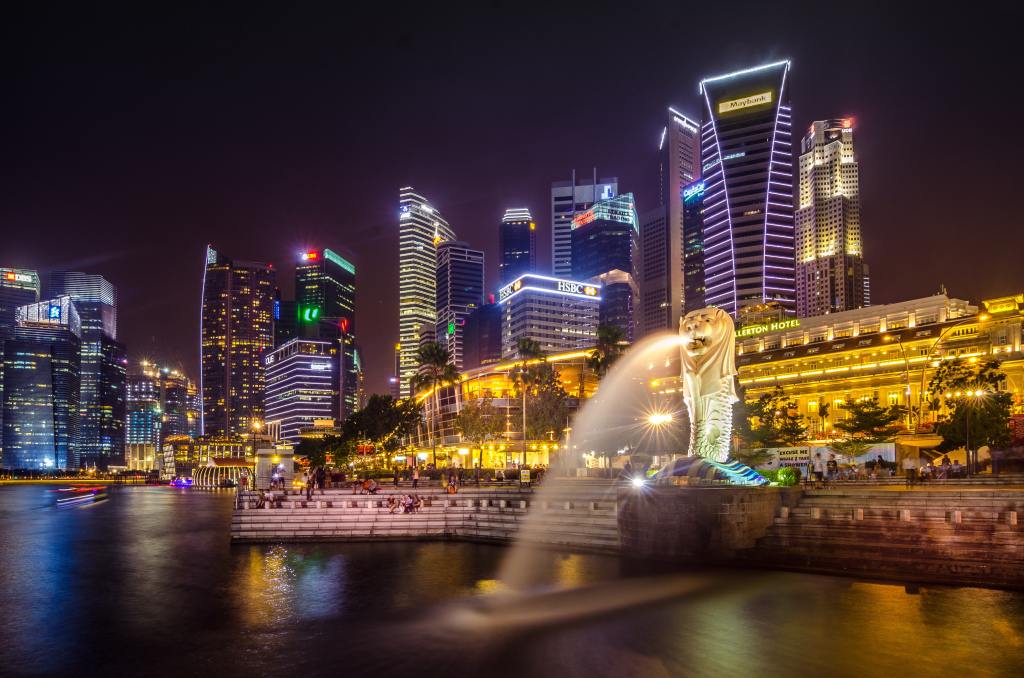
It’s the F1 in Singapore this weekend! It’s an exciting time full of hype, hustle and bustle, and loads of things to do! I thought I would write a short post on all the great stuff happening over the F1 weekend- along with some important things to take note.
The F1 starts this Friday 15th September, and finishes on Sunday 17th, at the Marina Bay Street Circuit. The official race is on Sunday from 8pm onwards, with the Friday & Saturday sessions being the practice and qualifying sessions, respectively. If you’re looking for tickets, you may still be able to purchase them on the events official website, or from official 3rd party sellers. If not, I’ve seen loads of dedicated posts and threads on the various Singapore Facebook groups. Just use your own due diligence and beware of scams. Also, do note that you can’t book just for the race, or just for the concert, it’s an all-in sort of thing, so just make sure you’re buying the correct day.
For me, the most exciting part of F1 is the concert- Formula 1 get some really amazing live bands and acts to perform over the weekend. On Friday we have Jackson Wang; on Saturday the acts will be: Post Malone, Kings of Leon, Culture Club and The Kooks; and on Sunday we have King of Leon again, Groove Armada, Madness and Robbie Williams. This is a massive year for UK artists, with a lot of throwbacks I’m sure us Brits will appreciate!
Don’t forget that places like Marquee and Zouk normally do afterparty events, too, it’s bound to be packed!
The main F1 race is scheduled to end by 10pm on September 17th, so be ready for a spectacular firework display shortly after. If you’re not attending the F1, but just want to watch the fireworks, I would suggest getting there well in advance to grab a spot- the Marina Bay area is normally packed during the F1 weekend, so be sure to get a good spot if you want to see the pyrotechnics.
Not only that, there will be road closures during the F1 weekend. Affected areas are usually town and the CBD, across areas including but not limited to Bayfront Avenue, Esplanade Drive, Raffles Avenue, and Temasek Boulevard and Suntec. Be sure to plan your routes accordingly.
Are you excited or attending the F1 this weekend?!
For someone whose job revolves around finances, it’s very easy for me to think about money on a daily basis. But for those who have other areas of expertise; are in the creative field; have a tonne of other priorities to think about; or are just not knowledgeable in this subject, planning finances can seem like an incredibly difficult feat.
How do we know that we are planning correctly? How do we check that we are on track? Do we need to change our financial planning? I’m going to give you a couple of tips on how to self-reflect when it comes to money and, if needs be, do a financial reset.
Think to yourself, ‘Do I have a plan in place?’
This is one of the building blocks of financial planning; you must know what goals you hope to achieve and plan accordingly. Aim for mid- to long-term goals, as this will be easier to plan out using savings & investment instruments. Not only that, you should ensure than whatever planning you do takes into account which country you will be moving to or retiring. Different countries have different tax laws and jurisdictions, so you need to be aware of these if you want to plan your money successfully.
2. ‘Am I prepared for the unexpected?’
While this may be very bleak to think of, it is very important; life doesn’t always go as smoothly as we have planned. Any number of events can happen that can negatively effect your finances, such as a death in the family, a divorce, unexpected illness or even something as small as the fridge breaking. That’s why it’s crucial to have several safety nets in place to cushion the blow of these things impacting you and your family. You should make sure that you have an emergency fund of at least 3-6 months of spending. Not only that, you should ensure that your assets are protected with sufficient insurance, and you and your family should have a will in place for every country that you have assets.
3. ‘Do I know what I spend daily? Am I in control?’
We cannot deny, life is getting more expensive. Inflation is high, the cost of living has increased, you may feel it is more difficult to save each month. Take this time to reflect and be conscious about your spending. If this means putting all your cashflow into a spreadsheet, do so. If you need to use an app to track this, there are plenty of free ones you can use. Remember that what you are spending now will only increase over time (inflation, again!) so ask yourself, ‘Could I live like this comfortably in my retirement? Is this monthly income going to be enough?’. If the answer is no, start making tweaks to your retirement planning.
4. ‘Have I taken steps to plan for later life?’
This final point leads on from my previous one- no one wants to think about getting old but unfortunately, it is a fact of life. With old age comes extra challenges, like will your savings be enough to allow you to retire? Where and when will you retire, and is that even achievable? Not only that, who will you pass your estate on to when you leave, and have you sorted out inheritance tax? As mentioned, no one wants to think about these things, but it is good to ask yourself these tough questions every once in a while.
If you feel like all of this is too much, or you have reflected and now don’t know what to do, reach out to an advisor or a professional to help you mitigate these challenges.
I often get asked the question, “Why should I involve a professional with my investing, when I can do it myself?”. To me, the answer is very simple, but there are lots of reasons why. The analogy I like to use is this; if you are unwell, you go and see a doctor. Especially if it’s serious, like an operation, you will go and see a surgeon. Same with a suit, if you want a suit made, very few people will sew it themselves; they will get a tailor to do it. This same logic should apply to finances and investments. Unless you are an expert, like a fund manager, financial analyst, etc, having the input of a professional is always going to be beneficial. Here are five key ways financial advice is better than DIY.
Avoiding Scams
Back in 2021, I wrote an article on ‘How to Spot An Investment Scam’ (you can check it out here:
Investment scams are still on the rise, with many ‘investments’ offering huge returns over a short period of time. These may either be Ponzi schemes, or just a way to con you out of a lump sum of money. A professional will be able to spot an investment scam, understand the rules and regulations of the country they provide advice in, and could potentially help you save losing a lot of money.
2. Confidence in Investing
If you’re unsure how to even start planning your finances, a professional will guide you with your financial goals and objectives, and put forward an investment plan that will achieve these goals, whilst still being within your means and circumstances. They can provide you with confidence during your investment journey, supplementing their advice with knowledge and data. For example, I know many people that think they are a risk-taker and an adventurous investor. But, as soon as there is an economic downturn, such as Covid or the Russian invasion of Ukraine, they panic, and are concerned that their investment value has dropped. An advisor would be able to provide that person with the perspective they need to ignore short-term fluctuations and to take the emotion out of investing. For my article on this topic, click below:
This links back to my first two points; normally if an investment offers amazing returns over the short-term, it’s too good to be true. Not only that, if you check on your investment every day for fluctuations, you may lose faith in your planning. Investment should be for the long-term. A lot of my clients plan for retirement; a long-term goal that is inevitable (we all have to stop working one day!). But even if you have mid- to long-term goals, your money is bound to go further than if you expect returns in one or two years. This is because investing long-term can withstand short-term fluctuations or drops in the market. Overall, the stock market has risen over the years; even with crashes like the Lehman Brothers, Covid, The Dot Com Bubble, and even The Great Depression. Your advisor will know this and encourage you to diversify and hold long-term, so that you benefit and achieve your financial goals.
4. Providing Something Tax Beneficial
Wealth and tax go hand-in-hand, and a lot of expats will require tax advice or need a tax-efficient investment. If you think about it, it’s pointless in doing an investment that eventually you will have to pay a hefty sum of tax on, and navigating tax is often confusing, time-consuming and possibly costly. Instead of trying to do it yourself, wasting time and possibly money, a professional can offer tax-efficient solutions, advise you on tax reliefs you are eligible for, and connect you with experts for more tricky tax situations. All of this means that you are saving time and also your investment is growing in the most tax-efficient way possible.
For my article on what tax relief you may be eligible for in Singapore, check out this link:
Going back to my initial analogy, when you get a suit made, a tailor will do it for you. If you need alterations, a tailor will also help you with this. This is the same with a financial professional; they will tailor a bespoke financial plan for you. Investing is not one-size-fits-all. Just because your friend is doing a certain investment, doesn’t mean it is the right thing for you. A professional will match your goals, lifestyle and personality with a suitable investment plan, and will tweak and make adjustments along the way. Financial planning is a process, one that may change throughout your life, so a financial professional will review regularly to make sure that you are on track.
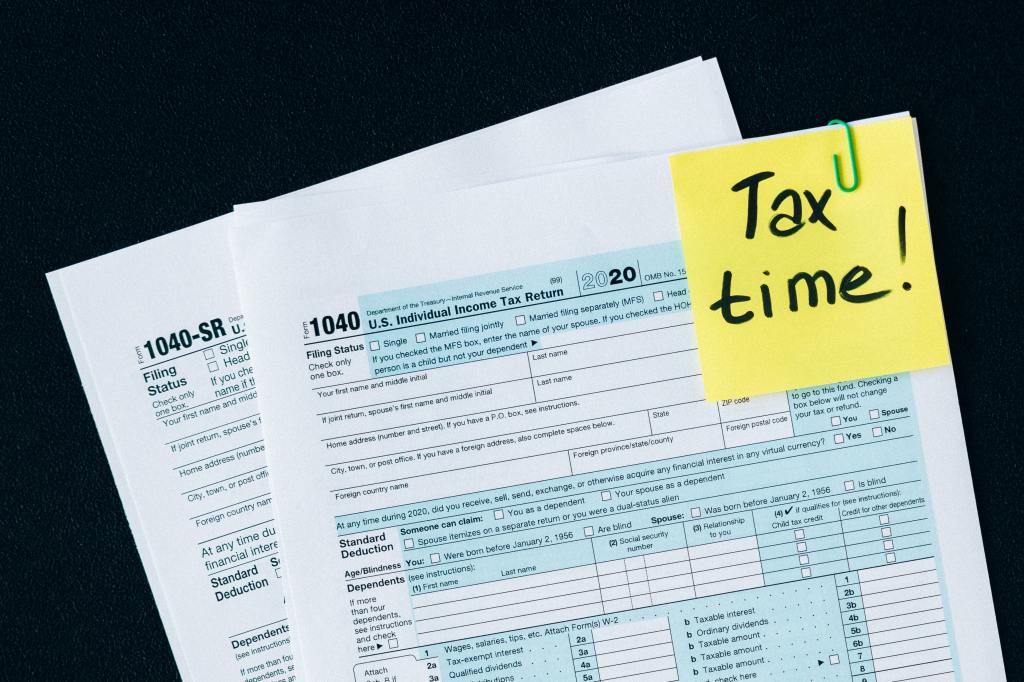
Half the year has already gone and it’ll be December before you know it. Therefore, I think now is a good time to start tax planning and looking into topping up your SRS account. In this article, I will be giving a brief overview of SRS, and why I believe it is an effective retirement and tax planning tool for expats in Singapore.
What is an SRS?
SRS stands for ‘Supplementary Retirement Scheme’, which you can think of as similar to CPF, with added benefits. This voluntary scheme is open to foreigners and locals, whereby anything inside this account is eligible for tax relief. In my opinion, not only is this a great way for saving for retirement, but it’s also one of the most effective ways to enjoy tax relief. There are a few other ways that expats can claim on their tax each year, such as life insurance relief, dependants relief and charitable donations. However, none seem to make a dent into tax savings as much as SRS.
You can open an SRS account with one of these three banks: DBS, UOB & OCBC. Opening the account itself is very simple and can be done via internet banking. In just five minutes, you can set up an account and deposit a maximum of $15,300 per year. However, this cap of $15,300 is just for PRs and citizens. If you want to increase your limit to the foreigner’s limit of $35,700, make an appointment at your bank and complete the relevant tax declaration form; you will then be able to add up to $37,500 into your SRS each year (provided you declare at the bank every subsequent year).
As of now, you can make penalty-free withdrawals from age 63, over a ten year period. But, take note, this number does change, so the longer you take to open your SRS account, the higher the retirement age may be. This account is for retirement, hence the long lock-in. However, not to worry, if you do wish to withdraw some money early, you may do so, it will just be taxable and a 5% penalty fee will apply. One thing that is good if you’re a foreigner and need to leave the country, is that you can withdraw in full penalty free, so long as your SRS account has been open for ten years.
Why is it good for foreigners?
One of the main benefits of SRS is the tax relief. Any monies that you deposit into this account is eligible for tax relief. You can check how much the savings are for someone of your income, you can download the tax calculator from the IRAS website. For those in the higher tax brackets, moving the maximum amount into SRS each year can knock a substantial amount off their tax bill, sometimes in the thousands.
Not only that, any withdrawal at or after the retirement age (over a ten year period) is only 50% taxable. This may not seem good, but remember that spreading out your withdrawals, instead of withdrawing lumpsum, will maximise your tax savings. Moreover, income of $20,000 or below is not taxable in Singapore; meaning that if you withdraw $40,000 a year from your SRS account, only 50% of that is taxable, which means that $20,000 would be taxable and the tax payable would be nil. Remembering key information like this will make your tax planning more robust.
Do remember that keeping your money in an SRS bank account only has an interest rate of about 0.05%, and we know that this is not going to keep up with inflation and may render your long-term savings useless. So what you can do is move your SRS money into approved investment vehicles. This means that you can still enjoy your yearly tax relief, the 50% taxable withdrawals, all while having your money grow better than bank rates, achieving you even higher returns with less tax!
We all know that investment is important, especially during times of high interest rate and inflation. The only way we are going to be able to survive retirement is if we plan and invest properly, instead of leaving it all in a bank account. SRS allows you to do that, whilst enjoying tax relief, now and in the future. And with the ability of opening an account with just $1, what’s stopping you?
A couple of weeks ago I turned 30 years old. Initially, the thought of being in my third decade was incredibly daunting; I was ignoring the fact that it was happening, avoiding making plans and just the overall fear and dread of hitting the big 3-0 loomed over me as the date approached. But now I’m a couple of weeks in, it doesn’t feel so bad, I have almost found a new confidence turning 30. So, I thought I would write a post listing all the stuff I stressed about that I am no longer losing any sleep over.
Looking and feeling ‘old’
This first one may seem so stupid, but I’m sure it’s something people get a lot when they turned 30. I was starting to feel like my face looked dull, and that I definitely looked my age (which in my head was old!). I felt like none of my clothes would suit me anymore, people would make comments about not dressing my age and I would have to transition in to more sensible, frumpy attire. This wasn’t the case at all; I didn’t wake up on 10th July 2023 all of a sudden being an old woman. It didn’t feel any different to being 29, or actually not even 28. I got up and went about my day as per normal and it wasn’t as scary as I thought. There were no looming thoughts of aging, my body clock ticking…any of this! The past few weeks I’ve actually being getting dolled up more, wearing heels more, and feeling overall more confident in myself.
I feel that, women especially, put a lot of pressure on ourselves to look and behave a certain way in accordance to our age. We shouldn’t waste so much of our energy thinking about it. We should feel empowered wearing, looking and acting how we want! Age really is just a number after all.
Not being ‘where I want in life’
I think this leads on from the previous point. For some reason 30 seems to be a huge milestone whereby I measured my life accomplishments. Anything not checked off the list by 30 seemed like a life failure to me and what followed by a wave of disappointment. In my head, I was approaching 30 not a homeowner, unhappy with my current job and feeling like my friends around me had achieved so much more. Whilst some of those things may be true, as I’m very lucky to have strong and successful friends, the rest wasn’t to be taken so seriously; I’m not a homeowner, not because of my own doing, but because of my circumstances being a foreigner in Singapore, it’s not that much of a big deal. And yes, I was unhappy at work, so I decided to make a change; a wealth management firm had offered me a prestigious role, which I decided to accept! I already feel so much better entering my 30s in a role that seems more dynamic, more professional and makes me happier.
My advice would be, to not let the little things get to you…but if there’s something big getting to you- change it! There’s no point sitting around miserable when you can actually make a change about these things.
Having to slow down
There seems to be this stereotype that women in their 30s need to slow down, not go out so much, not socialise so much, not focus all their energy on work and focus more on home life. I will not be doing that. If anything, being constantly busy with work gives me the adrenaline I need to keep me going throughout the week, it motivates me to strive to be better.
Priorities
Following on from that, I will be shifting slight priorities into my 30s. I will be focusing more on my close friendships, instead of trying to be mates with everyone. I will not be going out late into the night as much, as I will be waking up earlier and meeting more of my clients during the day. I will be spending the occasional weekday night at home, to meal prep and spend time with my husband, to ensure that the rest of the week goes smoothly. I will be enjoying my weekends doing what I want. And most importantly, I will not be worrying about what other people think.
Turning 30 doesn’t have to mark the beginning of the end, for me, it marks the beginning of a new chapter- new job, new apartment, new beginnings and opportunities! If I’ve learnt anything, it’s to not let external pressures get to me- I was too wrapped up in what I thought other people would think, or how I thought turning 30 is supposed to be, that I forgot how to enjoy myself and be grateful for all the things I have achieved and accomplished. Watch this space for more great things to come!
Many expats in Singapore have the privilege of being covered under their company’s insurance policy. This is a great perk to have; I’ve already written posts in the past on the benefits corporate insurance brings, such as covering pre-existing and outpatient costs. But there are some aspects that people seldom think about. In this article, I will explore these here.
Clear Limits & T&Cs
This point may seem very obvious but a lot of people simply think, I have company insurance, I’m covered. This is not always the case; company policies will always have limits. Sometimes, a company may not provide certain outpatient coverage (especially dental, as this tends to be more expensive). Sometimes, the claim limit for surgery may be insufficient. For example, the most common limit I see for company hospitalisation is $15,000. I went for a very minor surgery back in 2018 that cost close to $18,000. Medical costs have definitely risen since then, and my surgery was only a 30-minute procedure. So, you can see that $15,000 is clearly not enough to be covered for hospitalisation. Not only that, some policies may include a co-payment that you need to pay and cannot be claimed. Make sure that you are made fully aware of your company’s insurance limits and terms & conditions.
Fast Response
It’s all well and good having amazing claim limits, but if you don’t hear back from the agent or company for months on end, it renders worthless. Ideally, you as an employee should be able to talk to the company’s agent directly, instead of constantly having to use your HR as the middle man, and the agent should respond to you quickly in regards to claims status or understanding your policy further.
No LOG Complications
A Letter of Guarantee is very common both for company and individual policies. This letter acts as a kind of pre-approval so that the hospital can directly bill to the insurance company. However, I have seen some very strange clauses when it comes to LOGs, such as asking for notification weeks in advance, including if you are hospitalised due to an emergency. As you can imagine, it can be very difficult to get an LOG if you are being rushed to the hospital! And it would be unfortunate if this means you are unable to claim! Even if you have to pay for your emergency hospitalisation first, you should be able to claim later.
Personal Touch & Added Perks
This is something that many forget about- personal touch makes all the difference! Starting with the responsiveness of your agent in regards to claims, but also so much more. Did you know that many corporate policies offer free talks, classes and wellness perks for their clients? This could be anything from on-site health screenings, to doctor’s talks, to yoga sessions, and even financial empowerment seminars. If your company insurance is a faceless corporation, with none of these personal perks, you may be missing out.
Whilst sometimes your own company’s policy is out of your control, you can still take the initiative to find out more of what you are covered for. If you find that it is not enough or insufficient, then you can be proactive and have personal coverage, too. Moreover, if you are in the midst of applying for a new job, you know that there are certain employee benefits that you can ask for or look out for in your contract. Or you can share this article with new expats moving to Singapore!
Back in January, MAS increased Singapore’s gold reserves by 30%, another 6.8 tonnes of gold, seeing a significant increase in our overall reserves to 205 tonnes. But why are they doing this? What is the reason?
Central banks are continuing to buy gold, instead of holding USD. Belief is that, now, we are a multi-currency world, so gold is a safer asset to hold than American Dollars. Although USD won’t lose its currency reserve status anytime soon, central banks want to diversify away from the dollar.
The trend of diversifying away from the US Dollar gained momentum when Western nations began putting sanctions on Russia because of the war in Ukraine; Russia was kicked out of the SWIFT system and many other sanctions caused Russia’s economy to plummet.
Not only that, the US Dollar’s recent rise has caused massive inflation problems worldwide, especially for emerging markets. This has obviously worried banks, causing a shift to gold; gold is a good hedge against inflation, and is separate from currency, so does not suffer from exchange rate risks.
During times of political and economic uncertainty, gold is a safe reserve. Gold is able to retain value much better than other forms of currency, because it is limited and cannot be diluted. So to me, it is clear that Singapore is increasing its gold reserves due to the current economic climate; Singapore will be able to whether the financial storm we are facing right now.
Gold can be a good investment option right now, as it’s a good way to hedge against inflation and recession. If you hold cash, your money can be eaten away due to the poor interest rates vs inflation. And finally, while to US Dollar is likely to be the reserve currency for a while, we do not know what will happen in future. Will you be investing in gold, like Singapore?
When I first moved to Singapore, I didn’t really know much about the landscape here in terms of living and working. I had only visited the country via transit, so Changi airport was all I knew! Of course, the reason I chose to move to Singapore was because the pay was a lot higher than what I can get in the UK. However, I wish I did understand things before I moved here so I could make more of an informed decision. So, I’ve come up with this list, hopefully I can help some newbies who are considering to move here.
Flights
Of course, if a company is willing to relocate you over here, then they should try and cover some of the moving costs. When I first accepted my job offer, my company did in fact offer to reimburse my flight ticket. However, this was not enough to cover the full flight cost. If I remember correctly, I had to book with a budget airline direct from London; there are no direct flights from Birmingham, so that was an extra hassle for me to try and travel down there. We all know they’re a lot more expensive than they were pre-Covid, so look out and make sure that your company’s reimbursement is sufficient to cover these inflated flight costs!
2. Housing Costs
I’ve written a few articles now regarding how expensive housing has gotten in Singapore. In fact, a couple of days after I broke my last article, the government raised the additional stamp duty for foreigners from 30% to 60%! Not only that, rental has skyrocketed over the past year or so; so even though your salary might be higher here than your home country, your outgoings might be a lot more too. If you are offered a package that covers some or all of your rental costs, then I think that is ideal! Rental costs are the bulk of my outgoing expenditures each month.
3. Insurance
I know I always go on about this, but it’s very important! I spend a lot of my personal insurance each month. When I first arrived in Singapore, my previous company gave me an allowance of $200 annually to cover insurance…let me tell you now, this is not enough. This only covered a fraction of the very basic hospital & accident insurance I purchased, let alone the additional life & critical illness insurance I later purchased. If a company offers an allowance to purchase insurance, make sure it’s at least in the thousand dollar range. But ideally, a company should provide you with a corporate insurance plan, that way you may have an opportunity to be covered for GP, specialist and dental, coverage that is normally not claimable on a personal insurance plan. Also, it’s good to know that it is mandatory for companies to provide foreigners on work permits and S passes with insurance coverage.
4. Annual Leave
I didn’t factor in how important this was when I accepted a job offer. In my previous company, when I was an English teacher, I enjoyed a lot of days off, because of school holidays et cetera. The tuition centre simply refused to open, meaning that we were unable to work. However, these days off went over our 14 days annual leave, meaning that we actually had to pay back the company the days that we did not work! This basically ate away into our bonuses. I wish I’d have found a better offer that didn’t absorb our days off in lieu this way!
5. Shares & Taxes
A lot of companies offer shares as part of their incentive. I think this is a great idea, as you basically have access to stocks (maybe even blue chips) that you wouldn’t normally have access to. However, a word of caution- and this has happened a few times with my clients; IRAS will tax you on these shares even if you haven’t cashed them out. Quite often, you are taxed when the shares are doing well and price high, then, the shares may plummet, especially during this economic uncertainty. So, you may be taxed on assets that are actually a lot higher than their current value! This could push you into different tax brackets altogether, meaning that your tax for that year will be quite costly!
6. Education Costs
As a foreigner, it is often incredibly difficult to get your child into a local school, they have to take several exams on a syllabus that they probably are not familiar with. So, for most expats in Singapore, their kids have to go to international schools. The fees for these schools can be very pricey, easily $50,000 or even more a year for some! So, factor this in before you make the move. Ideally, you can find a package that will cover some of these educational costs for you.
7. Dependent’s Pass
A lot of foreigners here are in fact trailing spouses, following their husband or wife for work. In the past, this was not so much of an issue, but over Covid, the government made it a rule that those on a dependent pass could not get a letter of consent to work. This means that if you are on a dependent pass, you may have to work remotely for your previous company overseas, or simply not at all. I do know some who have set up their own company to bypass this, but then another problem arises in having to hire a local and pay their CPF, regardless of how well your business is doing.
Some argue that Singapore is becoming less attractive for foreigners to live and work. I don’t necessarily agree with this statement, however, I think it’s key that you know all of these things to look out for and make an informed decision.
I think about this question a lot, as we all know the rental rates in Singapore have skyrocketed recently, and it pains me to pay more for rent than what some of my local colleagues pay for their monthly mortgage instalments. So I often think whether it is worth buying a property as a foreigner. However, there are many restrictions and extra costs involved are often put expat off buying property. Or, we can only buy private condominiums or landed property if it is in Sentosa. HDBs are completely out of the question, which, of course the more affordable option.
So let’s take a deep dive into whether it is worth an expat buying a property here.
One thing that does bring some foreign investors into buying property. Here is how stable and strongly Singapore dollar is. Even during the pandemic, the Singapore dollar continues to be stable, unlike some currencies in Europe and the US. Last year, in 2022, foreign buyers made up 22.4% of all condominium sales in Singapore. This was quite a shock to me when I found this out, because Additional Buyer’s Stamp Duty (ABSD) for foreigners is at a staggering 30%!
For example if I was buying a condo, as an expat, at S$1M my total Buyer’s Stamp Duty would be $24,600. Then my ABSD would be $50,000. So in total my costs for this condo would be $1,074,600! That’s a lot of extra cash to put down. And this isn’t even taking into account legal fees and other admin costs!
(Note that if you’re from the States, Iceland, Liechtenstein, Norway, or Switzerland, you don’t have to pay ABSD!)
In a lot of other countries, it’s very popular to flip your properties as a form of side income, or to do as a full-time business i.e., buying a property and selling it very quickly for a profit.
But in Singapore, if you plan to sell your home within the first three years of purchase, you will have to pay Seller Stamp Duty (SSD), which is 12% in the first year, 8% in the second and 4% in the third, so I think twice if you want to start being a home, flipper in Singapore! Your business may not be as lucrative as you think.
Now, I think that a lot of expats don’t know in Singapore, is that we can actually apply for mortgages, normally with no issues. Usually the ratio is 75%, but can be as low as 55%. Do take note that the cash down payment is usually anywhere between 5% to 10%. However, although it doesn’t sound too bad, remember that interests are not exactly in our favour right now; you’re looking at our interest rate of about 3.65% – 4.25%, which means that if you are wanting to purchase $1 million property, your mortgage repayments could easily be around $7000 a month.
Looking at these numbers, I can look at it from both sides of the coin; this mortgage repayment is what a lot of people are paying as their monthly rental in Singapore. So if you are planning to stay in Singapore long-term, it’s actually a good investment because the property belongs to you, it’s not like you’re lining the pockets of a landlord by paying this in rent. But, if you’re only here short-term, perhaps it’s best just to suck up the large rental amount!
The last thing I want to talk about, is the longevity of your home in Singapore. Unlike many other countries, whereby when you buy the property, it is yours forever, and you can use it as an ancestral property to pass down to your children et cetera, this may not be the case in Singapore. Most properties here are 99 year lease, including a lot of condos. Looking at PropertyGuru, it’s very difficult to find condos nowadays that are freehold. What I mean by this, is that it is owned by the buyer for life; it can be passed down generation to generation. If the property is a 99 year lease, then in theory, it has to be given back to the government after the 99 years is up. Not only does this mean that the property cannot be passed down multiple generations, but it also means that as a property becomes older, it can often lose its value, because buyers in the market know that at some point, it will have to be returned to the government. In my opinion, this is one of the reasons why a lot of expats are put off buying in Singapore. But now we see a lot more countries adopting this concept, especially with over population. And to be honest, I don’t think I would want to give my future generations an old dilapidated apartment, anyway. The buildings here are not like back at home, where they can last for hundreds of years, so to me, this is not much of an issue. If anything, I think it encourages the property market. It means that once the three years & SSD is up, you can sell your property and get a new one and upgrade.
So it’s kind of like a long-term flipping process. Instead of staying in one property that may become very rundown.
If I were to conclude on my thoughts as to whether it’s worth a foreigner buying a property here in Singapore, there are a few things. I do think it is worthwhile if they are planning on staying long time in Singapore, also because in future this could look good on their PR application as they are already rooted in Singapore. Moreover, I always think it’s good to be paying for your own asset, instead of paying rent to a landlord! And with rentals being crazy prices right now, it works out to be more cost-effective if you are going to be staying here in the long run, even with the additional taxes and stamp duty. However, if you’re wanting to use it as an investment property, and don’t really have intentions of staying long-term in Singapore, then it may be a better idea to look for properties elsewhere. Nearby Southeast Asian countries have less regulations in terms of the costing for foreigners, and the properties are larger and much more affordable, meaning you can turn that into a nice passive income for rental.
These are just my opinion is but what do you think about buying a property in Singapore as a foreigner?
I have recently become somewhat addicted to youtiao. Sometimes known as the ‘Chinese Churro’, these deep-fried dough sticks are devilishly moreish. But, I wasn’t always such a big fan. I often saw my husband dipping one into his hawker centre kopi and frankly, that kind of grossed me out. But then I realised that the youtiao is a vessel for many more wonderful things. So, I decided to explore them…one more step to being local!
Ba Kut Teh
I love ba kut teh; this peppery and herbal pork rib soup is delicious. Quite often you will see youtiao included in your order. I like letting the dough get soaked into the soup until it’s a bit soggy.
Sweetened Soy Milk
I am definitely not at this stage yet; to me, dipping anything in soy milk is a disgusting concept. I don’t like soy milk at all, which is what the problem is here. But if you do, this might be up your street. Some people even dip their youtiao into soy pudding.
Condensed Milk
I have seen this a lot, and I guess it makes sense. A youtiao, in actuality, is just a long doughnut, and doughnuts are normally covered in icing or various other sweet and sticky substances. Condensed milk is so sweet and rich, dipping youtiao into it is a no-brainer for dessert-lovers or those with a sweet tooth.
Coffee
A very traditional and obvious choice. Whilst I don’t like it myself, it’s a similar concept to us Brits dipping a bickie into our tea or coffee. I just don’t like floaty pastry bits swimming around in my cup. It’s a no from me.
Congee
You may have guessed by now that youtiao is a Singapore breakfast staple, as is rice porridge! The two go together quite nicely, especially with a bit of soy sauce, for a balance of sweet and salty, soft and crunchy.
Curry Sauce
I’ve saved the best until last. And of course, someone from Birmingham loves anything drenched in curry sauce. In my opinion, youtiao is a perfect vessel for curry; it soaks it up perfectly and is the most comforting, stodgy snack. It may seem like a weird combo at first (and trust me, I thought so too), but you really can’t knock it until you’ve tried it. This combination got me back into youtiao, so I encourage all to give it a try!
I’m sure that I haven’t come across all ways of eating youtiao, and in fact I know that youtiao can be found across Chinese and South East Asian cuisine, each country having their special way of enjoying it. Have you tried this local staple? And how do you like to eat it?