The year of more: the ENTERTAINER Singapore launches its 2027 membership

I’m happy to share the latest release from the ENTERTAINER; who I have been working with for a couple of years to help my readers and listeners with savings on food, drinks and activities!

“For SGD 48 – roughly the price of one meal – unlock 1,000+ offers and a full year of savings with Singapore’s leading 1-for-1 dining and lifestyle app.

The ENTERTAINER is inviting Singapore to get out and get discovering this October with the launch of its 2027 membership – sharing more than 1,000 1-for-1 offers across restaurants, attractions, spas, salons, fitness venues and hotel stays. With value increasingly front of mind, the ENTERTAINER helps members make their everyday spending go further.


For SGD 48 – roughly the price of one meal – the ENTERTAINER Singapore 2027 unlocks a full year of savings. When purchased this month, members get 15 months of access instead of 12, offers valid seven days a week, and the opportunity to go “Double” and get twice the savings.


New features for 2027 make the ENTERTAINER simpler to use and easier to plan with. Members can now redeem offers in fewer steps and in less time, with terms shown upfront and multiple offers combined in a single journey. Plus, the ENTERTAINER has become more social, with new in-app features putting trusted recommendations at the heart of planning. Connect With Friends lets members build a network, see friends’ favourite places, request their offers, and share their own reviews to make planning what to do together easier. With almost 130,000 reviews written by nearly 60,000 members, plus 88% of offer requests between friends accepted, organising a night out that everyone will enjoy just became effortless.


The ambition of the ENTERTAINER is simple: before deciding on a plan, open the ENTERTAINER, see what savings are on offer, share it with friends and get more out of going out, together.

From “Where should we go?” to “Is it on the ENTERTAINER?”


With consumers in Singapore becoming more considered about where they spend, value is playing a bigger role in everyday choices. Yet, at SGD 48 – the equivalent of a mid-range main meal – the ENTERTAINER Singapore membership makes it easier to say yes more often, all year long. The ENTERTAINER’s 1-for-1 offering responds directly to members feeling that increased cost of living with over 3.8 million offers redeemed globally in the past 12 months.

With even more ways to save added for 2027, the platform helps consumers to still enjoy all that Singapore has to offer while making their spending work harder for them.


With over 370,000 active users across seven global markets, the platform continues to bring value to all kinds of lifestyles – from the brunch-loving professional looking for somewhere new to spend a Saturday, to a family of four planning a day of activities. SGD 48 for a full year of savings? It’s a no-brainer.

From confirmed classics to fresh new finds


From much-loved household names to sought-after spots and new discoveries, the ENTERTAINER SINGAPORE 2027 membership is giving its users even more reasons to explore.


Foodies can indulge in 1-for-1 offers at some of Singapore’s most delicious restaurants including Bedrock Bar & Grill, MIYOSHI by Fat Cow and Les Bouchons Steakhouse or enjoy offers at everyday haunts including PAUL Bakery, Plain Vanilla and Wowfish. Mall must-haves such as Smooy, Dunkin Donuts and Potato Corner provide a quick treat while long-standing ENTERTAINER favourites such as The Marmalade Pantry, Ginkyo by Kinki and Harry’s provide go-to comfort dishes. Plus, there are some brand new additions to the app including Baker & Cook, Prego at the Fairmont and Coastes on Sentosa.


The ENTERTAINER experience extends well beyond dining. Families can discover activities including BOUNCE Singapore and Singapore Ski & Snowboard Academy, while those looking to relax and recharge can explore beauty destinations including Elements Wellness and Ikigai Wellness Clinic. From dining and entertainment, to wellness, fitness and travel, there are so many offers available to the ENTERTAINER members.


A lifestyle worth getting out for

“We want people to think of the ENTERTAINER as their passport to experiencing more of Singapore,” said Keith Jaggard, the ENTERTAINER’s Senior Director, Commercial. “It’s about discovering somewhere new, turning an ordinary evening into something memorable, or finally saying yes to the plans you’ve been talking about – with savings that can turn one meal, outing or experience into two. The ENTERTAINER lifestyle is about choice, value and experiencing more, and we want everyone to have a slice of it.”


The ENTERTAINER SINGAPORE 2027 makes it easier to say yes to the experiences that make life in Singapore so vibrant. This October, get out, get discovering, get saving – and before choosing your next meal, adventure or night out, ask one question: is it on the ENTERTAINER?”


Please download the app or go to www.theentertainerme.com to learn more.

My Experience at 8 Medi-Aesthetics (Using The ENTERTAINER App)


Living in Singapore as an expat often comes with a trade-off: you want to enjoy the lifestyle; great food, wellness, experiences, but without feeling like you’re constantly overspending.


That’s exactly why I’ve been using The ENTERTAINER. It aligns perfectly with my philosophy: spend intentionally, not restrictively.

Recently, I decided to try something a little different; a medi-aesthetic facial at 8 Medi-Aesthetics and I was genuinely impressed.


First Impressions: Calm, Professional, and Personalised

Located conveniently in Somerset, 8 Medi-Aesthetics has that clean, clinical feel you want from a medi-facial clinic, but without being intimidating.
From the moment I walked in, the experience felt tailored rather than transactional, which is rare in a city where treatments can sometimes feel rushed.


The Treatment: DEP Facial + More Than Expected

I went in for a DEP (Dynamic Electroporation) treatment, which is designed to deeply infuse active ingredients into the skin without needles.

But what stood out most was how comprehensive the session was. It wasn’t just a single-step treatment; it felt like a full skin reset:

Deep cleansing
Extractions (done gently, not aggressively)
Hydrating mask
DEP infusion
And… an unexpected bonus, she even tidied up my brows!

It felt like one of those rare sessions where you leave thinking, “That was actually worth it.”


The Results: Subtle, Healthy Glow

I’m not someone who chases dramatic, overnight transformations. What I look for is:

Hydration
Skin clarity
A natural glow

And that’s exactly what I got.

My skin felt plumper, cleaner, and noticeably fresher without redness or downtime.


Why I Use The ENTERTAINER (And Why It Matters)

Now, let’s talk about the part that really matters…value.

Through The ENTERTAINER, you can access treatments at 8 Medi-Aesthetics with Buy-One-Get-One-Free offers, which gives you flexibility:

Use both sessions yourself (perfect if you want consistency)
Or bring a friend and turn it into a self-care day


Here are a few of the offers currently available:

60-minute Signature Glow Infusion Facial
   → Estimated saving: ~$88
60-minute Collagen Boost Facial
   → Estimated saving: ~$78
45-minute Thermo Detox Body Sculpt Therapy
   → Estimated saving: ~$68

In a city like Singapore, where wellness treatments can add up quickly, this kind of saving makes a noticeable difference.

Check out their savings here:

https://www.theentertainerme.com/en/singapore


The Bigger Picture: Lifestyle Without Guilt

This is something I speak about a lot with my clients:

You don’t have to cut out lifestyle spending; you just need to be smarter about how you do it.


Using tools like The ENTERTAINER allows you to:

Maintain a high-quality lifestyle
Enjoy experiences you actually value
Stay aligned with your financial goals

It’s not about doing less; it’s about doing it better.


Would I Go Back?

Yes, and not just because of the offer.

The quality of the treatment, the attention to detail, and the overall experience genuinely stood on its own. The fact that I could access it at a reduced cost just made it an even easier decision.


Final Thoughts

If you’re in Singapore and looking to explore medi-aesthetic treatments without overcommitting financially, this is a great place to start.

And if you’re not already using The ENTERTAINER, it’s one of the simplest ways to optimise your lifestyle spending as an expat.


If you’ve tried any treatments through The ENTERTAINER, I’d love to hear your experience—feel free to reach out or message me on Instagram @expatfinances.

You can find 8 Medi-Aesthetics at 51 Cuppage Rd, #06-22, Singapore 229469

Or check out their website:

https://www.8medi-aesthetics.com/

A Thai Dining Experience That Feels Truly Special — And How the ENTERTAINER Makes It Even Better


Singapore has no shortage of Thai restaurants. From casual hawker-style eateries to upscale dining rooms, the options are endless. But every now and then, you come across a place that feels genuinely different; somewhere that clearly cares about the craft of what they’re doing.

That’s exactly how I felt during a recent media experience at IM JAI by Pun Im at Icone Village, where I was invited to try their menu through a collaboration with the ENTERTAINER app.

https://www.theentertainerme.com/en/singapore

https://www.imjaisg.com/

As someone who writes a lot about lifestyle choices that make financial sense, I’m always interested in experiences that combine quality with value. This one delivered on both.


Thai Food…But Not As You Know It

The concept behind IM JAI isn’t simply to replicate the Thai dishes you already know. The team focuses on creating dishes that feel unique and hard to duplicate, combining traditional Thai flavours with thoughtful techniques and carefully sourced ingredients.

Some ingredients are even imported from places like Japan to elevate the flavours and textures.

What immediately stood out to me was the creativity in the menu; this wasn’t just another Thai restaurant repeating the same standard dishes.

The Drinks: Homemade and Completely Different

We started with drinks, and this set the tone for the whole experience.

IM JAI offers craft Thai beer, which is something you don’t see very often. We tried the Thai honey craft beer, which had a subtle sweetness and a smooth finish that paired beautifully with the food.

Alongside that, I had a butterfly pea flower and aloe juice, which was incredibly refreshing and visually striking.

It’s small details like this, homemade drinks and unusual flavour combinations, that make the experience feel a little more special.

Standout Dishes From the Tasting

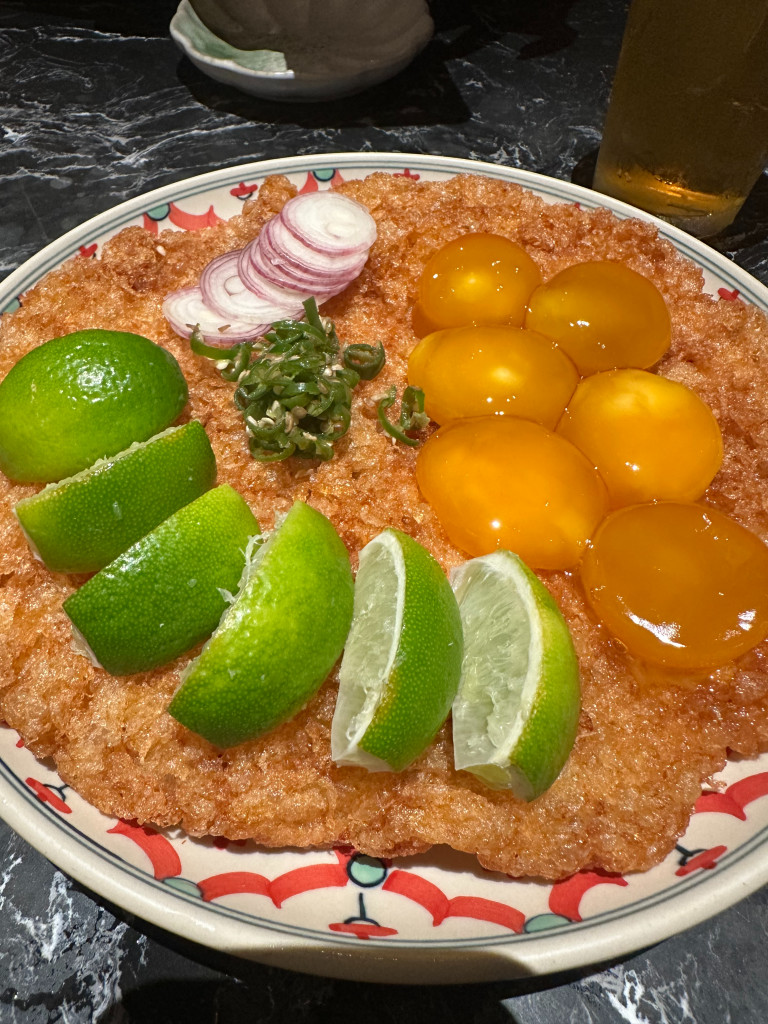
One of the most memorable dishes of the evening was the crispy cloud egg with a five-hour cured egg yolk.

The egg yolk is cured until it reaches a rich, spreadable texture. The idea is to spread it across the crispy egg base almost like butter on toast, then squeeze fresh lime over the top. The result is a perfect balance of creamy, crispy, rich and bright citrus flavours.

Another highlight was the fried squid tentacles with homemade curry mayo. The batter was incredibly light and crisp, not oily or heavy, and paired with a curry mayo that added just the right amount of richness and spice.

We also tried the Massaman curry chicken with Japanese sweet potatoes. Massaman curry is already a comfort-food favourite for many people, but this version felt slightly elevated. The Japanese sweet potatoes added a natural sweetness that complemented the rich, aromatic curry beautifully.


Other Dishes That Completed the Experience

The tasting menu included several other dishes that rounded out the evening:
• Eggplant dip finished with coconut milk
• Signature spicy and sour pork rib soup
• Stir-fried morning glory with fermented soybeans
• Coconut kaffir lime rice (the aroma alone was incredible)
• Black sticky rice pancake for dessert

Every dish felt thoughtfully prepared and full of flavour.

Why This Works So Well With The ENTERTAINER

One of the things I love about the ENTERTAINER is that it allows you to experience great restaurants while still being financially sensible.

Dining out in Singapore can add up quickly, but apps like this make it easier to enjoy experiences without overspending.


At IM JAI, the offers include:

Regular offers on the ENTERTAINER:
• Buy 1 Get 1 Free rice or noodle dishes
• Buy 1 Get 1 Free soups or stir-fries

Special March promotion:
• Buy 1 Get 1 Free rice or noodle dish & drink

And if you’re stopping by another time just for drinks, you can also use:
• Buy 1 Get 1 Free Thai craft beer

It’s a great way to try a restaurant like this, especially if you’re going with a friend or partner.

My Final Thoughts

What impressed me most about IM JAI was the attention to detail. From the homemade drinks to the creative dishes and carefully sourced ingredients, it’s clear that the team is passionate about what they do.

It’s the kind of place that feels a little bit special, but still relaxed enough to enjoy regularly.

And when you can pair that experience with the savings from the ENTERTAINER, it makes the experience even better.

Because good financial habits don’t mean giving up great experiences, sometimes they simply mean being smart about how you enjoy them.

If you’re in the area, this is definitely one worth trying.

What’s New on the ENTERTAINER (And What I’m Actually Using This Month)

If you live in Singapore and you’re not using the ENTERTAINER properly… you’re leaving money on the table.

And in a city where a casual dinner can easily hit $150–$200 for two, that adds up fast.

I’ve been scrolling through the latest additions on the ENTERTAINER for March, and there are some genuinely good new spots, both in Singapore and, excitedly enough, across the border in JB, that are perfect whether you’re doing date nights, coffee catch-ups, or planning a weekend escape.

Here’s what’s new, what I’d actually order, and how this fits into a smart “live well but spend intentionally” plan.

https://www.theentertainerme.com/en/singapore


SINGAPORE – New Spots Worth Using

LEILA

Middle Eastern food done properly.

Think grilled meats, vibrant mezze, fresh herbs, smoky dips. If you’re going, I’d order:

  • A spread of mezze to share
  • Grilled skewers
  • One of their signature mains

With a 1-for-1 style offer, this is easily a $25–$30 saving on a dinner for two.

This is exactly the type of place where the ENTERTAINER turns “we probably shouldn’t” into “why not?”

https://www.leilasingapore.com/

STYXX
Great for after-work drinks or a casual night out.

Expect elevated bar bites, cocktails, and a good social vibe. If you’re doing 1-for-1 mains or drinks, you’re effectively cutting your bill in half, which makes spontaneous plans much less financially painful.

https://styxx.sg/

TOMORO COFFEE

This one is great for my coffee lovers! If you’re working remotely, doing client meetings, or just living your best café life, we all know that coffee savings add up fast in Singapore.

Two lattes easily = $14+. With 1-for-1? That’s proper weekly savings without changing your lifestyle.

https://www.tomoro-coffee.sg/home

BURMA SOCIAL (SIGLAP)

Check out Burma Social for Burmese food; genuinely one of the more interesting cuisines in Singapore’s dining scene right now.

Order:
• Tea leaf salad
• Curries
• Sharing plates

If you live in the East (or want an excuse to head there), this is a strong one to use the app on. And as an Eastie and a Foodie myself, this is one of the places worth checking out!

APT (A Place To…)

Coffee by day, cocktails by night, which basically means two opportunities to save.

I love multi-use venues like this because you can justify the membership across different occasions, brunch, work catch-ups, or evening drinks. For someone like me, who needs to attend client events, business meetings and networking, I love utilising the app for multi-function venues like this.

https://www.instagram.com/aptapt.sg/?hl=en


BASQ & BEAN

Basque cheesecake lovers…this is your sign.

Dessert spots are underrated on the ENTERTAINER. A 1-for-1 cake and coffee situation? Yes please.

TIGRESS Premium Billiard Club

This one’s fun, and something genuinely a bit different from a lot of the offering I normally use on the ENTERTAINER.

Pool, food, drinks and offers available there too.

Perfect for:
• Date nights that aren’t just dinner
• Group socials
• Something different without paying full Singapore prices

Experiential savings > just food savings.


 JB – Stack the Savings on a Weekend Escape

If you’re already heading to Johor Bahru for groceries, salons, or just a breather from Singapore prices, it makes sense to layer your savings properly. There are some genuinely good additions on the ENTERTAINER across the border right now. SIBLINGS GELATO is perfect for a post-dinner dessert stop (because let’s be honest, you’re getting dessert), while SUNDAY MORNING COFFEE SHOP and THE REPLACEMENT are ideal for slow, aesthetic brunches that feel like a mini reset. If you’re after something more substantial, FLAME & FERN, KYUDON, and FIREPITZ cover everything from Western grills to Japanese comfort bowls and easy group pizzas; all at JB pricing, made even better with 1-for-1 style offers. And if you want to do something different, CAMP5 at Paradigm Mall offers indoor rock climbing, which is significantly pricier in Singapore, so using an offer here makes it an easy yes for a fun, active afternoon.

https://www.facebook.com/kyudon.jb


The key is this: if you’re already saving on exchange rates, transport and everyday costs in JB, stacking ENTERTAINER offers on top means your weekend away feels indulgent, without quietly undoing your monthly budget.

How This Actually Helps You Save in Singapore

Here’s the key point.

The ENTERTAINER works best when you use it for:
• Things you were already going to do
• Social plans you would’ve paid full price for
• Regular habits (coffee, brunch, date nights)

If you use just:
• 2 dinners per month
• 2 coffee meetups
• 1 JB weekend

You can easily offset the cost of the membership within a month or two.

And for expats especially, where we all know lifestyle inflation creeps in quickly, this is one of those quiet tools that helps you enjoy Singapore without overspending.

Live well. Spend intentionally. Optimise where you can.

https://www.theentertainerme.com/en/singapore

Three Things Every Expat Should Review Before Changing Jobs in Singapore

Job changes are common for expats, but they come with financial consequences people rarely think about.
Here are the three things every expat must review before making a career move.


1. Insurance & Medical Coverage

Your employer-sponsored health insurance often ends the day you resign.

Before you move:
Check if your hospitalisation coverage is tied to your employer
Review any exclusions or loading on personal plans
Consider securing your own independent cover before leaving

Changing jobs is the worst time to discover a coverage gap.


2. SRS & Bonus Timing

How and when bonuses are paid impacts:
• SRS contribution timing
• Tax relief
• Investment planning

If your bonus arrives early in the new year, you might miss the chance to use it for this year’s SRS contributions.


3. Employer Benefits & Retirement Schemes

Consider:
• Loss of corporate benefits
• Loss of employee stock options
• Changes in tax exposure
• Opportunities to consolidate investments
• Need to adjust your portfolio risk

Job changes should trigger a full financial review.


A smooth career move includes financial clarity.
Review these three areas before signing any new contract, and you’ll protect yourself from unexpected gaps and missed opportunities.

Making Insurance Finally Make Sense for Expats in Singapore; Why I’m excited About Forgettable

If there’s one universal truth in expat life, it’s this: the admin is never-ending.

You can be thriving in your career, juggling two currencies, planning investments across borders… and still end up drowning in PDFs, renewal emails, HR benefit summaries, and three different insurance policies you vaguely remember buying but can’t quite locate. Add on the “free” protection that comes with credit cards or company packages, and suddenly your life admin becomes a full-time job.

As someone who works daily with expats on their financial planning, I see this chaos all the time. Clients come to me with folders of mixed paperwork, half-complete coverage, overlapping policies, and sometimes, gaps they didn’t even know existed.


Our expectations for banking and investments have evolved massively. We track expenses from our phones, invest with a swipe, and send money globally in seconds.
So why doesn’t insurance feel the same? Why is the most important safety net in our lives stuck in a world of PDFs, policy jargon, and patchy visibility?

That’s why I’m genuinely excited about what forgettable is building.

The App That Simplifies Life Admin (finally)

Forgettable is a Singapore-based insurtech built for Millennials and Gen Z, but honestly, anyone who has ever sighed at a policy document could benefit. Their approach is simple: to help people actually see and use the protection they already have, before topping up with anything new.


The platform:

Turns messy PDFs into smart digital cards: Upload your policies and Forgettable transforms them into clean, visual summaries that show exactly what you’re covered for. No jargon. No fine print scavenger hunts.

Surfaces protection from your credit cards & work benefits: Most people don’t realise how much “free” cover they already have. Forgettable pulls those benefits together so you don’t miss perks you’re already paying for.

Shows overlaps, gaps, and total insurance spend: This is a big deal. Insurance planning shouldn’t be guesswork. With everything centralised, it becomes instantly clear where you’re double-paying, under-protected, or perfectly balanced.

Visualises claims, limits, and geographical coverage: Especially for expats, knowing where your cover applies is crucial. Forgettable helps you understand your protection geographically, Singapore, home country, travel, and where the blind spots are.

In short: It’s life admin, but easier. It’s insurance, but finally modern.

Clarity = Confidence abroad

One of the biggest emotional undercurrents I see in expat financial planning is uncertainty. We’re far from home. Our systems are different. Our support networks shift. Insurance is one of the few tools that gives people stability and confidence, but only if they understand what they have.

Having everything centralised not only helps clients make better decisions, it also empowers them with knowledge. And when someone understands their foundation, they’re far more prepared to build on it; whether that means topping up critical illness, adding maternity riders, or planning long-term medical insurance as a foreigner in Singapore.


Why I’m sharing this

I don’t often highlight specific platforms, but I think forgettable is solving a very real pain point, especially for expats who already juggle more admin, more uncertainty, and more moving pieces than the average person.

Anything that helps people gain clarity, save time, and make smarter decisions about their protection is a win in my books.

If you’d like to explore forgettable, , their website is http://forgettable.ai [forgettable.ai] &

their recent features and direction have also been covered in:
– E27: https://e27.co/forgettable-insurance-startup-20251024/ [e27.co]
– Tech In Asia: https://www.techinasia.com/startup-demystify-insurance [techinasia.com]
– The Straits Times: https://www.straitstimes.com/paid-press-releases/a-new-app-just-launched-and-it-fixes-the-one-thing-youve-been-ignoring-insurance-20251015 [straitstimes.com]


And of course, if you ever want help understanding your insurance planning or how your existing coverage fits into your wider financial goals, I’m always here. Because the right insurance should protect you, not confuse you.

Can You Really Retire in Singapore?

Singapore is a city that dazzles with opportunity – efficient transport, world-class healthcare, clean streets, and a thriving expat community. It’s no wonder many dream of retiring here. But as an expat, the question isn’t just “Can I live here?”, it’s “Can I retire here comfortably and sustainably?”

The answer depends on planning, lifestyle choices, and a clear understanding of the financial realities of expat retirement.


1. Understand What Retirement Means for You

Retirement isn’t just a number in your bank account, it’s a lifestyle. For some, it means early mornings at the golf course and evenings exploring cultural events. For others, it’s quiet days at home or travel abroad.

Ask yourself:
• How do I want to spend my time?
• Where do I want to live in retirement?
• What standard of living am I aiming for?

Answering these questions early helps shape your financial plan and determines how much you’ll actually need.


2. The Cost of Living: Realistic Expectations

Singapore offers a high standard of living, but it comes at a cost. As an expat retiree, you need to budget for:
• Housing: Rental or purchase costs can vary widely depending on location and property type.
• Healthcare: While Singapore has excellent healthcare, private medical care is costly without insurance. Planning for comprehensive coverage is essential.
• Daily living expenses: Food, utilities, transportation, leisure activities, and domestic help if needed.

Realistically, retirement in Singapore requires a substantial financial buffer. It’s not impossible, but it demands planning and disciplined saving.


3. Saving and Investing for Retirement

The traditional approach of a local pension may not apply to expats. Instead, consider:
• SRS (Supplementary Retirement Scheme): Offers tax-deferred contributions and flexible investment options.
• Global investment portfolios: Diversified equities, bonds, and funds can grow wealth in a way that’s accessible internationally.
• Property: Owning a home can provide stability, but it’s essential to weigh upfront costs and ongoing maintenance.

The key is building multiple layers, some funds accessible in the short term, others growing for long-term security.


4. Health Planning: The Overlooked Factor

One of the biggest risks to expat retirement is healthcare costs. While Singapore’s healthcare system is excellent, private medical care can be expensive without coverage.

Strategies to consider:
• Maintain comprehensive health insurance valid through retirement.
• Include coverage for chronic conditions or long-term care.
• Consider a savings buffer specifically earmarked for healthcare emergencies.

Being proactive about health planning prevents unexpected expenses from eroding your retirement security.


5. Immigration and Residency Considerations

Retirement as an expat isn’t just a financial decision, it’s a legal one. Your ability to live long-term in Singapore depends on visa eligibility:
• Long-Term Visit Pass (LTVP): For family members of citizens or permanent residents.
• Employment Pass or EntrePass extensions: If planning to continue to work or run a business.
• Permanent Residency (PR): Provides greater security but has eligibility criteria and obligations.

Unlike in some countries where retirees can simply buy residency, Singapore’s rules mean that your financial independence must align with immigration pathways.


6. Currency and Cross-Border Planning

Even if your retirement savings are in Singapore dollars, consider:
• Currency diversification: Savings in multiple currencies can hedge against fluctuations.
• Support for family abroad: Factor in potential remittances or financial support.
• Investment portability: Choose assets that can be accessed internationally, in case plans change.

The financial identity shift we discussed earlier applies here: your money must be mobile and adaptable.


7. Lifestyle Planning: Balancing Comfort and Reality

Many expats underestimate lifestyle expenses in retirement. For example:
• Regular dining out or entertainment can quickly add up.
• Travel and home maintenance costs are ongoing commitments.
• Social expectations and hobbies can inflate budgets.

A clear picture of your desired lifestyle allows you to plan realistically, so you can enjoy retirement without constantly worrying about money.


8. Practical Steps for Retiring in Singapore


1. Set a target retirement budget: Include housing, healthcare, daily expenses, and discretionary spending.
2. Build layered savings and investments: Mix accessible funds with long-term growth vehicles like SRS and global portfolios.
3. Plan for healthcare: Comprehensive insurance and a dedicated medical savings buffer.
4. Review immigration options: Align financial planning with visa or PR eligibility.
5. Consider contingency funds: For unexpected expenses or changes in plans.
6. Regularly review and adjust: Life abroad is dynamic; retirement planning should be iterative.

Taking these steps ensures that retirement in Singapore is both achievable and enjoyable, rather than stressful or uncertain.


9. The Mindset Shift for Expat Retirement

Retiring abroad requires a shift from “what I want now” to “what I need sustainably”. It’s not about limiting your lifestyle, it’s about:
• Being realistic about costs.
• Building financial resilience.
• Planning for legal and healthcare contingencies.
• Ensuring flexibility if circumstances change.

With the right preparation, Singapore can offer a secure, comfortable, and enriching retirement for expats who plan carefully.


If you’re considering retiring in Singapore or want to understand what long-term financial independence looks like for expats, my blog and podcast offer practical guides, examples, and tips tailored to your unique situation. You can explore more here or reach out personally for more information.

Planning for Tomorrow When You Don’t Know Where You’ll Live

One of the most challenging aspects of expat life is uncertainty. Unlike at home, where long-term plans might feel straightforward, living abroad often comes with a question mark over your future: visa renewals, career moves, family considerations, or even global events can change your plans overnight.

This uncertainty can make planning for the future feel impossible. Yet, it’s exactly this uncertainty that makes financial foresight more important than ever. You need a plan that works whether you stay in Singapore for five years, twenty, or decide to move again.


1. Embrace Portability as a Guiding Principle

When you’re unsure how long you’ll stay in one place, the first step is thinking about portability in every financial decision:
• Investments: Choose assets that can be accessed globally or moved without heavy penalties. International equities, funds, or offshore accounts can give you flexibility.
• Banking: Maintain accounts that allow smooth transfers and currency conversions. A local account is essential for daily expenses, but an international account can safeguard your savings.
• Insurance: Life, health, and disability coverage should be valid internationally or easily transferable.

Portability is about freedom. Your money should move with you, not tie you down.


2. Build a Flexible Financial Foundation

Even with uncertainty, some financial basics remain universal:
• Emergency fund: Aim for 6–12 months of expenses in a liquid account. This ensures you can handle sudden changes, from visa delays to unexpected relocation costs.
• Debt management: Minimise high-interest debt and be mindful of local credit rules. Keeping debt low ensures options stay open if plans change.
• Essential insurance: Health insurance, critical illness coverage, and life insurance provide stability and peace of mind, even in a changing environment.

The key is not rigidity; it’s creating a foundation that adapts to different scenarios.


3. Think in Scenarios, Not Certainties

Instead of planning as if life will stay static, think in “what if” scenarios:
• Scenario 1: You stay in Singapore long-term. What are the investment and savings steps that make sense locally?
• Scenario 2: You move abroad again in 3–5 years. How can your finances be transferred, protected, and grown internationally?
• Scenario 3: Life circumstances change unexpectedly — career, family, or health. What safety nets do you need?

By mapping out these scenarios, you gain clarity and control. You’re not trying to predict the future, you’re preparing for it, whatever shape it takes.


4. Prioritise Liquid Assets and Accessible Savings

Uncertainty makes liquidity a priority. Avoid tying up all your resources in illiquid investments or long-term contracts that penalise early withdrawal. Consider:
• Savings accounts in local and foreign currencies for flexibility.
• Short- to medium-term investments that can be accessed if relocation becomes necessary.
• Diversified portfolios to balance growth with security, without locking all capital in one market.

Liquidity isn’t just a safety net; it’s freedom to move without financial stress.


5. Use SRS and Other Flexible Investment Vehicles

In Singapore, the Supplementary Retirement Scheme (SRS) can be a strategic tool for expats. It allows for:
• Tax deferral on contributions, easing your current cash flow.
• Investment flexibility, as funds can be placed in a variety of financial instruments.
• Portability, as the SRS account remains yours even if you leave Singapore.

Pairing SRS with offshore or global investment options creates a layered approach: some funds are accessible now, others grow tax-efficiently for the future.


6. Protect Your Family and Loved Ones

Planning isn’t only about yourself, if you have dependents, consider:
• Life insurance to provide for your family regardless of your location.
• Estate planning to ensure assets are distributed according to your wishes internationally.
• Emergency communication plans for family abroad, including funds and contingencies.

These steps reduce stress and protect loved ones if relocation or unforeseen events occur.


7. Make Planning Practical, Not Overwhelming

It’s easy to feel paralysed by uncertainty, but planning doesn’t need to be complicated:
• Set small, actionable goals: automate savings, schedule portfolio reviews, and update insurance.
• Review quarterly: life changes quickly abroad; a regular check-in keeps your plan aligned.
• Seek guidance: a financial advisor familiar with expat challenges can provide clarity and structure.

The aim is confidence, not perfection. You’re creating a roadmap that works across multiple possibilities.


8. The Mindset Shift: Planning for Flexibility

Ultimately, planning while living abroad requires a mindset shift:
• From certainty to flexibility: accepting that plans may change but your preparedness remains constant.
• From accumulation to alignment: ensuring that savings and investments support your lifestyle and values, not just numbers on a balance sheet.
• From fear to empowerment: using financial planning as a tool to create freedom, not anxiety.

When you adopt this mindset, uncertainty transforms from a source of stress into an opportunity for intentional living.


If you’re navigating life abroad and want guidance on creating a portable, flexible financial plan, I explore strategies for saving, investing, and protecting your future on my blog and podcast. Find practical tips and real-life examples here or reach out to find out more.

Luxury or Lifestyle? Decoding Expat Spending Habits

Living in Singapore as an expat comes with a unique set of opportunities; world-class food, vibrant social scenes, excellent gyms, and cultural experiences that can make life feel full and exciting. But it also comes with a challenge many expats don’t initially anticipate: deciding how to spend your money without losing sight of what truly matters.

It’s easy to slip into a pattern where your spending is influenced more by social comparison than by personal fulfilment. That’s where the distinction between lifestyle spending and luxury spending becomes essential. Understanding this difference can transform not only your bank balance but your sense of wellbeing as an expat.


1. Lifestyle Spending: Enhancing Daily Life

Lifestyle spending is money used to improve your quality of life, not just signal wealth. It’s about comfort, convenience, and personal enjoyment. Examples include:
• A membership at a fitness studio that energises you and keeps you healthy.
• Attending cultural events or workshops that bring joy and connection.
• Occasional dining at a restaurant you genuinely love, rather than somewhere just to impress friends.

The common thread? Lifestyle spending aligns with your values and priorities. It supports your well-being, relationships, and growth. It’s money well spent because it has a tangible, positive impact on your life.


2. Luxury Spending: Status Over Substance

Luxury spending, by contrast, is often influenced by perception rather than personal value. It’s when purchases are driven by:
• A desire to “keep up” with peers.
• The assumption that higher cost equals higher status.
• The need to project a particular lifestyle to the outside world.

Examples might include designer goods you rarely use, expensive gadgets bought for image, or memberships that don’t align with your interests but are “expected” socially.

The danger of luxury spending isn’t the occasional treat…it’s the habit of over-prioritising image over utility or joy, which can quietly erode your financial stability.


3. Why Expats Are Especially Susceptible

Expats often face unique pressures that make luxury spending feel “normal”:
• Social comparison: You see peers living in stylish condos, driving new cars, or dining out frequently. It’s natural to measure yourself against that.
• Temporary mindset: Feeling like your time abroad is limited can create a “spend now, worry later” mentality.
• High cost of living: When everything seems expensive, it’s easy to justify splurges as deserved or necessary.

Recognising these pressures is the first step to taking control of your spending habits.

4. Decoding Your Own Spending Patterns

Here’s a simple framework to help identify whether your spending is lifestyle-driven or luxury-driven:
1. Ask yourself the why: Does this purchase bring me lasting value, convenience, or joy — or am I doing it to look good or fit in?
2. Measure impact: Will this spend improve my daily life, my health, or my relationships? Or is it purely external validation?
3. Track habit frequency: Occasional indulgence is fine. When purchases become routine and don’t align with your values, it’s a red flag.
4. Check alignment with goals: If you’re saving for a home, building a safety net, or planning long-term investments, does this spending move you closer or farther from those goals?

By honestly evaluating your purchases, you begin to spend intentionally rather than reactively.


5. Strategies for Intentional Expat Spending

Here are practical steps to maintain a balance between lifestyle enjoyment and avoiding unnecessary luxury spending:
• Set clear values: Write down what matters most to you — health, experiences, learning, travel, security. Use these as your spending compass.
• Budget by purpose: Create categories for essential, lifestyle, and occasional luxury spending. Allocating in advance reduces impulse decisions.
• Use conscious indulgence: Plan luxury purchases intentionally. Buy that designer bag or tech gadget when it truly brings joy, not just because “everyone else has it.”
• Evaluate subscriptions and memberships: Are they genuinely used or just collecting digital dust? Cancel or pause those that don’t add value.
• Track mindset shifts: Regularly reflect: “Did this purchase enhance my life, or my image?” Journaling or a quick monthly review can build awareness.


6. When Lifestyle Spending Feels Luxurious

Interestingly, lifestyle spending can feel luxurious, and that’s okay. The difference lies in motivation and impact.

For example:
• A weekend getaway with friends might feel like a luxury, but if it strengthens connections and rejuvenates you, it’s a value-aligned investment.
• Cooking classes or personal training sessions might seem expensive, but the skills, confidence, and health benefits are lasting returns.

By framing spending around personal value rather than social signal, you can enjoy the richness of Singapore’s lifestyle without financial guilt.


7. The Emotional Payoff of Spending Aligned with Values

When you shift from reactive or image-driven spending to intentional lifestyle spending, the benefits extend beyond your bank balance:
• Reduced anxiety: You no longer feel pressured to keep up with peers.
• Greater satisfaction: Purchases bring real joy or improvement, not fleeting status.
• Financial clarity: Your money works for you, not against you.
• Confidence in long-term planning: When your spending aligns with your values, saving and investing becomes less of a chore and more of a natural extension of your lifestyle.

It’s not about austerity, it’s about making choices that honour both your life today and your life tomorrow.


Understanding the difference between lifestyle and luxury spending is a cornerstone of financial freedom as an expat. On my blog and podcast, I explore strategies for managing expenses, building a resilient portfolio, and aligning money with your values while living abroad. You can dive deeper here, or reach out to find out more.

The Financial Identity Shift: From Local to Global Citizen

Moving abroad isn’t just a change of address; it’s a shift in perspective, priorities, and, often, finances. As an expat in Singapore, you might have noticed that the way you used to think about money back home doesn’t quite fit anymore. The same salary, the same savings habits, the same assumptions about investments, suddenly, they feel… different.

This is what I like to call the financial identity shift. It’s subtle, emotional, and deeply practical all at once. And understanding it is the first step to making smart, empowered financial decisions while living abroad.

1. From Familiar to Fluid: Your Money Mindset Changes

When you were at home, your financial decisions were guided by context you understood: local property markets, familiar banks, tax rules, and long-established social safety nets. Moving abroad disrupts that framework. Suddenly:
• Your salary is in a different currency.
• Your banking options feel more complicated.
• Long-term savings and retirement planning require new structures.

You may start asking questions you never considered:
• “Should I invest locally or offshore?”
• “How do I protect my family if we’re in different countries?”
• “What happens if my visa status changes?”

These questions aren’t just logistical; they signal a shift in how you define financial security. The comfortable rules you once followed no longer apply, and you need to build a new framework; one that fits a more fluid, international life.


2. Spending in Singapore: Lifestyle vs Luxury

One of the biggest adjustments expats notice is the cost of living, and the temptation to spend. Singapore offers incredible lifestyle options, from world-class food and shopping to vibrant cultural experiences. It’s easy to slip into patterns where spending feels like self-expression, rather than necessity.

Here’s the key distinction:
• Lifestyle spending: Money that enhances your daily experience…a weekend brunch with friends, a fitness class that keeps you energised, or a hobby that brings joy.
• Luxury spending: Money that signals status or attempts to match someone else’s standard of living, rather than improving your own well-being.

Many expats find themselves overspending because they’re trying to adapt or fit in, rather than consciously choosing what adds value. Recognising the difference is critical. Start by asking: “Does this expense make my life better, or just look better?”


3. Your Portfolio Becomes Portable

Back home, retirement might have been a distant, almost automatic consideration; a pension or provident fund, a property plan, or a steady investment account. Abroad, the picture is more nuanced.
• Flexibility is everything: You want investments that can travel with you, rather than being tied exclusively to one country.
• Diversification matters more: Currency fluctuations, different regulations, and international exposure mean your portfolio should be resilient to change.
• Offshore options: International equities, bonds, and funds can provide access to global markets, while local accounts like the SRS can offer Singapore-specific benefits.

The financial identity shift here is about thinking of your money as mobile and adaptable, not fixed. You are building a plan that works whether you stay in Singapore for five years or twenty.


4. Currency Awareness and Cross-Border Considerations

One of the more practical but often overlooked aspects of this shift is currency awareness. Even if your salary is in Singapore dollars, you might still have family, property, or investments elsewhere. Changes in exchange rates can have a real impact on your savings and lifestyle.

Tips to navigate this:
• Keep some savings in the currency you’ll spend it in most frequently.
• Consider regular small transfers if you need to support family abroad…it’s often cheaper than lump-sum conversions.
• Use local accounts for day-to-day living to avoid repeated conversion fees.

By recognising the financial identity shift, you start seeing your money in relative, global terms, rather than just what the balance shows at the end of the month.


5. Emotional Side of Money Abroad

Money isn’t just numbers, it’s deeply tied to identity, comfort, and belonging. Expats often report feeling “less financially secure” despite having higher earnings than at home. Why?
• You’re building systems from scratch.
• You might not have extended family nearby as a fallback.
• Local rules, cultural norms, and hidden costs make planning feel complicated.

Acknowledging this emotional side is vital. Instead of forcing yourself to replicate old financial patterns, redefine what security and success mean for your current context.


6. Practical Steps to Embrace Your New Financial Identity

Here are some actionable strategies to help make this shift concrete:
1. Audit your spending: Separate lifestyle from luxury. Know what brings you value.
2. Build portable investments: Focus on assets that are flexible and accessible internationally.
3. Plan for contingencies: Emergency funds, insurance, and legal structures protect you and your family.
4. Educate yourself: Learn about Singapore’s financial landscape, SRS options, and local investment vehicles.
5. Revisit your mindset regularly: Check in with your goals, lifestyle choices, and whether your money aligns with your values.

Each step reinforces the idea that being an expat isn’t just a geographic move — it’s a mindset shift, and your financial life should reflect that.


7. Looking Forward: Building Confidence as a Global Citizen

The financial identity shift can feel unsettling at first. Old habits don’t work, and everything feels new and complicated. But this is also an opportunity: to design a financial life that is aligned with your values, flexible across borders, and resilient for the long term.

Being a global citizen doesn’t mean abandoning your roots, it means choosing consciously what matters to you and how you want to live. Your finances can support that, rather than dictate it.


If you’d like a practical guide to navigating this shift, I’ve broken down strategies for spending, investing, and building a safety net for expats in Singapore on my blog and podcast. You can explore more tips and real-life examples here, or reach out to find out more.