Navigating the Changes: Key Highlights from the UK Autumn Budget 2024

With the recent unveiling of the UK Autumn Budget 2024, significant changes to personal and corporate tax regulations are set to reshape financial landscapes for individuals and businesses alike.

In his latest write-up, Peter Webb, our expert technical consultant delves into the nuanced details of these tax adjustments, providing clarity on what to expect moving forward. From adjustments to income tax thresholds to corporate tax rate modifications, understanding these changes is crucial to effective financial planning.

Join us as we explore the implications of this budget on your financial strategy and what it means for the future of taxation in the UK.

Personal

  • Rates of income tax and National Insurance (NI) paid by employees, and of VAT,
    to remain unchanged
  • Income tax band thresholds remain frozen until 2028
  • Basic rate capital gains tax on profits from selling shares to increase from from
    10% to 18%, with the higher rate rising from 20% to 24%
  • Rates on profits from selling additional property unchanged
  • Business Asset Disposal Relief tax rate to rise to 18% over the next 2 tax years
  • Business Relief and Agricultural Property Relief will be limited to £1mn from April
    2026 with 50% IHT relief above that limit
  • IHT relief on AIM shares to be limited to 50% (ie e􀆯ective 20% IHT rate)
  • Stamp duty surcharge, paid on second home purchases in England and Northern
    Ireland, to go up from 3% to 5%
  • Point at which house buyers start paying stamp duty on a main home to drop
    from £250,000 to £125,000 in April, reversing a previous tax cut
  • Threshold at which first-time buyers pay the tax will also drop back, from
    £425,000 to £300,000
  • 5p cut in fuel duty on petrol and diesel brought in by the Conservatives, due to
    end in April 2025, kept for another year
  • Basic and new state pension payments to go up by 4.1% next year due to the
    “triple lock”, more than working age benefits
  • Inheritance tax threshold freeze extended by further two years to 2030, with
    unspent pension pots also subject to IHT from 2027


Business

  • Companies to pay NI at 15% on salaries above £5,000 from April, up from 13.8%
    on salaries above £9,100, raising an additional £25bn a year
  • Employment allowance – which allows smaller companies to reduce their NIC
    liability – to increase from £5,000 to £10,500
  • Tax paid by private equity managers on Carried Interest to rise from up to 28% to
    up to 32% from April
  • Main rate of corporation tax, paid by businesses on taxable profits over
    £250,000, to stay at 25% until next election”

We encourage our readers to engage with us on this topic. If you have questions about how these budget changes may affect your personal or corporate tax planning, or if you need expert advice tailored to your specific circumstances, please don’t hesitate to reach out. You can connect with Peter & I through the comments section below or contact us directly at peter.webb@sjpp.asia. Your financial well-being is our priority, and we’re here to help you navigate these changes effectively!

Emergency Preparedness: Financial and Lifestyle Considerations for Expats

Living abroad can be an incredible adventure, but it also presents unique challenges, especially in unforeseen circumstances. Whether it’s a natural disaster, health crisis, or political upheaval, having a plan in place can make all the difference. Here, we’ll discuss some financial and lifestyle considerations to help you prepare effectively for emergencies as an expat.

Financial Considerations

  1. Emergency Fund:
    One of the most fundamental steps in financial preparedness is to establish an emergency fund. Aim to save at least three to six months’ worth of living expenses. This fund should be easily accessible and kept separate from your regular finances to ensure you can quickly act when needed. (https://danielleteboul.com/2021/02/08/how-i-planned-my-finances/)
  2. Insurance Coverage:
    Review your health insurance and ensure that it provides adequate coverage in emergencies. Many expats opt for international health insurance plans that include evacuation coverage in case of medical emergencies. Additionally, check if you need to consider travel insurance for longer trips back home or even just for travel to neighboring countries. (https://danielleteboul.com/2024/10/25/insurance-basics-for-expats-protecting-your-adventures-abroad/)
  3. Local Currency and Access to Funds:
    Familiarise yourself with the local banking system. Have access to local currency, but also ensure you can access your funds globally. This might include debit or credit cards that are internationally recognized or maintaining an account with a bank that has a global presence. (https://danielleteboul.com/2024/08/30/managing-finances-and-remittances-best-practices-for-expats/)
  4. Keep Important Documents Accessible:
    Make digital copies of essential documents such as passports, visas, insurance policies, and identification. Store these in a secure cloud service and have physical copies in a safe but accessible location. This preparedness can save critical time in a crisis situation.
  5. Budgeting for Emergencies:
    Revisit your monthly budget and make accommodations for emergency savings. This could mean reallocating funds from non-essential expenses to build up your reserve, ensuring you’re financially resilient. (https://danielleteboul.com/2024/09/17/financial-literacy-for-expats-understanding-singapores-economic-landscape/)

Lifestyle Considerations

  1. Create an Emergency Plan:
    Developing a robust emergency plan tailored to your lifestyle is vital. Outline steps for various scenarios—such as natural disasters or sudden evacuations. Plan your local contact numbers, emergency service numbers, and nearby safe locations.
  2. Community Connections:
    Building relationships within your expat community can prove invaluable during emergencies. Other expats can offer support, information, and local insights that you may not find elsewhere. Attend local events, join online forums, and establish a network of people you can rely on.
  3. Health and Safety Preparedness:
    Maintain a basic first-aid kit and familiarise yourself with local health facilities. Understand the health risks in your area and ensure you are up-to-date with vaccinations and medical check-ups. In the case of health crises, having a plan for medical emergencies can save valuable time.
  4. Stay Informed:
    Regularly check local news sources and community bulletins to stay informed about potential emergencies. Sign up for any local emergency alerts and familiarise yourself with the process of receiving updates and alerts.
  5. Language Proficiency:
    While many places cater to English speakers, knowing the local language can be incredibly advantageous in an emergency. Basic language skills can help you communicate effectively with local authorities or in situations where services may only be offered in the local language. We are very lucky here in Singapore that English is so widely spoken, but it’s good to know some Malay or Mandarin basics.

In closing, being prepared as an expat involves a combination of financial foresight and lifestyle awareness. By establishing an emergency fund, securing appropriate insurance, creating an emergency plan, and fostering community connections, you can equip yourself to handle unforeseen circumstances with greater confidence. Check in with your expat friends and family to discuss how they prepare for emergencies—all of us can learn from each other’s experiences.

Insurance Basics for Expats: Protecting Your Adventures Abroad

In this article, I’ll be writing about the essential types of insurance that every expat should consider: health, travel, and home insurance. Whether you’re moving abroad for work, study, or adventure, understanding these types of insurance can save you considerable hassle down the line

Health Insurance

Let’s start with health insurance—arguably the most critical form of insurance for expats. Healthcare systems differ widely from country to country, and what may be covered in one nation may not be in another.

  1. Types of Health Insurance:
    • International Health Insurance: This type typically covers you globally or in specific regions, providing coverage for hospital stays, outpatient services, and sometimes even routine check-ups. Companies like Henner, Allianz, and Bupa are popular choices.
    • Local Health Insurance: If you’re going to stay in one country for an extended period, you might consider getting health insurance from a local provider. This can often be more affordable than international policies but may have limited coverage when you travel outside the local area.
  2. How to Obtain Health Insurance:
    • Research: Start by comparing policies and providers online. Websites like InsureMyTrip or Squaremouth allow you to compare options.
    • Read Reviews: Check out testimonials and reviews from other expats who have used the service.
    • Consult a Broker: If you’re feeling overwhelmed, using an insurance broker who specialises in expat insurance may save you time and lead you to the best options.

Travel Insurance

Next up is travel insurance. While you may think you’ll never need it, unexpected situations can arise that could lead to costly expenses.

  1. What Travel Insurance Covers:
    • It typically covers trip cancellations, lost luggage, medical emergencies, and other unforeseen events that could derail your travel plans. For expats, this can be especially important if you plan to travel back home or explore other countries during your stay.
  2. How to Obtain Travel Insurance:
    • Online Platforms: Just like health insurance, platforms like World Nomads or InsureMyTrip allow you to compare coverage options and rates.
    • Policy Bundling: It may be beneficial to bundle your travel insurance with your health insurance. Some providers offer discounts or extended coverage when you get both from them.

Home Insurance

Finally, let’s discuss home insurance. If you’re renting or buying a property abroad, protecting your home and belongings is crucial.

  1. Types of Home Insurance:
    • Renters Insurance: This covers your personal belongings against theft or damage but doesn’t cover the building itself.
    • Homeowners Insurance: If you’re purchasing a property, this type of insurance will cover both the structure and your possessions.
  2. How to Obtain Home Insurance:
    • Local Providers: Research local insurance companies in your host country. They will understand the specific risks associated with the region.
    • Understand the Policy: Read the fine print. Make sure you understand what is covered and what’s not, especially concerning natural disasters or local legalities.

In conclusion, navigating the world of insurance as an expat doesn’t have to be daunting. By understanding the importance of health, travel, and home insurance, and knowing where to find them, you can ensure peace of mind during your adventure abroad.

Remember, always read the terms and conditions and ask questions if anything is unclear. The last thing you want is a surprise when you need to use your insurance.

Retirement Planning for Expats: Strategies for Long-Term Financial Security Including Offshore Investments

 If you’re living abroad, you may face unique challenges and opportunities when it comes to securing your financial future. In this episode, we’ll explore effective strategies for long-term financial security and specifically look at the benefits and considerations of offshore investments.

Understanding the Expat Landscape

Living as an expat often means navigating a complex financial and legal landscape. Here are some key aspects to consider:

  1. Varied Legal Obligations: Different countries have different rules regarding taxes, social security, and retirement benefits. Understanding these policies is crucial, as they affect how you save and invest for retirement. (https://danielleteboul.com/2022/04/04/tax-relief-for-foreigners/)
  2. Currency Fluctuations: If you earn and save in different currencies, you have to consider how exchange rates can impact your retirement savings. (https://danielleteboul.com/2024/09/17/what-is-currency-risk-how-can-we-avoid-it/)
  3. State Pension: If you’re from a country with a state pension, find out how living abroad affects your benefits. Sometimes, time spent working abroad may not count towards pension eligibility. (https://danielleteboul.com/2024/08/21/understanding-pensions-around-the-world/)
  4. Healthcare and Insurance: Factor in your healthcare needs and how they may change in retirement. Some countries may not provide the same healthcare benefits to expats. (https://danielleteboul.com/2022/04/12/is-corporate-insurance-enough/)

Key Components of an Effective Retirement Plan

To build a robust retirement plan as an expat:

  1. Assess Your Current Financial Situation: Take stock of your assets and income. Understand your expenses both currently and in retirement.
  2. Set Clear Goals: Determine the lifestyle you envision in retirement. This will help you gauge how much you need to save.
  3. Diversified Investments: As an expat, ensure that your investment portfolio is diversified not just geographically but also across different asset classes. This can help mitigate risk.
  4. Emergency Fund: Build an emergency fund that covers at least 6 to 12 months of living expenses, as needs can arise unexpectedly, especially in a foreign country.

You can read more on the need for long-term financial planning here: https://danielleteboul.com/2021/06/06/why-do-expats-need-financial-planning-in-singapore/

Offshore Investments: A Viable Strategy?

Now, let’s delve into offshore investments and why they may be a good option for expats looking to secure their retirement.

  1. Tax Efficiency: Many expats can benefit from offshore accounts that offer tax shelters or incentives. However, it’s vital to ensure compliance with both local laws and FATCA regulations if you’re a US citizen.
  2. Access to Global Markets: Offshore investments provide an opportunity to access international markets that might not be available to you in your home country.
  3. Currency Diversification: Holding assets in multiple currencies can protect you from currency fluctuations that might impact your purchasing power in retirement.
  4. Estate Planning: Offshore structures can aid in estate planning, ensuring that your assets are passed on according to your wishes while potentially minimising tax liabilities.

 Seeking Professional Guidance

Given the complexities of retirement planning as an expat, working with a financial advisor who specializes in expat financial solutions is highly advisable. Here’s what to look for:

  1. Experience with Expat Financial Issues: Choose an advisor familiar with the tax laws and retirement regulations of both your home country and your country of residence.
  2. Trustworthiness and Credentials: Ensure they have the right qualifications and are certified by recognised financial regulatory bodies. In Singapore, this is MAS.
  3. Transparent Fee Structures: Look for advisors with clear fee structures so you know exactly what you’re paying and what services you’re receiving.

Read more on that exact topic here: https://danielleteboul.com/2024/07/02/what-type-of-advisor-should-expats-in-singapore-work-with/

In conclusion, retirement planning as an expat involves understanding the unique challenges and opportunities you face. By assessing your situation, setting clear goals, diversifying your investments—including considering offshore strategies—and seeking professional guidance, you can create a plan that ensures long-term financial security.

Understanding the Central Provident Fund (CPF): An Essential Guide

What Is CPF?

The Central Provident Fund is a mandatory savings scheme that supports Singaporeans in retirement, healthcare, and housing. Established in 1955, it functions as a comprehensive social security system, whereby both employees and employers contribute a percentage of the employee’s salary to various accounts.

The Different Accounts

CPF is divided into three main accounts, each serving specific purposes:

  1. Ordinary Account (OA):
    • Primarily used for housing, education, and investment. Funds in the OA can be utilised for purchasing homes, paying for CPF-approved housing loans, and education expenses.
  2. Special Account (SA):
    • Aimed at retirement savings, this account offers higher interest rates. Savings in the SA can only be withdrawn at age 55 and are primarily meant to support old age.
  3. Medisave Account (MA):
    • Designed for healthcare expenses. Contributions to the MA can be used for hospitalisation, outpatient treatments, and various health insurance premiums. This account helps ensure that Singaporeans are covered for medical needs throughout their lives.

Retirement Sums

The CPF system is engineered to ensure that Singaporeans have sufficient savings for their retirement. As of 2023, the Full Retirement Sum (FRS) is set at SGD 198,000 for those turning 55. Those who wish to enjoy a higher monthly payout can opt to set aside a higher sum under the Enhanced Retirement Sum (ERS), which stands at SGD 297,000.

To qualify for the various retirement schemes, it’s crucial to meet these sums by the time you reach retirement age. The CPF LIFE scheme further guarantees a lifelong monthly payout, allowing members to enjoy peace of mind during their retirement years.

Is it Worth Topping Up Your CPF?

Many may wonder if topping up your CPF, beyond the mandatory contributions, is worthwhile. Here are a few considerations:

  • Higher Interest Rates: The CPF accounts offer guaranteed interest rates that can go up to 5% for the first SGD 60,000 of combined balances. This is attractive compared to many saving accounts available in the market.
  • Tax Benefits: Contributions to the Special Account or MediSave Account may qualify for tax relief, reducing your taxable income and offering additional savings.
  • Future Financial Security: By topping up your CPF, you boost your retirement funds, ensuring a more comfortable lifestyle in your golden years. The compounded interest on these savings can significantly accumulate over time.

However, it’s essential to balance your current liquidity needs with long-term savings. CPF funds are not retrievable until you reach retirement age.

In summary, the CPF is not just a savings tool; it’s a comprehensive financial framework designed for Singaporeans to support their retirement, health, and housing needs. Understanding the different accounts and contributing to them can significantly enhance your financial security. Whether you’re considering topping up your CPF or just starting your savings journey, remember the long-term benefits it provides.

If you found this information helpful, consider sharing it with friends and family who may also benefit from understanding CPF better. Until next time, stay financially savvy!

Navigating the Financial Seas: Gold and Stocks & The Recent Interest Rate Cut

Despite the doom and gloom you might hear in the news, the world economy is showing some grit, holding its own. This has given central banks a bit of wiggle room to tweak interest rates, which is good news for stocks, though not so much for gold. However, with the political scene being a tad unpredictable, gold remains a hot ticket item.

All That Glitters: Gold Market Buzz

The gold market is shifting gears. Its focus is moving from Chinese investment and central bank purchases towards anticipation of interest rate drops in Western economies. Gold prices are soaring, especially after the European Central Bank’s second rate cut. Traders in the futures market are hopeful, expecting lower interest rates, and the physical market is buzzing with investors seeking safer options.

However, history teaches us that interest rate cuts alone don’t guarantee a gold price surge. In the past, gold usually climbed only if rate cuts led to a recession, averaging a 15.5% increase within a year. If there was no recession post-cuts, gold prices typically fell by around 7%.

Stock Market Standouts

US stock markets have generally done well when the Federal Reserve cuts rates, especially if there’s no subsequent economic slump. Since the 1980s, the S&P 500 has averaged a 14.2% return in the year after initial cuts, outperforming the average return of 10.4% over the same period. This suggests that lower interest rates, without a corresponding recession, usually make for a good stock market environment.

While the economic backdrop looks positive, market ups and downs may persist due to uncertainties around the upcoming U.S. election and concerns of economic slowdown. However, these fluctuations might be a blip in a larger upward trend. So, long-term investors might want to keep their eye on U.S. large-cap growth stocks, which are likely to lead the charge in this bull market.

Emerging Markets: A Mixed Bag

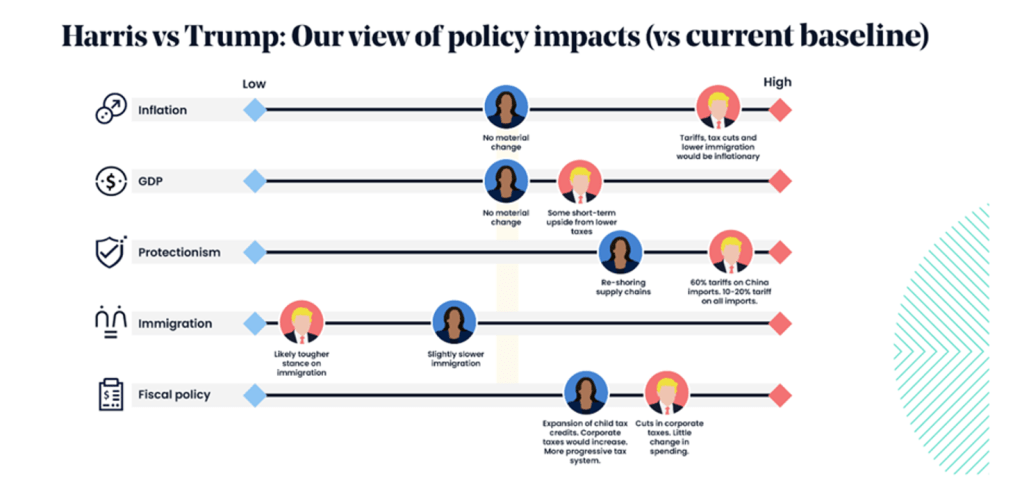
Historically, when the Fed cuts rates, emerging market (EM) stocks tend to do well, especially if there’s no recession. However, the U.S. elections could sway the outlook for EM assets. Any protectionist policies could hit them hard. So, given the current uncertainties, it might be wise to hold off on heavy EM investment until the economic picture becomes clearer.

Data shows that after the first rate cut, EM stocks often outdo developed markets, especially if a recession is avoided. While initial performance might not show big differences, a clearer picture usually emerges about a quarter later as investors assess the economic landscape.

While EM stocks might not be a priority right now, EM bonds could offer good returns in this period, presenting potential investment opportunities amid U.S. growth concerns. Things might become clearer once election risks reduce and signs of economic stability appear.

The Fed & its Rate Cut

The Federal Reserve cut interest rates by half a percentage point, the first reduction since early in the Covid pandemic, to prevent a slowdown in the labor market. Rates now range from 4.75% to 5%, impacting short-term borrowing costs for banks and consumer products like mortgages and loans. The committee plans further cuts, aiming for another full percentage point by the end of 2025 and a half point in 2026, despite a dissenting vote from Governor Michelle Bowman.

The cut seeks to restore price stability without increasing unemployment, which remains low at 4.2%. Although job gains have slowed and the unemployment rate is expected to rise to 4.4%, inflation outlook has improved to 2.3%. The decision caused market volatility, with the Dow Jones fluctuating significantly.

Concerns persist about the labor market, as hiring rates have dropped, suggesting potential future rate cuts may vary among committee members. The Fed’s last rate reduction was in March 2020, followed by three increases due to inflation. While other central banks are cutting rates, the Fed continues to reduce its bond holdings, lowering its balance sheet to $7.2 trillion, down $1.7 trillion from its peak.

Investor Takeaway

Overall, the current environment looks good for stocks, though the U.S. presidential election could cause some market nerves. For gold, while the environment usually doesn’t favor price increases, it still holds an important place as a diversifier in uncertain times. As central banks tweak their strategies, investors should feel comfortable with the current rate cuts, while remembering that every cycle is unique, especially in our current politically charged world.

Setting Up a Comprehensive Investment Portfolio as an Expat in Singapore

Let’s tackle a topic that’s increasingly relevant for many individuals living and working abroad: setting up a comprehensive investment portfolio as an expat in Singapore. Whether you’re fresh off the plane or have been in the Lion City for a while, understanding how to build an effective investment strategy is crucial for your financial well-being. Let’s explore the key aspects to consider when constructing your investment portfolio in Singapore.

Understanding Your Financial Goals

The first step in setting up your investment portfolio is to clearly define your financial goals. Are you looking to grow your wealth for retirement, save for your children’s education, or build a security cushion for unexpected expenses? Your goals will significantly influence your investment choices, so take the time to formulate a plan that aligns with your objectives. I’ve written a little bit about it here:

Assessing Your Risk Tolerance

Once your financial goals are established, the next step is to assess your risk tolerance. This refers to how much risk you’re willing to accept in pursuit of those goals. In general, higher potential returns often come with higher risk. As an expat, consider factors such as your investment horizon, financial situation, and emotional comfort with market fluctuations. Establishing a clear understanding of your risk tolerance will guide your asset allocation strategy. It may be very tempting to go for something incredibly high risk when you see the high returns, but do beware. Think to yourself, “Would I be comfortable to lose all of this money if things were to go wrong?” If the answer is no…opt for a lower risk portfolio.

Understanding the Singapore Market

Singapore is one of the most dynamic financial centers in Asia. The country boasts a stable economy, a robust regulatory environment, and a diverse range of investment options. Familiarising yourself with local markets—such as the Singapore Exchange (SGX)—and understanding industries that drive growth, like finance, technology, and healthcare, is crucial when making informed investment decisions. Check out my latest article here:

Building Your Investment Portfolio

When constructing your investment portfolio, diversification is paramount. A well-diversified portfolio can help manage risk and reduce the volatility of your overall returns. If you are a bit more cautious with your investments, try incorporating bonds or fixed income in your portfolio. If you’re unsure as to what some of these terms mean, you can check out this article here:

I always think it’s best to think about your goals and risk tolerance first, before investing. If you are unsure, it’s best to seek the advice of a professional – they can also give you a bit more information in terms of tax, and how to successfully structure your investments.

Financial Literacy for Expats: Understanding Singapore’s Economic Landscape

Moving to Singapore, or anywhere for that matter, is an exciting move! But, it does require a bit of getting used to. One of which is how to navigate your finances in a new country.

Singapore is one of the world’s leading financial hubs, known for its stable economy, business-friendly environment, and strategic location in Southeast Asia. As expats, it’s essential to familiarise ourselves with the following aspects of the economy:

1. Currency and Cost of Living:

   Singapore’s official currency is the Singapore Dollar (SGD). The cost of living can be high, especially in terms of housing, dining, and transportation. As you plan your budget, remember to research typical prices for groceries, utilities, and other everyday expenses. Check out my recent article on Singapore’s cost of living here:

2. Income Tax System:

   Singapore has a progressive income tax system, which means that the tax rate increases as your income rises. Fortunately, the tax rates are relatively low compared to many other countries, with no capital gains tax and no inheritance tax. Understanding your tax obligations, including filing dates and deductibles, is crucial to staying compliant and minimising liabilities. Find out more about tax here in Singapore with these articles:

3. Financial Products and Services:

   Singapore boasts a sophisticated financial services sector. Expats have access to a wide range of banking and investment options. From local banks to international institutions, the choices are plentiful. Familiarise yourself with saving accounts, fixed deposits, and various investment vehicles like mutual funds, stocks, and bonds. It’s always advisable to consult a financial advisor, particularly one who understands the regulations that apply to expats. I wrote an article on this exact topics here:

4. Retirement and CPF:

   The Central Provident Fund (CPF) is a government-mandated savings plan for Singaporeans and Permanent Residents, helping them save for retirement, healthcare, and housing. As an expat, you probably won’t be eligible for CPF contributions, but understanding this system can provide insight into Singapore’s approach to financial security. You can however (and do read that article above) opt into the SRS (Supplementary Retirement Scheme). This works similar to CPF but is also open to foreigners, and offers various tax benefits.

5. Insurance:

   Health insurance is another critical aspect of financial literacy. Singapore has a high standard of healthcare, but medical care can be expensive without insurance. Depending on your employment package, you may have health insurance coverage included. Otherwise, be proactive in researching local insurance providers to ensure you have adequate health and life insurance. I always say that having medical insurance through work is good, but you should always have your own as a back-up. You can read more here:

Practical Tips for Expats

Open a Local Bank Account: This simplifies your financial transactions and may offer better exchange rates than foreign accounts.

Create a Budget: Track your spending to get a clear picture of your financial situation in this new country.

Educate Yourself: Attend workshops or read financial literacy materials available for expats in Singapore. The more informed you are, the better financial decisions you can make.

Network: Join expat groups or forums. Fellow expatriates can share valuable knowledge and experiences regarding managing finances in Singapore.

Understanding Singapore’s economic landscape is vital for expats aiming to thrive financially. By familiarising yourself with the local currency, tax system, financial products, and insurance options, you’ll set yourself up for success. As always, seek professional advice when needed, and continue educating yourself on financial matters.

What Is Currency Risk & How Can We Avoid It?

For many expats here in Singapore, we are earning in SGD, but we may have cash or assets in various other currencies. This can often pose certain additional risks when it comes to investing, mainly, currency risk. Currency risk, also known as exchange rate risk, is the risk that the value of your investment will fluctuate due to changes in the exchange rate between, for example, the euro (EUR) and the Singapore dollar (SGD). Here’s how this risk can affect your investment, and what you should take note of before you decide to invest in a certain currency: (FYI I’m going to be using euros as the main example currency here)

  1. Fluctuating Exchange Rates: If you invest in assets denominated in euros, the value of those assets will be influenced by the exchange rate between the euro and your home currency (SGD). If the euro strengthens against the SGD, the value of your investment in SGD terms will increase. Conversely, if the euro weakens against the SGD, the value of your investment in SGD terms will decrease.
  • For example, if you invest €1,000 and the exchange rate is 1 EUR = 1.5 SGD at the time of purchase, your investment is worth 1,500 SGD. If the exchange rate later changes to 1 EUR = 1.3 SGD, your investment would then be worth only 1,300 SGD.

2. Impact on Returns: Currency fluctuations can significantly impact your returns. Even if your euro-denominated investments perform well in their local market, adverse currency movements can erase or diminish your gains when converted back to SGD.

3. Hedging Options: To manage currency risk, investors can use various hedging strategies. These may include forward contracts, options, or other financial instruments that can help offset potential losses due to currency movements. However, hedging comes with its own costs and considerations. I don’t often suggest this to my clients as hedging is a higher-risk strategy. However, for an avid & experienced investor, this is a good option.

4. Diversification: Diversifying your investments across various currencies can help mitigate currency risk. By holding a mix of assets denominated in different currencies, you may reduce the potential negative impact of fluctuations in any single currency. Diversification, as you will know if you’ve read a lot of my articles, is a key part of investing, and whilst it’s not smart to invest in every single currency, having a mix of currencies such as the one you earn in, the one where you have assets etc. is a good way for lessening exchange rate risk.

5. Long-Term vs. Short-Term: If you are investing for the long term, short-term currency fluctuations might be less of a concern since over time, currencies tend to fluctuate in cycles. However, if you’re looking at a shorter investment horizon, currency risk may significantly affect your returns.

6. Global Economic Factors: Currency values are influenced by a variety of factors, including interest rates, inflation, political stability, and overall economic performance in both regions. Staying informed about these factors can help you anticipate potential currency movements.

These are key points to remember if you are faced with currency risk; investing in euros while earning in SGD exposes you to exchange rate risk, which can affect the value of your investments when converted back to your home currency. It’s essential to consider this risk in your investment strategy and explore ways to manage or mitigate it based on your investment goals and risk tolerance.

Spice Taxation: Our Thoughts on the Spring Budget – 6th March 2024

For those that may be following my blog and my podcast, you’ll know that I’ve been working a fair bit with Martin Rimmer, Managing Director at Spice Taxation; a Singapore-based UK tax company.

Martin has kindly shared with me his write-ups on various UK tax topics, such as this one. You can see his write-up below. You can read more at spicetaxation.com, or follow up with Martin at martin@spicetaxation.com.

Please note that I am not a tax expert, Martin is; therefore these opinions are his, I am merely sharing.

The Most Important Budget for Expatriates since 2010


Over the years I have discovered that I am just not very good at predicting Budgets. Speculation is always rife about what a Chancellor might do in face of this and that economic and political situation, but mostly the actual announcements just tend to underwhelm and disappoint. Maybe I just crave excitement!


However, all that changed with Jeremy Hunt’s Budget on 6th March. It is likely to be the last Conservative Party Budget before the next General Election – an election which the Labour Party is widely expected to win. So, it remains to be seen how many of the announcements will find their way onto the Statute books if Labour does win. That aside, it really was an exciting Budget which promises a lot of change, much of it positive.


For much of the speech, it felt like a ‘normal budget’ with a plethora of announcements about regional incentives, funding initiatives, levelling up grants, subsidies and tax breaks for the arts etc. However, there was also a number of genuinely eye-catching and important announcements which are also relevant to expatriates.


First of all, Jeremy Hunt announced a further reduction in National Insurance paid by employees and the self-employed of 2%, from 6th April 2024. For employees, this will reduce from 10% to 8% and for the Self-Employed from 8% to 6%. For those returning to the UK, this will be welcome news.


Secondly, he announced the intention to introduce a new Individual Savings Account – the UK ISA, with an annual subscription allowance of GBP 5,000, in addition to the existing threshold of GBP 20,000. This new ISA would hold British-only assets – equities listed on the four recognised UK stock exchanges, UK corporate bonds and gilts and collectives. This will be good for UK resident savers.


Third, there were a few property tax announcements which came as a surprise:

o The marginal rate of Capital Gains Tax on the sale of residential property will reduce from 28% to 24% from 6th April 2024. This is intended to help stimulate the property market. The basic rate will remain at 18%. This is good for anyone selling, gifting or assigning an interest in UK residential property from that date.


o Multiple Dwellings Relief for Stamp Duty Land Tax is being abolished from 1st June 2024 – this was a relief that allowed you to take the average purchase price for SDLT purposes where at least two properties were being purchased in a single transaction.

o Furnished Holiday Letting status is to be abolished from 6th April 2025, with some anti-forestalling provisions which came into effect on 6th March 2024.


o The geographical scope of Agricultural Property Relief and Woodlands Relief (two Inheritance Tax incentives) will be limited to assets situated in the UK only from 6th April 2024 – those situated in the Crown Dependencies and the EEA will lose their IHT protected status.


Fourth, the VAT registration threshold will rise to GBP 90,000 from 6th April 2024, an increase of GBP 5,000, which will be welcome news for small businesses.
However, perhaps the biggest and most barnstorming announcement was the abolition of ‘non-dom’ status from 6th April 2025. The Conservative Party has been a staunch defender of the ‘non-domiciled regime’ over many years, so it was something of a surprise to see them adopt an avowed Labour Party policy. Stealing their thunder no doubt. It is a very major announcement that will impact many people.

In a nutshell, the Government plans to delink a person’s ‘domicile status’ from their UK tax outcomes, and move to a residence-based set of incentives. Consultation documents are yet to be published, but the main features of the new system will be to:

Abolish the ‘remittance basis of taxation’ for UK resident ‘non-doms’.

Replace it with an opt-in system that will allow, seemingly anyone – including, presumably, British nationals – to exempt their non-UK incomes and gains from UK tax for the first four years of UK residence, provided that they have been continuously non-resident for at least the 10 previous years.

Exempt from tax the remittance of these non-UK income and gains to the UK, which will be hugely simplifying in the long run.

Retain Overseas Workday Relief for qualifying individuals for the first 3 tax years of residence

Apply world-wide taxation for all individuals from the 5th year of residence in the UK

Introduce a thoughtful set of transitional reliefs for certain ‘non-doms’ who are already resident in the UK

Switch away from a ‘domicile based’ system of Inheritance Tax to a residence-based system, whereby qualifying individuals switch to IHT on world-wide assets only after 10 years of residence

Keep anyone who leaves the UK within IHT for 10 further years, which presumably also will apply to British Expatriates too. UK assets remain within Inheritance Tax at all times, regardless of residence.

We are missing a lot of technical detail here which should be answered by the Consultation Documents that the Government will be publishing shortly. So watch this space! However, whilst I have many more questions than answers at the moment, at first sight the main impacts appear to be the following.


a) Tax planning for relocation to the UK is likely to change quite a bit and these proposals could amount to a generous tax break for returning British expatriates.


b) They will also make Inheritance Tax planning potentially a lot simpler and not so reliant on subjective judgments about where a person is domiciled.


c) It might possibly result in an exemption from Inheritance Tax for a swathe of non-resident British expatriates who have already been non-resident for at least 10 years, which would be quite a result!


I am going out on a limb a little by saying that it appears the proposals will also apply to those we currently regard as ‘domiciled’ in the UK. However, surely that is the point – it is switch away from a tax system where a person’s domicile was the deciding factor, to a tax system where the deciding factor is driven by residence. This potentially bodes extremely well for British expatriates.
If this Budget does turn out to be the Conservative Party’s fiscal swansong, it is perhaps fitting that its period of Government will be bookended by a commitment to enshrine in law a statutory test for residence in 2010 at the start, and a set of announcements that displace domicile with a new regime based on that very residence test at the end. Mastering the Statutory Residence Test is clearly going to be more and more important.
Beyond this, all tax rates, thresholds and allowances for Personal Tax remain frozen, as do the rates for Corporation Tax. The dividend allowance will fall to GBP 500 from 6th April 2024 and the Capital Gains Tax Annual Exemption will fall to GBP 3,000 from the same date. Class 2 and Class 3 voluntary National Insurance Contribution rates will remain unchanged at GBP 3.45 per week and GBP 17.45 per week respectively, and the New State Pension will rise to GBP 221.20 per week (of GBP 11,502.40 per year) from 6th April 2024.

If you would like to discuss your own circumstances in confidence or would like to be on the subscriber list for our new dedicated coverage of these breaking developments, please contact me at martin@spicetaxation.com or by sending a Whatsapp to +65 96650019.

Registered Office : #05-06C The Arcade, 11 Collyer Quay, Singapore 048617
Trading Address: #04-435 Eastcrown @ Canberra, 130a Canberra Cres, Singapore 751130