You Could Be Paying 4 Times Too Much For Insurance!

Hospital plans are an absolute must in Singapore; with the average hospital bill being approximately $40,000, you must ensure that you are covered. Many expats want an international plan, as it often seems like there are more benefits. But, did you know that most international plans are around 4 times the price of local ones?

For the past two years (I can’t believe it’s been that long), we have been unable to leave Singapore due to Covid-19. This means that less people are able to travel freely to their home countries or on holiday, so why pay for an international insurance policy during this period?

The pros of an international policy are that you are covered worldwide at the same amount of coverage as you would in Singapore. However, this often means that the coverage you are offered is slightly lesser than local plans. Local hospital plans are often able to provide customers with maximum coverage, because there is not that extra risk of claiming abroad. Not only that, claiming through a local company is often a lot easier than with an international one, as you can directly contact your agent who is in the same time zone as you, instead of calling a hotline based abroad.

But what if I am hospitalised abroad and a have a local health insurance? Not to worry- did you know that most local plans cover hospitalisation abroad if it is due to an accident or emergency? But, if you are planning to be hospitalised abroad, I would suggest using a top-up insurance from that country, or a travel insurance.

Not only that, if boarders open it’s very easy to switch from a local plan to an international one. So, what is the point of paying for an international plan when you’re not going abroad?!

I did a comparison for myself on different insurance policies. I am currently 27, non-smoker, and I am paying $1,192 per year for a hospital plan that covers private hospitals. I am covered for $2,000,000 per policy year, and I can go to panel and non-panel doctors so long as I pre-authorise (something which very few companies offer). This is with a local company. When I check international plans, some are offering worldwide coverage of $1,000,000 for double the price. Some are offering $2,5000,000 coverage for over four times the price, of over $5,015 a year. This to me, seems like a no brainer to go for a local plan during this period than an international one.

As an expat, I feel that the term ‘international insurance’ is very alluring and may seem like the best option. But, if you delve a little deeper, read in between the lines and compare costing, it is quite often an unnecessary expense. Comment or contact me if you want to know how I planned my health insurance!

Investment vs Insurance- Which is More Important?

Whether we like it or not, when we become adults, we have to start thinking about our personal finances and planning our future. For those who have not been taught about finances (I know pretty much none of us learnt this in school), planning finances could be a daunting task. The words ‘investment’ and ‘insurance’ often fill people with dread; is it a scam? Why should I spend my money on that? Do I need it?

The long and short of it is, both are important and you need both. But is one more important than the other? Let’s look at both and see for ourselves.

There are lots of kinds of insurance products but they all cover one thing- loss. The whole point of insurance is that it covers us if something goes wrong. This may be a hospitalisation, a disability, an illness, or some other kind of liability that would set us back financially. It is meant for protection; protecting us from the adverse effects of not being able to work or financial hardships. Many people think that planning for these things, such as death or disability, is a morbid topic and a worst-case scenario. But good health is never guaranteed, and it’s always best to get these things sorted before it’s too late. Insurance products also become more expensive as you get older, so it’s best to start early, so that these payments don’t interfere with any of your future life stages like purchasing a house or sending your kids to school.

Investing is all about growing money for our future- we can either plan for a passive income stream, so that we don’t have to rely on work so much. Or, we can plan for capital gains, so that we have a nice chunk of money when we want it. The idea of making money with not necessarily putting too much effort in (check out my articles about passive investing), is an attractive one. And, if we make all this money, why do we even need insurance?

Unfortunately, the truth of the matter is, it is unwise to have one without the other; investment increases our upsides, but insurance protects our downside. If you invest without being insured, you run the risk of losing it all should you fall sick or become hospitalised (also, can I just say, it’s very naïve to think you will stay healthy forever), especially if your investments are not enough to pay for your bills. If you just insure yourself without investing, you are selling yourself short, only planning for the bad things that can happen, and not planning for the good times ahead. It also means that you may have to constantly work and never be able to retire. Neither insurance nor investments will work on their own; you need to plan and review both in order to be financially successful.

A very important thing to take note of is that investments take a long time to accumulate, especially if you cannot set aside a lot of money to invest. Insurance policies cover you pretty much as soon as you get them. So, it’s always important to sort your insurance out first; once you are protected you can focus on growing your money.

But do remember that investing and insurance is never fixed and one-size-fits all. You need to constantly review your finances in order to keep up with your changing needs!

Fun Places To Go As A 5!

The Phase 2 Heightened Restrictions have been eased! We’re now allowed to hang out in groups of 5 again. All this time working from home and staying in the house might have had you wondering…what fun stuff is there to do in a group these days? Look no further! Here’s a list of some awesome places to go in a group!

  • Adventure Cover Water Park

If you like water slides, fish and relaxing whilst floating, then this is the place for you. Adventure Cove is a water park that is a great day out for a group of friends or a family. There’s thrilling water slides, lazy rivers and you can even snorkel with fish! This water park is a perfect way to cool off on a hot day and you can book tickets online beforehand.

  • ArtScience Museum: Virtual Realms

From now until January, you can explore and immerse yourself with six installations at the ArtScience Museum. For art lovers and videogame enthusiasts alike, this exhibition has teamed up with some of the world’s leading video game developers to bring you this multi-sensory gallery. Submerge yourself into these different virtual realms that have been created. The exhibition is $16 for adults and $12 for children.

  • #InstaWalk

No good pictures to post online because you’ve been stuck outside? Want to meet new people? Then check out #InstaWalk; this guided tour has two options- Civic Colours or Bugis, Waterloo, KG Glam. Take this 2 hour walk and explore whichever are you choose out of the two options. The tour guides share tips on how to take great insta-worthy shots, whilst telling you about the history of the area. Not only that, if you sign up, you can get CapitaLand vouchers for free!

  • Gardens By The Bay

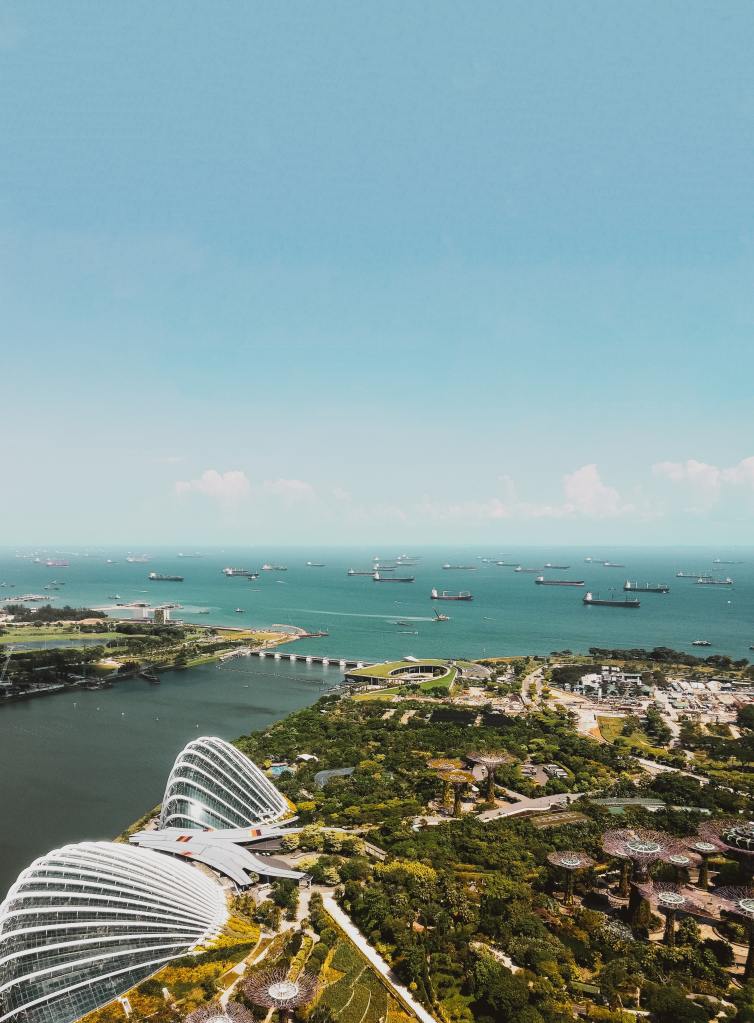
If you’ve got a group of 5 and it’s a lovely sunny day, consider a day out at Gardens By The Bay. Start off by grabbing some food at Satay By The Bay or Makansutra and then head over for the new exhibition Dale Chihuly: Glass in Bloom. This renowned artist’s glasswork is being shown until 1st August and has been shipped all the way from Seattle. Casually stroll around the gardens and see the beautiful glass structures and you can even chill and wind down with some drinks and a little picnic at Marina Barrage.

  • Durian Party!

It’s durian season! And I’ve left one of my favourite things (eating durian) until last. Many fruit stalls are now stocking up on this delicious spiky fruit, and if you want to try some, or have all your friends over to eat durian, now is the best time! The most popular (and most expensive) is Mao Shan Wang. It’s soft, creamy, sweet and yet a bit bitter. It’s definitely one of my favourite types, but it can be up to $25 per kg. Black Thorn (or Black Gold as I’ve also seen it advertised) is new to the market and similar (if not better) in taste to Mao Shan Wang. If you’re new to durian and want something sweet, not too bitter, and a cheaper option ($9-$17 per kg), try Red Prawn.

More things are set to open up as the month progresses, but here’s just a few things that can keep you and your friends busy until then!

Why do Expats Need Financial Planning in Singapore?

As an expat, and a financial consultant, I have seen both sides of the coin when it comes to financial planning. 30% of Singapore’s population is made up of expats; and, being the fourth most expensive city in the world, means that non-residents really need to understand and adapt to the way of living here.

  Here are some main differences between locals’ and expats’ expenses that you should take into consideration.

Housing

Houses takes up the main bulk of expenses moving to Singapore; rental is expensive, especially in the downtown area, where a lot of offices and expat’s place of work is. Singaporeans and PRs can buy a HDB at an affordable price using their CPF money, but if an expat wishes to buy a property, they are not allowed to buy a HDB, and executive condos and landed property can be in the millions. Clearly, for a foreigner, more often than not purchasing a property is not an option. So be cautious when you begin to start renting here- the rental and bills should never exceed 50% of your monthly income.

School Fees and Childcare

If you are in Singapore with your family, you need to understand the differences between local and international schooling. As local schools are funded by the government, the fees are a lot cheaper than international schools. Sending your child to international school can cost roughly $2,000-$4,000 per month. While there is some debate as to which schooling system is better (which I’m not going to go into), it is certainly more economical to send your child to local school. However, do take note that in order for an expat child to go to a local school, they have to pass exams, and places are competitive.

Healthcare

I often hear outrage from expats in regards to the cost of healthcare in Singapore. In 2018 Singapore was announced to have the second-best healthcare in the world, second to Hong Kong. All of this comes at a price, and Singapore is not a welfare state. While there are government subsides for locals, it is crucial that expats get a comprehensive healthcare insurance. The average hospital bill in Singapore is about $40,000, so to avoid paying out of pocket- get insurance! I know it may seem annoying but paying for healthcare is unavoidable in this country.

A Holistic Need For Planning

While most expats earn more here in Singapore than they would back in their home country, it is imperative that we plan correctly and not live paycheque to paycheque. This may often be difficult; Singapore has a plethora of amazing places to eat out, visit and experience, which can really burn a hole in our pockets. Simply saving a bit each month is not enough. Think long term, why did you move to Singapore? What do you plan on achieving? And where to plan on staying for the rest of your years?

Long-term planning may be daunting, but there is a reason why Singaporeans are some of the most well-off people in the world…they did the uncomfortable and planned their finances early!

Best Hawkers For Expats…Part Two!

It’s back! Another list of hawkers that expats might not know about, but should! I got a bit of backlash from my first post so, just to reiterate…this is not a list containing all the well-known expat locations like Newton or Lau Pa Sat; I am not writing about these because a) everyone already knows about them b) I sometimes think they’re a bit overpriced.

If you’ve tried my previous list and are looking for more suggestions then please read on!

Old Airport Road

Must Try: Curry Chicken Noodles

To be honest, I don’t know why this wasn’t in my first list. Old Airport Road is great; it has such a wide selection and it is huge- there’s something for everyone. The chicken rice there is great, the curry chicken noodles are delicious and there is an abundance of beer, what more could you ask for!

Chom Chom

Must Try: Stingray, Carrot Cake

This made the honourable mentions list last time but I went back recently and tried pretty much everything there! The food there is very reasonably priced and it is your one-stop-shop for all Singaporean food. The feast I had contained satay, chicken wings, black and white carrot cake, stingray, rice and kangkong. Can I just say that the portions are huge so be careful when ordering! I definitely over-ordered!

Seah Im Food Centre

Must Try: Boat Noodles

This hawker centre is a short walk away from Vivocity. It’s incredibly underrated and is great after a long day at Sentosa. During the day a lot more stalls are open than at night, but no matter what time of day you go I would highly recommend the Thai stall that sells beef boat noodle soup; it’s spicy, flavourful, comes with or without beef stomach (I personally like it with) and you get a good bowl for a cheap price! There are many stalls to choose from, so if you’re not particularly in the mood for Thai you can always grab something else.

Golden Mile Tower

Must Try: Leng Saap

Speaking of Thai food, next to the very famous Golden Mile Complex is Golden Mile Tower. In the basement there is lots of great food, notably leng saap, or pork spine soup. This soup is not for the faint of heart; imagine a vast bowl filled with spicy coriander soup, and protruding out the top, massive pork spines where the meat falls off the bone. You can choose your size and spiciness level, and the soup is usually refillable. The meat that comes off the pork spine is so juicy and tender, it’s making my mouth water just typing about it!

Eunos Crescent Market and Food Centre

Must Try: Yong Tau Foo, Indian Rojak

Right next to Eunos MRT Station, this hawker is packed full of choices. It may seem small, but each stall as something different. I also think that, because it’s not very well known by expats, it tends to be more reasonably priced. The satay here is great, and you can get hand pulled noodles at the ban mien stall. Behind the first set of hawkers is another, mostly specialising in Chinese and Hong Kong cuisine. Here I recommend relaxing with a beer and trying the Mala Xiang Guo. When I don’t know what to eat, my go-to is either the Indian rojak stall, or the Yong Tau Foo with laksa gravy.

So there you have it, another 5 great places to eat around Singapore. I hope this list has got your mouth watering enough to go and try all my latest top picks! Which hawker is your favourite?

How To Cope With Co-Payment

A few weeks ago, I wrote an article about the changes to medical insurance here in Singapore. If you haven’t read it yet, please go and have a read. As of April 2021, all insurance companies in Singapore will have to introduce a co-payment system; whereby the patient will have to fork out a portion of the hospital bill, which cannot be claimed or reimbursed.

So how do we tackle this problem? I will explore a couple of solutions here; long and short term.

Short-term Solution

To counteract the impact of losing some of your money to co-insurance and deductible on a medical bill, you can choose to include a hospital income plan to your insurance policy. This plan will pay you cash each day you are hospitalised and recovering at home, regardless of the cost of the hospital bill. This is a good way to fill the shortfall that you cannot claim, and it can be used for each time you are hospitalised. This is a quick and cheap option to save on that bit of cash.

Long-term Solution

Medical inflation increases year by year, and it is a problem that will not go away. Obviously, a hospital income plan can only go so far to counteract the rising cost of healthcare in Singapore. There are some ways in which you can prepare for a bit hospital bill in the long run.

Consider adding an extra plan to your insurance portfolio that is kept only for long term use and emergencies only. You can start by putting a small amount of your savings into a plan that will grow this cash for you at a better rate than the bank. Not only that, you can include insurance coverage in this plan. So, if the worst should happen and you are diagnosed with a critical illness or become disabled, you have a lump sum pay-out to supplement the cost of treatment, or help you with adjusting to your new lifestyle. No one likes thinking about these things happening, but it is best to prepare for the worst before you run into any problems. Hindsight is a wonderful thing, but it will not help when it comes to paying for a hospital bill.

I have posted a QR Code below to my WhatsApp should you have any questions or need help planning this out. If you would like me to review your current policy I would be more than happy to do that also.

Singlish For Expats!

Many expats move to Singapore thinking that life will be easy because everyone speaks English. Then you walk around the hawker centres and just think ??? What is everyone talking about?! Don’t fear, here is a mini Singlish dictionary for expats- impress your local friends and make them say, “Wah! This Angmoh speak Singlish leh?!”

Can lah-

Your most commonly used Singlish phrase. A phrase used to affirm a statement or question.

Example: “Are your free for lunch at 2pm?”

“Can lah!”

Shiok-

A term of general approval, showing that something is very pleasing.

Example:

“These chicken wings damn shiok!”

Makan-

Malay word meaning ‘to eat’.

Example:

“You want go makan or not?”

Lepak –

To rest or to chill.

Example:

You want to go Seletar Bridge to lepak?

Correct-

Another word of affirmation. Simply means ‘yes’. Top tip, drop the sound of the ‘t’ at the end.

Example:

“You don’t have NS in UK is it?”

“Correc”

Confirm one-

Even more affirmation than ‘correct’. Adding ‘one’ on the end of your sentence adds emphasis one.

Example:

“You speak Singlish meh?”

“Confirm one.”

Kena-

A word with negative connotations that means ‘to be affected by’.

Example:

“How was that restaurant?”

“Not shiok. I kena food poisoning.”

Kaisu-

A Hokkien word denoting a fear of missing out, pushy and somewhat selfish attitude. Often used to describe Tiger Moms.

Example:

“She puts her kids in so many enrichments. She’s so Kaisu.”

Kaypoh-

Another Hokkien word, this one often describing someone who is nosey, not minding their own business.

Example:

“Stop looking across at that table, you’re so kaypoh!”

Sien-

Bored, fed up, sick of it.

Example:

“Everyday I go office, come home. I’m so sien lor.”

Wah lao eh-

Singlish version of OMG! Usually used when something frustrating or annoying has happened.

Example:

“I spilt my kopi on my shirt, wah lao eh!”

Singlish may seem confusing and tricky at first, but the more you hear it the more you get used to it. Try some of these on your local friends!

Outdoor Singapore

Singapore’s weather has been incredibly hot and sunny lately, and if you would prefer to spend your days off being outdoors soaking up the sun, rather than indoor activities, then have I got a list for you! Read on for my top picks for things to do outdoors in Singapore!

  1. St John’s and Lazarus Islands

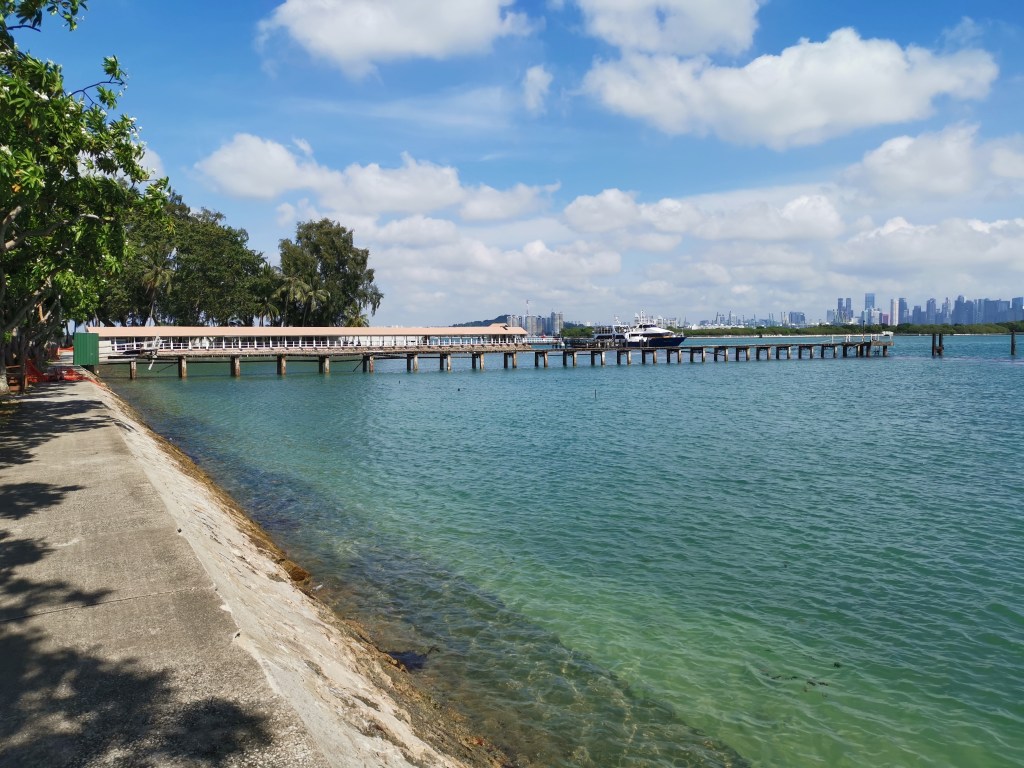
Don’t you miss being on holiday? Sandy beaches, relaxing by the ocean and sipping beer? Me too! Whilst we can’t travel overseas, the closest thing I can think of is heading over to St. John’s and Lazarus islands. You can take a ferry from Marina South Pier over to these islands, along with Kusu Island. To be honest, I wouldn’t really recommend Kusu island as last time I went half of it was closed and there was just a small temple to visit. But the beaches at St. John’s and Lazarus islands are way better than the ones on Sentosa. Think white sand and warm clear seas. One thing to note is that there are few to no facilities, especially on Lazarus island. So, it’s best to bring everything with you, especially extra water, as it gets so hot!

2. Kayaking

There are many options for kayaking in Singapore, and it really just depends on your preference. If you want a fun couple of hours on a kayak you can do it at East Coast Park. If you want a longer adventure you can kayak to Pulau Ubin and explore all its mangroves and waterways! And if you want something totally different and unusual, you can try a kayaking fishing trip (don’t worry, fish are released after you catch them).

3. Pulau Ubin

Speaking of Pulau Ubin, if you love cycling then this is the perfect day out. Catch a boat from Changi Jetty over to the island and enjoy the rugged landscape by foot or by bicycle. You can rent bikes over there, even tandem ones, and ride around the whole island. If you’re lucky, you may catch a glimpse of some wild boars! And, when the long day is over, you can chill at the Little Island Brewery at Changi and relax with some cold beers.

4. Sungei Buloh Wetland Reserve

If you love wildlife and want to spend your day exploring mangrove wetlands, this Heritage Park is the place for you. Not only is this area abundant with migratory birds, but you can also catch a glimpse of otters, lizards and even crocodiles here! If you want a change of scenery from the hustle and bustle of the city, then head up to Kranji and enjoy this ecological gem.

5. Nature Walks

There is a plethora of nature walks in Singapore, and in my opinion, they are all worth doing. Head to MacRitchie to do the famous tree top walk (watch out for monkeys!), Bukit Timah Nature Reserve (maybe my favourite nature walk), Bukit Batok Nature Park, Labrador Nature Reserve…the list goes on! Considering Singapore is such a small country with so many people and so many high-rise buildings, it is amazing how many parks and outdoor trails there are! Which one is your favourite and why?

Singapore really does have a lot of outdoor activities to offer, so get out there and explore!

Best Hawkers For Expats!

  When the conversation of coffee shops come up around expats come up, Newton is ALWAYS mentioned. It’s the one in Crazy Rich Asians, it’s the one where people try sting ray for the first time, but it’s pretty touristy and they jack the prices up. So, I’ve come up with a list of my favourite hawkers across Singapore, and what my favourite food is from those places.

Maxwell

Best Things To Eat: Chicken Rice, Shanghai Dumplings

  This is my favourite hawker in the whole of Singapore; the food is so delicious and very reasonably priced. My top picks for food would be the chicken rice; there’s a lot of famous chicken rice stalls at Maxwell and they’re all so tasty. But my absolute top pick for food here is the Shanghai dumplings; they’re incredibly juicy and soft. And, the beer is cheap!

Bedok Food Centre

Best Things To Eat: Mala Xiang Guo

  I don’t know why people don’t talk more about this hawker- it’s MASSIVE and there are so many amazing and delicious things to try here. It gets very busy on the weekends to make sure to bring some tissues to chope your table! The mala xiang guo is very fresh and yummy and incredibly reasonably priced; I often find mala to be quite expensive if you’re eating for 1, but this only costs $5!

East Coast Park

Best Things To Eat: Satay

 Of course I was going to put this on the list- there are so many fantastic foods to try. I love the stingray, the carrot cake, the fried rice but especially the satay. People say that Lau Pa Sat has the best satay but I disagree- East Coast Park takes the gold. What’s more, the beer is the best here- so cheap!

Yishun Park Hawker Centre

Best Things To Eat: Mee Jiang Kuah

 This is my favourite hawker in the north. It’s near where I used to live so during circuit breaker I would go there once a week just to treat myself and get myself out the house. I would highly recommend the mee jiang kuah; these fluffy pancakes come in many different flavours. I like the charcoal and peanut butter ones.

Satay By The Bay

Best Things To Eat: BBQ Sting Ray and Kang Kong

Even though the satay here is very popular I would also recommend their tze char, especially their stingray and kang kong. This hawker is a great place to go after a cycle around the Marina Bay area. It feels so rewarding chomping down on delicious food after a long day exercising!

Honourable Mentions: Nasi Lemak at Boon Lay Food Centre; Curry Fish Head at Zion; Hokkien Mee at Chom Chom

What are some of your favourite local Singapore delights?