Protecting Your Wealth as an Expat: Tax, Trusts, and Term Insurance in Singapore

Singapore has a huge Aussie & Brit expat population, many of whom are living and working here for now, but will most likely move back home when they retire. While the allure of a new life abroad is enticing, it brings with it a myriad of challenges, particularly regarding wealth management, taxation, and succession planning. This article delves into the essential aspects of protecting your wealth as an expat in Singapore, with a focus on tax implications, trust structures, and the role of term insurance.

Understanding the Tax Landscape for Expats in Singapore

Tax Residency

First and foremost, it’s crucial to understand your tax residency status in Singapore. According to the Inland Revenue Authority of Singapore (IRAS), you are considered a tax resident if you stay or work in Singapore for at least 183 days in a calendar year. Tax residents benefit from progressive tax rates, which range from 0% to 22%, depending on income levels.

For expats, the tax implications can change significantly when returning to the UK or Australia. Both countries operate under a residence-based taxation system, meaning that if you are considered a tax resident upon your return, you may be subject to tax on your worldwide income.

Double Tax Agreements (DTAs)

Fortunately, Singapore has signed Double Tax Agreements with both the UK and Australia. These treaties help to prevent double taxation on income earned in Singapore and provide relief for expats planning to return home. Understanding how these agreements work is essential to ensure you don’t pay more tax than necessary.

Tax Implications When Returning Home

UK Tax Considerations

When British expats return to the UK, they may become liable for UK tax on their global income. The UK operates a system of residence and domicile, where your domicile status can significantly impact inheritance tax (IHT) liabilities. If you were non-domiciled while living abroad, you could have enjoyed certain tax benefits. However, upon returning to the UK, this status may change, and you could be liable for IHT on your worldwide assets. There have been significant changes in the latest UK Autumn Budget announcement, so be sure to read on the write up on my website to see how that may affect you.

Australian Tax Considerations

Similarly, Australian tax law assesses residents on their global income. If you have been an Australian citizen or permanent resident and return home, your foreign income, including any investments or properties held in Singapore, may also be subject to Australian tax. Moreover, capital gains tax (CGT) may apply to assets sold after your return.

Inheritance Tax Planning

As expats, planning for inheritance tax is crucial, especially for those with assets in multiple jurisdictions. Both the UK and Australia have different approaches to inheritance tax that can significantly impact your estate.

UK Inheritance Tax

In the UK, IHT is charged at a rate of 40% on estates valued over £325,000 (as of the 2023/24 tax year). If you are a non-UK domiciled individual, you are only liable for IHT on UK assets. However, if you return to the UK and are deemed domiciled, your worldwide estate may be subject to IHT. Of course, this too is set to change with the latest budget announcement.

Australian Inheritance Tax

Australia, on the other hand, does not impose inheritance tax. However, it does have CGT implications on the transfer of assets, which can affect how much your heirs receive. Understanding these differences is essential for effective estate planning.

Utilising Trusts for Wealth Protection

UK-Based Trusts

Creating a trust is an effective way to manage your wealth and mitigate potential tax liabilities. Trusts can help protect your assets from inheritance tax and ensure they are distributed according to your wishes. UK-based trusts can be established even while residing in Singapore, allowing you to retain control over your assets.

Types of Trusts to Consider:

  1. Discretionary Trusts: These trusts give trustees discretion over how to distribute income and capital, providing flexibility in managing tax liabilities.
  2. Interest in Possession Trusts: Beneficiaries have the right to receive income from the trust, providing more control over distributions.

Setting Up Trusts in Singapore

To establish a trust while living in Singapore, you will need to engage with a qualified solicitor or trust company familiar with both UK and Singaporean laws. The process typically involves drafting a trust deed, appointing trustees, and transferring assets into the trust. I often help set up certain kinds of trusts for my client, to prepare and plan for inheritance tax.

The Role of Term Insurance in Wealth Protection

Importance of Term Insurance

Term insurance is a straightforward and cost-effective way to provide financial security for your dependents in the event of your untimely death. For expats, having a term insurance policy can ensure that your family is protected financially, regardless of where you are living. Sometimes, these policies can also be put into trust to mitigate inheritance tax.

Choosing the Right Policy

When selecting a term insurance policy, consider:

  • Coverage Amount: Ensure it is sufficient to cover your family’s needs, including living expenses, education, and debt repayment.
  • Policy Duration: Choose a term that aligns with your family’s needs and financial situation.
  • International Coverage: Ensure the policy covers you in Singapore and your home country, should you return.

As an expat in Singapore, particularly for British and Australian nationals, protecting your wealth is a multifaceted endeavor. Understanding the tax implications of your residency status, planning for inheritance tax, utilising trusts for asset protection, and securing term insurance are all critical components of a comprehensive wealth management strategy. By taking proactive steps, you can safeguard your financial future and ensure that your wealth is preserved for generations to come.

Engaging with financial advisors who understand the complexities of cross-border taxation and estate planning is highly recommended to tailor an approach that fits your unique circumstances.


Understanding the Current Investment Market Conditions at the End of 2024: What Expats in Singapore Need to Know

As we approach the end of 2024, the global investment landscape has undergone significant changes influenced by a myriad of factors including economic recovery post-pandemic, geopolitical tensions, and advancements in technology. For expatriates, understanding these market conditions is crucial for making informed investment decisions. This article delves into the prevailing market trends, key considerations for expats, and strategic insights to navigate the investment landscape effectively.

Overview of Market Conditions

Global stock markets registered strong gains in Q1 amid a resilient US economy and ongoing enthusiasm around AI. Expectations of interest rate cuts also boosted shares although the pace of cuts is likely to be slower than that market had hoped for at the turn of the year. Bonds saw negative returns in the quarter.

Strength in some Asian markets helped emerging market equities outperform developed markets in Q2. Stocks related to the AI theme continued to perform strongly. The European Central Bank cut interest rates, but sticky inflation kept other major central banks on hold.

In Q3, global equities gained despite pronounced volatility on several occasions. Emerging markets performed strongly, supported by the announcement of new stimulus measures in China. Interest rate cuts in the quarter, and the prospect of more to come, helped fixed income markets to deliver solid returns.

A Republican/Trump win will bring about a sea of changes, but this would not be immediate and not everything hoped for by the winning party would eventually be put into motion. Furthermore, history has shown that the outcome of elections does not affect the long-term trajectory of markets, therefore it remains paramount to have a broad and diversified portfolio and not lean excessively into any “Trump themes” that may or may not happen in the future.

History has shown it is unwise to make significant adjustments based on political events. Market volatility is often based on speculation and not any change to fundamentals.

At times of heightened uncertainty, it is important to remain faithful to our investment principles and process.

  • In Q1’24, markets rose as corporate earnings came in better than expected while AI optimism continued. A less hawkish than expected stance from central banks also boosted sentiment and the Fed affirmed rate cuts in 2024.
  • Q2’24 started off with a pullback on uncertainly over the rates outlook and stronger than expected economic data, but later rallied through the rest of Q2’24 as the disinflation trend came back on track and as the ECB started its rate cut cycle.
  • Markets gained in Jul’24 as optimism from the continued disinflationary trend in the U.S. reinforcing expectations of further rate cuts in H2’24.
  • Aug’24 started with a significant pullback as weaker than expected U.S. jobs and manufacturing data raised fears of a recession, while the unwinding of the carry trade exacerbatedvolatility. Losses were pared as recent economic data pointed to economic moderation rather than weakness, while the Fed confirmed a rate cut in Sep’24.
  • Sep’24, historically one of the weakest months in the calendar year, initially saw a pullback as worries over an economic slowdown appeared to weigh on sentiment. Markets later rebounded as investors looked forward to the first Fed rate cut, where the Fed cut rates by 50 bps and projected two more 25 bps cut in Nov’24 & Dec’24.
  • Reflecting on Trump’s previous presidency, high yield bonds & stocks outperformed due to favourable policies, which were pro-business and pro-markets.
Economic Recovery and Growth

The global economy has shown signs of recovery, with the International Monetary Fund (IMF) projecting a growth rate of around 3.5% for 2024. This recovery has been uneven across regions, with advanced economies experiencing slower growth compared to emerging markets. Countries in Asia, particularly India and Southeast Asia, have emerged as hotspots for investment due to their young demographics and increasing consumer spending.

Inflation and Interest Rates

Inflation remains a pressing concern, particularly in developed nations like the United States and the European Union. Central banks have responded by adjusting interest rates, with the Federal Reserve maintaining a cautious stance to balance growth and inflation. As of late 2024, interest rates are expected to stabilize, providing a more predictable environment for fixed-income investments.

Key Market Trends

Understanding the underlying trends is essential for expats looking to invest. Here are several key trends shaping the investment landscape:

Key Market Opportunities 2024/2025

  • We believe 2025 could be a year of relative clarity in global equity markets. The resolution of the US election and other key global elections has removed some critical policy question marks that had hampered investment, and pandemic-era shifts in supply chains have now solidified into a new post-Covid normal.
  • We expect a return to fundamentals in 2025, with the macro stories that dominated markets in 2024 giving way to a focus on companies’ individual strengths and weaknesses – this supports our ethos of global managers & active portfolio management.
  • In particular, the EM growth outlook is a relative bright spot in the global context, with disinflation, Chinese policy stimulus, and Fed rate cuts being supportive. Stock and currency market valuations remain undemanding.
  • Idiosyncratic trends within Emerging Markets imply scope of portfolio diversification too.
Fixed Income Outlook

During the third quarter, fixed income markets began to receive the policy rate cuts they had been craving for some time. Central banks had been reluctant to reduce rates too soon, as elements of inflation stickiness persisted across all major developed economies. This was particularly evident in the US and the UK, leading policymakers to maintain restrictive monetary policies. The European Central Bank was the first to cut rates, as Germany, the powerhouse of the European Union, continued to struggle with a range of economic headwinds. While some peripheral countries performed more strongly, this was overshadowed by ongoing concerns about the largest economy in Europe. The Bank of England followed with a modest 25-basis-point rate cut during the review period, despite pockets of inflationary pressure remaining in the UK economy. The Federal Reserve was the last major central bank to cut rates, announcing a 50-basis-point reduction at the end of September. This cut was larger than some commentators had expected and may have been designed to avoid any interference with the upcoming US Presidential election.
Yield differentials between sovereign bonds and their investment-grade and high-yield credit counterparts remained relatively compressed. Investors continued to be confident that the economic backdrop was sufficiently supportive of corporate borrowers, making any major shift in the default landscape unlikely in the short to medium term. Supply was generally well received, and, in a departure from historical norms, new issues were often priced at a tighter yield differential than the existing debt of the same issuer.

Considerations for Expat Investors

Expat investors face unique challenges and opportunities. Here are key considerations to keep in mind when investing in the current market:

Currency Fluctuations

Currency risk is a significant factor for expatriates investing abroad. Fluctuations in exchange rates can impact the value of investments and returns. It is advisable for expats to consider currency-hedged investment options or diversify their portfolios across multiple currencies to mitigate this risk.

Tax Implications

Understanding the tax implications of investing in a foreign country is crucial. Tax treaties between countries can significantly influence the tax burden on expatriates. Engaging with a tax advisor familiar with international tax laws can help expatriates optimise their investment strategies and ensure compliance.

Regulatory Environment

Investment regulations vary significantly across countries. Expat investors should familiarise themselves with the legal and regulatory landscape of their host country, including any restrictions on foreign ownership of assets. Consulting with local financial advisors can provide valuable insights into navigating these regulations.

Strategic Investment Approaches

To successfully navigate the current investment market conditions, expatriates should consider the following strategic approaches:

Diversification

Diversification remains a cornerstone of a sound investment strategy. Expats should aim to diversify their portfolios across various asset classes, including equities, fixed income, real estate, and alternative investments. This approach can help mitigate risks associated with market volatility.

Focus on Long-Term Goals

While short-term market fluctuations can be tempting, expats should remain focused on their long-term investment goals. A long-term perspective can help investors weather temporary downturns and capitalise on the growth potential of their investments over time.

Continuous Education and Adaptation

The investment landscape is constantly evolving. Expats should prioritise continuous education regarding market trends, economic indicators, and emerging investment opportunities. Staying informed can empower investors to make proactive adjustments to their portfolios.

As we conclude 2024, the investment market is filled with both opportunities and challenges. Expats must approach this landscape with a well-informed strategy, taking into account the current economic conditions, market trends, and unique considerations related to their expatriate status. By staying informed and adaptable, expatriate investors can position themselves to navigate the complexities of the investment world and achieve their financial objectives.

Cultural Differences and Financial Habits: What Expats Should Know

Living and working in a foreign country presents numerous opportunities and challenges, particularly when it comes to managing finances. For expats in Singapore, understanding the cultural nuances that influence financial planning and decision-making is essential to ensure successful integration and financial stability. Singapore, a melting pot of cultures, has a unique blend of Eastern and Western financial practices, and recognising these differences can significantly impact an expat’s financial journey. It can be very easy to get wrapped up into the expat lifestyle here in Singapore, but this means one may run the risk of earning paycheque to paycheque and not having much in terms of savings. In contrast, many locals here in Singapore are prudent savers.

One prominent cultural aspect that influences financial habits in Singapore is the collectivist mindset often seen in Asian cultures. In many Asian communities, including Singapore, financial decisions are frequently made with family or community considerations in mind. Expats may find that their local colleagues prioritise family obligations in their financial planning, such as supporting elderly parents or contributing to family businesses. This may be referred to as being part of the ‘sandwich generation’, in which family members are expected to financially support their parents, as well as their children. This contrasts with a more individualistic approach often observed in Western cultures, where personal financial autonomy is emphasised. Understanding this difference can help expats navigate discussions about financial matters and foster stronger relationships with their local counterparts. I am not here to make a judgement as to which is better, and in fact there can be arguments for and against both, but it is important to recognise and understand the differences.

Moreover, the concept of saving versus spending varies across cultures. In Singapore, there is a strong emphasis on savings and prudent financial management, often driven by the pressures of rising living costs and the cultural expectation to prepare for the future. Expats may encounter a more aggressive savings culture in Singapore, where people commonly invest in property, insurance, and retirement funds. Conversely, in some Western cultures, there may be a greater acceptance of consumer spending and taking on debt for lifestyle purposes. This may not always be the best way forward, as it may mean expats fall into the trap of living beyond their means and overspending now, at the detriment of their future. Recognising these differences can empower expats to align their financial habits with local practices, allowing for more seamless interactions and potential investment opportunities. Singapore is a financial hub, and there are many investments available to expats here, all with the added benefit of Singapore’s stringent regulatory systems. That, paired with a lack of Capital Gains Tax, means it is a perfect environment for foreigners to grow their wealth whilst here.

Lastly, financial literacy and investment strategies are influenced by cultural backgrounds, which can create disparities in knowledge and comfort levels with financial products. For instance, expats from countries with less emphasis on investment might find themselves at a disadvantage when navigating Singapore’s robust financial landscape. I personally found that many European cultures do not put as much of an emphasis on investment planning and the importance of insurance as much as Asian cultures do. Understanding local investment products, tax regulations, and retirement schemes is crucial for success.

If in doubt, expats should consider seeking advice from financial advisors that are regulated by local boards, like the Monetary Authority of Singapore, or engaging in community workshops to bridge any knowledge gaps. By embracing these cultural differences and adapting their financial habits accordingly, expats in Singapore can enhance their financial well-being and contribute positively to their new environment.

Investment Strategies for Expats: Risk Assessment and Portfolio Diversification

Today, we’re diving into a crucial topic for expatriates navigating the complex world of investments: how to tailor investment strategies based on risk assessment and portfolio diversification. Whether you’re living abroad for work, adventure, or retirement, understanding your financial goals and risk tolerance is key to building a successful investment portfolio. I have written many articles in the past that talk about risk tolerance & diversification, so let’s look at it in a bit more depth today.

Understanding Risk Tolerance:
This is essentially how much risk you’re willing to take with your investments. It can vary widely from person to person and is influenced by factors such as age, financial situation, investment experience, and personal comfort with market fluctuations. Generally, someone that has a longer investment horizon, can tolerate more risk than someone who is planning on withdrawing their funds in a couple of years.

For expats, risk tolerance can also be shaped by their unique circumstances. For example, if you’re living in a country with instability, such as job insecurity, you may prefer safer, more conservative investments. Conversely, if you have a stable income and are decades away from retirement, you might be open to more aggressive investment strategies.

To assess your risk tolerance, consider asking yourself these questions:

  • How would I feel if my investments lost value?
  • What are my financial goals for the short and long term?
  • How much time do I have to recover from potential losses?

Setting Financial Goals:
Once you have a clear understanding of your risk tolerance, the next step is to define your financial goals. Are you investing for retirement, purchasing a home, or funding your children’s education? Each goal comes with its own timeline and risk profile.

For example, if you’re saving for a child’s education in ten years, you might choose a balanced approach that combines growth-oriented equities with safer bonds. On the other hand, if you’re looking toward long-term retirement savings in 20 or 30 years, you could lean more heavily into stocks for potential growth. This is why it is key to understand what goals you have, and are simply not investing for the sake of it, as you can lose sight of your reason why, and panic during certain market conditions.

Portfolio Diversification:
Now that you understand your risk tolerance and financial goals, let’s discuss portfolio diversification. Diversification is the practice of spreading your investments across various asset classes—such as stocks, bonds, real estate, and commodities—to reduce risk. For expats, diversification can also mean considering international investments that reflect the global nature of their lives.

Here are a few strategies to consider:

  1. Asset Allocation: Determine the right mix of assets based on your risk tolerance. A conservative investor might have a portfolio that is 60% bonds and 40% stocks, whereas a more aggressive investor could flip that ratio.
  2. Geographic Diversification: As an expat, you might be exposed to multiple currencies and economies. Investing in different regions can help mitigate risks associated with a single market. For instance, consider investing in both your home country and the country where you’re currently residing.
  3. Sector Diversification: Within your stock investments, aim to include a mix of sectors—such as technology, healthcare, and consumer goods—to protect against sector-specific downturns.
  4. Consider Local Regulations: Depending on your host country, there may be specific investment vehicles available to you, such as tax-advantaged retirement accounts or local mutual funds. For example, in Singapore you have access to SRS & specific funds within that account, that will help with minimising tax. However, you will not be able to contribute to other schemes whilst overseas, such as UK ISAs or Pensions. Familiarise yourself with these options to optimise your portfolio.


In conclusion, investing as an expat can present unique challenges, but with a clear understanding of your risk tolerance and financial goals, you can develop a tailored investment strategy. By diversifying your portfolio across various asset classes, geographic regions, and sectors, you can mitigate risks and position yourself for long-term success.

Macro Outlook & US Market Opportunities

We are all waiting on baited breath for the results of the US Election. What will the result mean for us as investors? Let’s take a look at a Macro Outlook overview & some key points to take note.

Macro Outlook

Attractive Valuations

• Asian Emerging markets are currently offering more attractive valuations compared to U.S. and other developed markets.

• These attractive valuations present a cost-effective entry point for investors seeking growth opportunities.

Declining Inflation and Interest Rates

• Recent trends indicate a decline in inflation rates across many emerging markets. This trend is expected to lead to lower interest rates over the next 18 months to two years.

• Lower interest rates can stimulate economic growth by making borrowing cheaper, which can boost consumer spending and corporate investment.

Weakening U.S. Dollar

• A weaker dollar can improve trading conditions for emerging market economies by making their exports more competitive on the global stage.

• A weaker dollar can attract foreign investment capital, as returns from these investments may be amplified when converted back into stronger currencies.

Bond Market Opportunities

• Yields continue to be elevated as compared to pre-2022, at the top of its percentile throughout history.

• With interest rates stabilising, fixed income, which exhibits 1/3 the volatility of equities, can act as a defensive portfolio diversifier, and an investor can lock in current yields at above average levels.

• With higher starting yields, expected forward returns are consequently higher and the correlation and statistical significance is high. 

• In this Fed pause cycle, yields have fallen lesser than average, and a mean reversion would see a larger potential for capital appreciation.

What If Trump Wins?

I was going to include ‘What If Harris Wins?’…but it seems like that probably won’t be the case! So what happens if Trump does win?

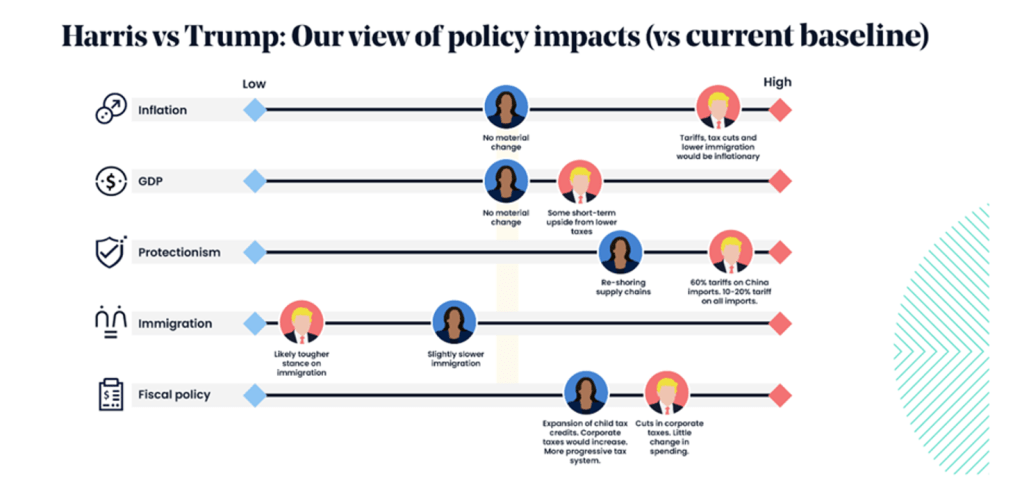
•Trump’s policy around trade tariffs, tax & immigration would be inflationary.

•There would be less interest rate normalisation, as the Federal Reserve may not be able to cut interest rates as rapidly.

•Reflecting on Trump’s previous presidency, high yield bonds & stocks outperformed due to favourable policies, which were pro-business and pro-markets.

• During his last election, in November 2016, small caps in those initial months performed well, double the performance of the S&P 500.

Graph above shows Small Cap ETFs in 2016

Investment Opportunities

· Many emerging market assets have been undervalued in the past, providing a compelling entry point for investors. By reallocating funds into EM/Asia funds, we can capitalise on these undervalued opportunities, positioning ourselves for substantial growth as these markets normalise.

· In addition, high yield bonds are less sensitive to inflation and have a current distribution yield of 7.8%. 

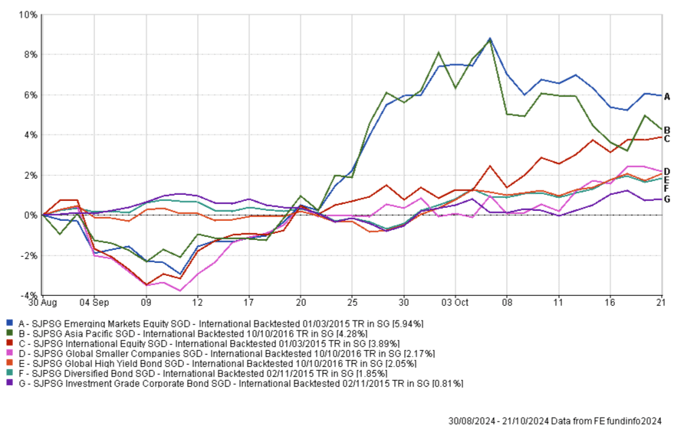
A Tale of Two Halves: After the Fed rate cut, we see an uptick & opportunity in Asia & EM. We also see a stable & resilient Global High Yield Bond.

Navigating the Changes: Key Highlights from the UK Autumn Budget 2024

With the recent unveiling of the UK Autumn Budget 2024, significant changes to personal and corporate tax regulations are set to reshape financial landscapes for individuals and businesses alike.

In his latest write-up, Peter Webb, our expert technical consultant delves into the nuanced details of these tax adjustments, providing clarity on what to expect moving forward. From adjustments to income tax thresholds to corporate tax rate modifications, understanding these changes is crucial to effective financial planning.

Join us as we explore the implications of this budget on your financial strategy and what it means for the future of taxation in the UK.

Personal

  • Rates of income tax and National Insurance (NI) paid by employees, and of VAT,
    to remain unchanged
  • Income tax band thresholds remain frozen until 2028
  • Basic rate capital gains tax on profits from selling shares to increase from from
    10% to 18%, with the higher rate rising from 20% to 24%
  • Rates on profits from selling additional property unchanged
  • Business Asset Disposal Relief tax rate to rise to 18% over the next 2 tax years
  • Business Relief and Agricultural Property Relief will be limited to £1mn from April
    2026 with 50% IHT relief above that limit
  • IHT relief on AIM shares to be limited to 50% (ie e􀆯ective 20% IHT rate)
  • Stamp duty surcharge, paid on second home purchases in England and Northern
    Ireland, to go up from 3% to 5%
  • Point at which house buyers start paying stamp duty on a main home to drop
    from £250,000 to £125,000 in April, reversing a previous tax cut
  • Threshold at which first-time buyers pay the tax will also drop back, from
    £425,000 to £300,000
  • 5p cut in fuel duty on petrol and diesel brought in by the Conservatives, due to
    end in April 2025, kept for another year
  • Basic and new state pension payments to go up by 4.1% next year due to the
    “triple lock”, more than working age benefits
  • Inheritance tax threshold freeze extended by further two years to 2030, with
    unspent pension pots also subject to IHT from 2027


Business

  • Companies to pay NI at 15% on salaries above £5,000 from April, up from 13.8%
    on salaries above £9,100, raising an additional £25bn a year
  • Employment allowance – which allows smaller companies to reduce their NIC
    liability – to increase from £5,000 to £10,500
  • Tax paid by private equity managers on Carried Interest to rise from up to 28% to
    up to 32% from April
  • Main rate of corporation tax, paid by businesses on taxable profits over
    £250,000, to stay at 25% until next election”

We encourage our readers to engage with us on this topic. If you have questions about how these budget changes may affect your personal or corporate tax planning, or if you need expert advice tailored to your specific circumstances, please don’t hesitate to reach out. You can connect with Peter & I through the comments section below or contact us directly at peter.webb@sjpp.asia. Your financial well-being is our priority, and we’re here to help you navigate these changes effectively!

Retirement Planning for Expats: Strategies for Long-Term Financial Security Including Offshore Investments

 If you’re living abroad, you may face unique challenges and opportunities when it comes to securing your financial future. In this episode, we’ll explore effective strategies for long-term financial security and specifically look at the benefits and considerations of offshore investments.

Understanding the Expat Landscape

Living as an expat often means navigating a complex financial and legal landscape. Here are some key aspects to consider:

  1. Varied Legal Obligations: Different countries have different rules regarding taxes, social security, and retirement benefits. Understanding these policies is crucial, as they affect how you save and invest for retirement. (https://danielleteboul.com/2022/04/04/tax-relief-for-foreigners/)
  2. Currency Fluctuations: If you earn and save in different currencies, you have to consider how exchange rates can impact your retirement savings. (https://danielleteboul.com/2024/09/17/what-is-currency-risk-how-can-we-avoid-it/)
  3. State Pension: If you’re from a country with a state pension, find out how living abroad affects your benefits. Sometimes, time spent working abroad may not count towards pension eligibility. (https://danielleteboul.com/2024/08/21/understanding-pensions-around-the-world/)
  4. Healthcare and Insurance: Factor in your healthcare needs and how they may change in retirement. Some countries may not provide the same healthcare benefits to expats. (https://danielleteboul.com/2022/04/12/is-corporate-insurance-enough/)

Key Components of an Effective Retirement Plan

To build a robust retirement plan as an expat:

  1. Assess Your Current Financial Situation: Take stock of your assets and income. Understand your expenses both currently and in retirement.
  2. Set Clear Goals: Determine the lifestyle you envision in retirement. This will help you gauge how much you need to save.
  3. Diversified Investments: As an expat, ensure that your investment portfolio is diversified not just geographically but also across different asset classes. This can help mitigate risk.
  4. Emergency Fund: Build an emergency fund that covers at least 6 to 12 months of living expenses, as needs can arise unexpectedly, especially in a foreign country.

You can read more on the need for long-term financial planning here: https://danielleteboul.com/2021/06/06/why-do-expats-need-financial-planning-in-singapore/

Offshore Investments: A Viable Strategy?

Now, let’s delve into offshore investments and why they may be a good option for expats looking to secure their retirement.

  1. Tax Efficiency: Many expats can benefit from offshore accounts that offer tax shelters or incentives. However, it’s vital to ensure compliance with both local laws and FATCA regulations if you’re a US citizen.
  2. Access to Global Markets: Offshore investments provide an opportunity to access international markets that might not be available to you in your home country.
  3. Currency Diversification: Holding assets in multiple currencies can protect you from currency fluctuations that might impact your purchasing power in retirement.
  4. Estate Planning: Offshore structures can aid in estate planning, ensuring that your assets are passed on according to your wishes while potentially minimising tax liabilities.

 Seeking Professional Guidance

Given the complexities of retirement planning as an expat, working with a financial advisor who specializes in expat financial solutions is highly advisable. Here’s what to look for:

  1. Experience with Expat Financial Issues: Choose an advisor familiar with the tax laws and retirement regulations of both your home country and your country of residence.
  2. Trustworthiness and Credentials: Ensure they have the right qualifications and are certified by recognised financial regulatory bodies. In Singapore, this is MAS.
  3. Transparent Fee Structures: Look for advisors with clear fee structures so you know exactly what you’re paying and what services you’re receiving.

Read more on that exact topic here: https://danielleteboul.com/2024/07/02/what-type-of-advisor-should-expats-in-singapore-work-with/

In conclusion, retirement planning as an expat involves understanding the unique challenges and opportunities you face. By assessing your situation, setting clear goals, diversifying your investments—including considering offshore strategies—and seeking professional guidance, you can create a plan that ensures long-term financial security.

Understanding the Central Provident Fund (CPF): An Essential Guide

What Is CPF?

The Central Provident Fund is a mandatory savings scheme that supports Singaporeans in retirement, healthcare, and housing. Established in 1955, it functions as a comprehensive social security system, whereby both employees and employers contribute a percentage of the employee’s salary to various accounts.

The Different Accounts

CPF is divided into three main accounts, each serving specific purposes:

  1. Ordinary Account (OA):
    • Primarily used for housing, education, and investment. Funds in the OA can be utilised for purchasing homes, paying for CPF-approved housing loans, and education expenses.
  2. Special Account (SA):
    • Aimed at retirement savings, this account offers higher interest rates. Savings in the SA can only be withdrawn at age 55 and are primarily meant to support old age.
  3. Medisave Account (MA):
    • Designed for healthcare expenses. Contributions to the MA can be used for hospitalisation, outpatient treatments, and various health insurance premiums. This account helps ensure that Singaporeans are covered for medical needs throughout their lives.

Retirement Sums

The CPF system is engineered to ensure that Singaporeans have sufficient savings for their retirement. As of 2023, the Full Retirement Sum (FRS) is set at SGD 198,000 for those turning 55. Those who wish to enjoy a higher monthly payout can opt to set aside a higher sum under the Enhanced Retirement Sum (ERS), which stands at SGD 297,000.

To qualify for the various retirement schemes, it’s crucial to meet these sums by the time you reach retirement age. The CPF LIFE scheme further guarantees a lifelong monthly payout, allowing members to enjoy peace of mind during their retirement years.

Is it Worth Topping Up Your CPF?

Many may wonder if topping up your CPF, beyond the mandatory contributions, is worthwhile. Here are a few considerations:

  • Higher Interest Rates: The CPF accounts offer guaranteed interest rates that can go up to 5% for the first SGD 60,000 of combined balances. This is attractive compared to many saving accounts available in the market.
  • Tax Benefits: Contributions to the Special Account or MediSave Account may qualify for tax relief, reducing your taxable income and offering additional savings.
  • Future Financial Security: By topping up your CPF, you boost your retirement funds, ensuring a more comfortable lifestyle in your golden years. The compounded interest on these savings can significantly accumulate over time.

However, it’s essential to balance your current liquidity needs with long-term savings. CPF funds are not retrievable until you reach retirement age.

In summary, the CPF is not just a savings tool; it’s a comprehensive financial framework designed for Singaporeans to support their retirement, health, and housing needs. Understanding the different accounts and contributing to them can significantly enhance your financial security. Whether you’re considering topping up your CPF or just starting your savings journey, remember the long-term benefits it provides.

If you found this information helpful, consider sharing it with friends and family who may also benefit from understanding CPF better. Until next time, stay financially savvy!

Navigating the Financial Seas: Gold and Stocks & The Recent Interest Rate Cut

Despite the doom and gloom you might hear in the news, the world economy is showing some grit, holding its own. This has given central banks a bit of wiggle room to tweak interest rates, which is good news for stocks, though not so much for gold. However, with the political scene being a tad unpredictable, gold remains a hot ticket item.

All That Glitters: Gold Market Buzz

The gold market is shifting gears. Its focus is moving from Chinese investment and central bank purchases towards anticipation of interest rate drops in Western economies. Gold prices are soaring, especially after the European Central Bank’s second rate cut. Traders in the futures market are hopeful, expecting lower interest rates, and the physical market is buzzing with investors seeking safer options.

However, history teaches us that interest rate cuts alone don’t guarantee a gold price surge. In the past, gold usually climbed only if rate cuts led to a recession, averaging a 15.5% increase within a year. If there was no recession post-cuts, gold prices typically fell by around 7%.

Stock Market Standouts

US stock markets have generally done well when the Federal Reserve cuts rates, especially if there’s no subsequent economic slump. Since the 1980s, the S&P 500 has averaged a 14.2% return in the year after initial cuts, outperforming the average return of 10.4% over the same period. This suggests that lower interest rates, without a corresponding recession, usually make for a good stock market environment.

While the economic backdrop looks positive, market ups and downs may persist due to uncertainties around the upcoming U.S. election and concerns of economic slowdown. However, these fluctuations might be a blip in a larger upward trend. So, long-term investors might want to keep their eye on U.S. large-cap growth stocks, which are likely to lead the charge in this bull market.

Emerging Markets: A Mixed Bag

Historically, when the Fed cuts rates, emerging market (EM) stocks tend to do well, especially if there’s no recession. However, the U.S. elections could sway the outlook for EM assets. Any protectionist policies could hit them hard. So, given the current uncertainties, it might be wise to hold off on heavy EM investment until the economic picture becomes clearer.

Data shows that after the first rate cut, EM stocks often outdo developed markets, especially if a recession is avoided. While initial performance might not show big differences, a clearer picture usually emerges about a quarter later as investors assess the economic landscape.

While EM stocks might not be a priority right now, EM bonds could offer good returns in this period, presenting potential investment opportunities amid U.S. growth concerns. Things might become clearer once election risks reduce and signs of economic stability appear.

The Fed & its Rate Cut

The Federal Reserve cut interest rates by half a percentage point, the first reduction since early in the Covid pandemic, to prevent a slowdown in the labor market. Rates now range from 4.75% to 5%, impacting short-term borrowing costs for banks and consumer products like mortgages and loans. The committee plans further cuts, aiming for another full percentage point by the end of 2025 and a half point in 2026, despite a dissenting vote from Governor Michelle Bowman.

The cut seeks to restore price stability without increasing unemployment, which remains low at 4.2%. Although job gains have slowed and the unemployment rate is expected to rise to 4.4%, inflation outlook has improved to 2.3%. The decision caused market volatility, with the Dow Jones fluctuating significantly.

Concerns persist about the labor market, as hiring rates have dropped, suggesting potential future rate cuts may vary among committee members. The Fed’s last rate reduction was in March 2020, followed by three increases due to inflation. While other central banks are cutting rates, the Fed continues to reduce its bond holdings, lowering its balance sheet to $7.2 trillion, down $1.7 trillion from its peak.

Investor Takeaway

Overall, the current environment looks good for stocks, though the U.S. presidential election could cause some market nerves. For gold, while the environment usually doesn’t favor price increases, it still holds an important place as a diversifier in uncertain times. As central banks tweak their strategies, investors should feel comfortable with the current rate cuts, while remembering that every cycle is unique, especially in our current politically charged world.

Setting Up a Comprehensive Investment Portfolio as an Expat in Singapore

Let’s tackle a topic that’s increasingly relevant for many individuals living and working abroad: setting up a comprehensive investment portfolio as an expat in Singapore. Whether you’re fresh off the plane or have been in the Lion City for a while, understanding how to build an effective investment strategy is crucial for your financial well-being. Let’s explore the key aspects to consider when constructing your investment portfolio in Singapore.

Understanding Your Financial Goals

The first step in setting up your investment portfolio is to clearly define your financial goals. Are you looking to grow your wealth for retirement, save for your children’s education, or build a security cushion for unexpected expenses? Your goals will significantly influence your investment choices, so take the time to formulate a plan that aligns with your objectives. I’ve written a little bit about it here:

Assessing Your Risk Tolerance

Once your financial goals are established, the next step is to assess your risk tolerance. This refers to how much risk you’re willing to accept in pursuit of those goals. In general, higher potential returns often come with higher risk. As an expat, consider factors such as your investment horizon, financial situation, and emotional comfort with market fluctuations. Establishing a clear understanding of your risk tolerance will guide your asset allocation strategy. It may be very tempting to go for something incredibly high risk when you see the high returns, but do beware. Think to yourself, “Would I be comfortable to lose all of this money if things were to go wrong?” If the answer is no…opt for a lower risk portfolio.

Understanding the Singapore Market

Singapore is one of the most dynamic financial centers in Asia. The country boasts a stable economy, a robust regulatory environment, and a diverse range of investment options. Familiarising yourself with local markets—such as the Singapore Exchange (SGX)—and understanding industries that drive growth, like finance, technology, and healthcare, is crucial when making informed investment decisions. Check out my latest article here:

Building Your Investment Portfolio

When constructing your investment portfolio, diversification is paramount. A well-diversified portfolio can help manage risk and reduce the volatility of your overall returns. If you are a bit more cautious with your investments, try incorporating bonds or fixed income in your portfolio. If you’re unsure as to what some of these terms mean, you can check out this article here:

I always think it’s best to think about your goals and risk tolerance first, before investing. If you are unsure, it’s best to seek the advice of a professional – they can also give you a bit more information in terms of tax, and how to successfully structure your investments.