Living and working in a foreign country presents numerous opportunities and challenges, particularly when it comes to managing finances. For expats in Singapore, understanding the cultural nuances that influence financial planning and decision-making is essential to ensure successful integration and financial stability. Singapore, a melting pot of cultures, has a unique blend of Eastern and Western financial practices, and recognising these differences can significantly impact an expat’s financial journey. It can be very easy to get wrapped up into the expat lifestyle here in Singapore, but this means one may run the risk of earning paycheque to paycheque and not having much in terms of savings. In contrast, many locals here in Singapore are prudent savers.
One prominent cultural aspect that influences financial habits in Singapore is the collectivist mindset often seen in Asian cultures. In many Asian communities, including Singapore, financial decisions are frequently made with family or community considerations in mind. Expats may find that their local colleagues prioritise family obligations in their financial planning, such as supporting elderly parents or contributing to family businesses. This may be referred to as being part of the ‘sandwich generation’, in which family members are expected to financially support their parents, as well as their children. This contrasts with a more individualistic approach often observed in Western cultures, where personal financial autonomy is emphasised. Understanding this difference can help expats navigate discussions about financial matters and foster stronger relationships with their local counterparts. I am not here to make a judgement as to which is better, and in fact there can be arguments for and against both, but it is important to recognise and understand the differences.
Moreover, the concept of saving versus spending varies across cultures. In Singapore, there is a strong emphasis on savings and prudent financial management, often driven by the pressures of rising living costs and the cultural expectation to prepare for the future. Expats may encounter a more aggressive savings culture in Singapore, where people commonly invest in property, insurance, and retirement funds. Conversely, in some Western cultures, there may be a greater acceptance of consumer spending and taking on debt for lifestyle purposes. This may not always be the best way forward, as it may mean expats fall into the trap of living beyond their means and overspending now, at the detriment of their future. Recognising these differences can empower expats to align their financial habits with local practices, allowing for more seamless interactions and potential investment opportunities. Singapore is a financial hub, and there are many investments available to expats here, all with the added benefit of Singapore’s stringent regulatory systems. That, paired with a lack of Capital Gains Tax, means it is a perfect environment for foreigners to grow their wealth whilst here.
Lastly, financial literacy and investment strategies are influenced by cultural backgrounds, which can create disparities in knowledge and comfort levels with financial products. For instance, expats from countries with less emphasis on investment might find themselves at a disadvantage when navigating Singapore’s robust financial landscape. I personally found that many European cultures do not put as much of an emphasis on investment planning and the importance of insurance as much as Asian cultures do. Understanding local investment products, tax regulations, and retirement schemes is crucial for success.
If in doubt, expats should consider seeking advice from financial advisors that are regulated by local boards, like the Monetary Authority of Singapore, or engaging in community workshops to bridge any knowledge gaps. By embracing these cultural differences and adapting their financial habits accordingly, expats in Singapore can enhance their financial well-being and contribute positively to their new environment.
Living abroad can be an incredible adventure, but it also presents unique challenges, especially in unforeseen circumstances. Whether it’s a natural disaster, health crisis, or political upheaval, having a plan in place can make all the difference. Here, we’ll discuss some financial and lifestyle considerations to help you prepare effectively for emergencies as an expat.
Financial Considerations
Emergency Fund: One of the most fundamental steps in financial preparedness is to establish an emergency fund. Aim to save at least three to six months’ worth of living expenses. This fund should be easily accessible and kept separate from your regular finances to ensure you can quickly act when needed. (https://danielleteboul.com/2021/02/08/how-i-planned-my-finances/)
Insurance Coverage: Review your health insurance and ensure that it provides adequate coverage in emergencies. Many expats opt for international health insurance plans that include evacuation coverage in case of medical emergencies. Additionally, check if you need to consider travel insurance for longer trips back home or even just for travel to neighboring countries. (https://danielleteboul.com/2024/10/25/insurance-basics-for-expats-protecting-your-adventures-abroad/)
Local Currency and Access to Funds: Familiarise yourself with the local banking system. Have access to local currency, but also ensure you can access your funds globally. This might include debit or credit cards that are internationally recognized or maintaining an account with a bank that has a global presence. (https://danielleteboul.com/2024/08/30/managing-finances-and-remittances-best-practices-for-expats/)
Keep Important Documents Accessible: Make digital copies of essential documents such as passports, visas, insurance policies, and identification. Store these in a secure cloud service and have physical copies in a safe but accessible location. This preparedness can save critical time in a crisis situation.
Create an Emergency Plan: Developing a robust emergency plan tailored to your lifestyle is vital. Outline steps for various scenarios—such as natural disasters or sudden evacuations. Plan your local contact numbers, emergency service numbers, and nearby safe locations.
Community Connections: Building relationships within your expat community can prove invaluable during emergencies. Other expats can offer support, information, and local insights that you may not find elsewhere. Attend local events, join online forums, and establish a network of people you can rely on.
Health and Safety Preparedness: Maintain a basic first-aid kit and familiarise yourself with local health facilities. Understand the health risks in your area and ensure you are up-to-date with vaccinations and medical check-ups. In the case of health crises, having a plan for medical emergencies can save valuable time.
Stay Informed: Regularly check local news sources and community bulletins to stay informed about potential emergencies. Sign up for any local emergency alerts and familiarise yourself with the process of receiving updates and alerts.
Language Proficiency: While many places cater to English speakers, knowing the local language can be incredibly advantageous in an emergency. Basic language skills can help you communicate effectively with local authorities or in situations where services may only be offered in the local language. We are very lucky here in Singapore that English is so widely spoken, but it’s good to know some Malay or Mandarin basics.
In closing, being prepared as an expat involves a combination of financial foresight and lifestyle awareness. By establishing an emergency fund, securing appropriate insurance, creating an emergency plan, and fostering community connections, you can equip yourself to handle unforeseen circumstances with greater confidence. Check in with your expat friends and family to discuss how they prepare for emergencies—all of us can learn from each other’s experiences.
In this article, I’ll be writing about the essential types of insurance that every expat should consider: health, travel, and home insurance. Whether you’re moving abroad for work, study, or adventure, understanding these types of insurance can save you considerable hassle down the line
Health Insurance
Let’s start with health insurance—arguably the most critical form of insurance for expats. Healthcare systems differ widely from country to country, and what may be covered in one nation may not be in another.
Types of Health Insurance:
International Health Insurance: This type typically covers you globally or in specific regions, providing coverage for hospital stays, outpatient services, and sometimes even routine check-ups. Companies like Henner, Allianz, and Bupa are popular choices.
Local Health Insurance: If you’re going to stay in one country for an extended period, you might consider getting health insurance from a local provider. This can often be more affordable than international policies but may have limited coverage when you travel outside the local area.
How to Obtain Health Insurance:
Research: Start by comparing policies and providers online. Websites like InsureMyTrip or Squaremouth allow you to compare options.
Read Reviews: Check out testimonials and reviews from other expats who have used the service.
Consult a Broker: If you’re feeling overwhelmed, using an insurance broker who specialises in expat insurance may save you time and lead you to the best options.
Travel Insurance
Next up is travel insurance. While you may think you’ll never need it, unexpected situations can arise that could lead to costly expenses.
What Travel Insurance Covers:
It typically covers trip cancellations, lost luggage, medical emergencies, and other unforeseen events that could derail your travel plans. For expats, this can be especially important if you plan to travel back home or explore other countries during your stay.
How to Obtain Travel Insurance:
Online Platforms: Just like health insurance, platforms like World Nomads or InsureMyTrip allow you to compare coverage options and rates.
Policy Bundling: It may be beneficial to bundle your travel insurance with your health insurance. Some providers offer discounts or extended coverage when you get both from them.
Home Insurance
Finally, let’s discuss home insurance. If you’re renting or buying a property abroad, protecting your home and belongings is crucial.
Types of Home Insurance:
Renters Insurance: This covers your personal belongings against theft or damage but doesn’t cover the building itself.
Homeowners Insurance: If you’re purchasing a property, this type of insurance will cover both the structure and your possessions.
How to Obtain Home Insurance:
Local Providers: Research local insurance companies in your host country. They will understand the specific risks associated with the region.
Understand the Policy: Read the fine print. Make sure you understand what is covered and what’s not, especially concerning natural disasters or local legalities.
In conclusion, navigating the world of insurance as an expat doesn’t have to be daunting. By understanding the importance of health, travel, and home insurance, and knowing where to find them, you can ensure peace of mind during your adventure abroad.
Remember, always read the terms and conditions and ask questions if anything is unclear. The last thing you want is a surprise when you need to use your insurance.
Moving to Singapore, or anywhere for that matter, is an exciting move! But, it does require a bit of getting used to. One of which is how to navigate your finances in a new country.
Singapore is one of the world’s leading financial hubs, known for its stable economy, business-friendly environment, and strategic location in Southeast Asia. As expats, it’s essential to familiarise ourselves with the following aspects of the economy:
1. Currency and Cost of Living:
Singapore’s official currency is the Singapore Dollar (SGD). The cost of living can be high, especially in terms of housing, dining, and transportation. As you plan your budget, remember to research typical prices for groceries, utilities, and other everyday expenses. Check out my recent article on Singapore’s cost of living here:
Singapore has a progressive income tax system, which means that the tax rate increases as your income rises. Fortunately, the tax rates are relatively low compared to many other countries, with no capital gains tax and no inheritance tax. Understanding your tax obligations, including filing dates and deductibles, is crucial to staying compliant and minimising liabilities. Find out more about tax here in Singapore with these articles:
Singapore boasts a sophisticated financial services sector. Expats have access to a wide range of banking and investment options. From local banks to international institutions, the choices are plentiful. Familiarise yourself with saving accounts, fixed deposits, and various investment vehicles like mutual funds, stocks, and bonds. It’s always advisable to consult a financial advisor, particularly one who understands the regulations that apply to expats. I wrote an article on this exact topics here:
The Central Provident Fund (CPF) is a government-mandated savings plan for Singaporeans and Permanent Residents, helping them save for retirement, healthcare, and housing. As an expat, you probably won’t be eligible for CPF contributions, but understanding this system can provide insight into Singapore’s approach to financial security. You can however (and do read that article above) opt into the SRS (Supplementary Retirement Scheme). This works similar to CPF but is also open to foreigners, and offers various tax benefits.
5. Insurance:
Health insurance is another critical aspect of financial literacy. Singapore has a high standard of healthcare, but medical care can be expensive without insurance. Depending on your employment package, you may have health insurance coverage included. Otherwise, be proactive in researching local insurance providers to ensure you have adequate health and life insurance. I always say that having medical insurance through work is good, but you should always have your own as a back-up. You can read more here:
– Open a Local Bank Account: This simplifies your financial transactions and may offer better exchange rates than foreign accounts.
– Create a Budget: Track your spending to get a clear picture of your financial situation in this new country.
– Educate Yourself: Attend workshops or read financial literacy materials available for expats in Singapore. The more informed you are, the better financial decisions you can make.
– Network: Join expat groups or forums. Fellow expatriates can share valuable knowledge and experiences regarding managing finances in Singapore.
Understanding Singapore’s economic landscape is vital for expats aiming to thrive financially. By familiarising yourself with the local currency, tax system, financial products, and insurance options, you’ll set yourself up for success. As always, seek professional advice when needed, and continue educating yourself on financial matters.
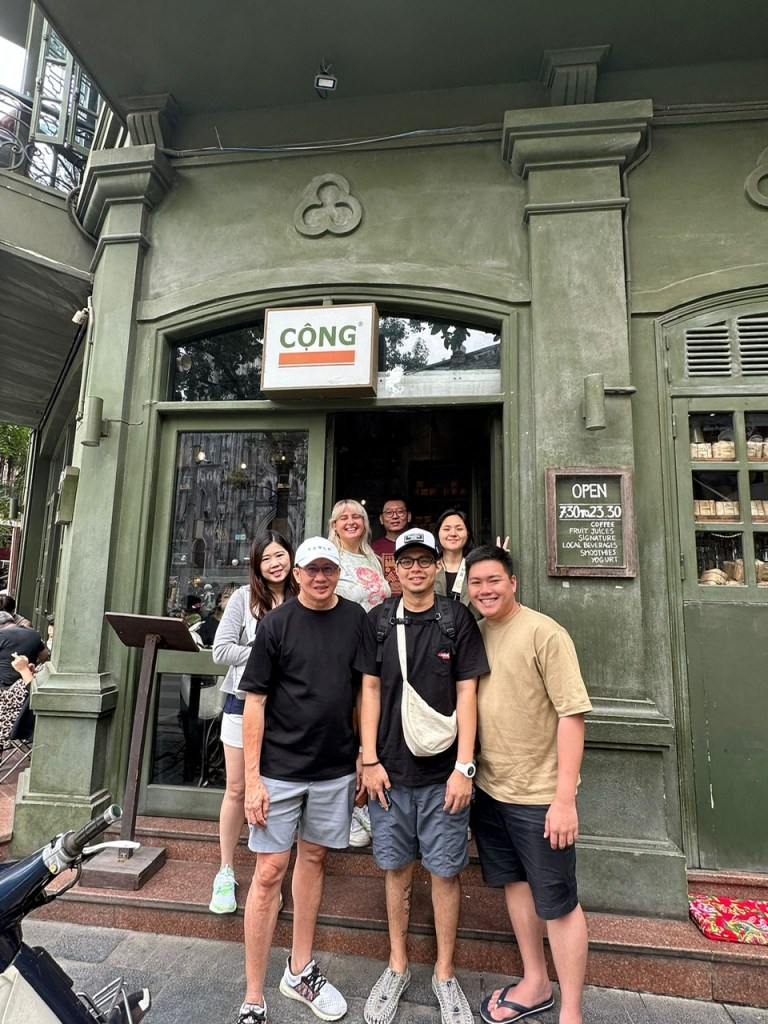
I recently took a short trip to Hanoi. But what some may not know is that I actually used to live in Hanoi, Vietnam before I moved to Singapore.
Returning back to the city, I really felt like not much had changed, and I slotted myself right back in. But, I was conscious that to some, Vietnam might be a total culture shock; food is unusual, streets are manic and English is not widely spoken.
For these reasons, I thought it would be a great idea to share some of my tips, as an ex-expat in Hanoi and now as a tourist.
The Roads
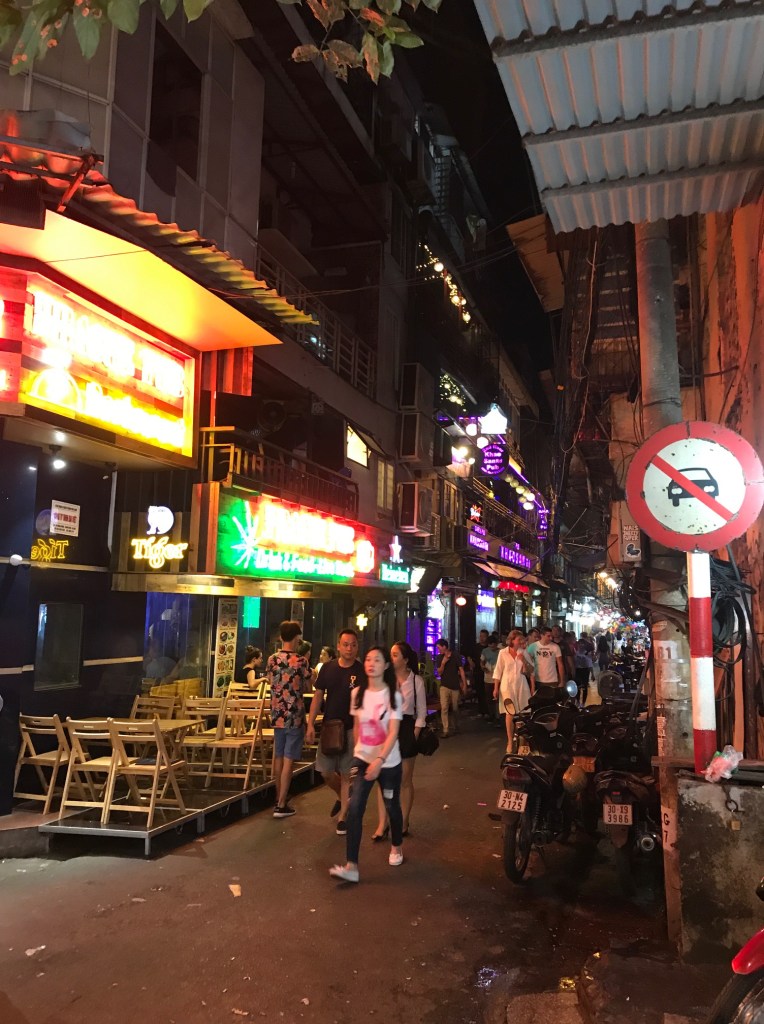
This may be the number one most difficult thing to adjust to in Vietnam. Traffic lights are seldom seen or used, most people drive motorcycles and to an outsider it may seem like total chaos. But, this is actually not the case. There are several unwritten rules when driving (and being a pedestrian) in Hanoi, and if you know these tips it may save you a lot of stress and hassle.
Even though there doesn’t seem to be any rules, it is simple. Like a river, or a colony of ants, the traffic in Hanoi moves constantly and slowly. There are no jerking movements, no need to suddenly break, and so long as everyone consistently flows around each other, it works. So, how does this affect you as a pedestrian? Well, if you panic whilst crossing the road, you disrupt the system. Do not expect people to move, or stop, for you. Walk slowly, at the same pace and in the same direction across the road. You will find that vehicles will work their way around you. This is why it is very important not to run, not to change your direction, or to get scared and stop half way through. Maintain your pace (and your confidence!) and crossing the road will seem like a breeze.
The Money
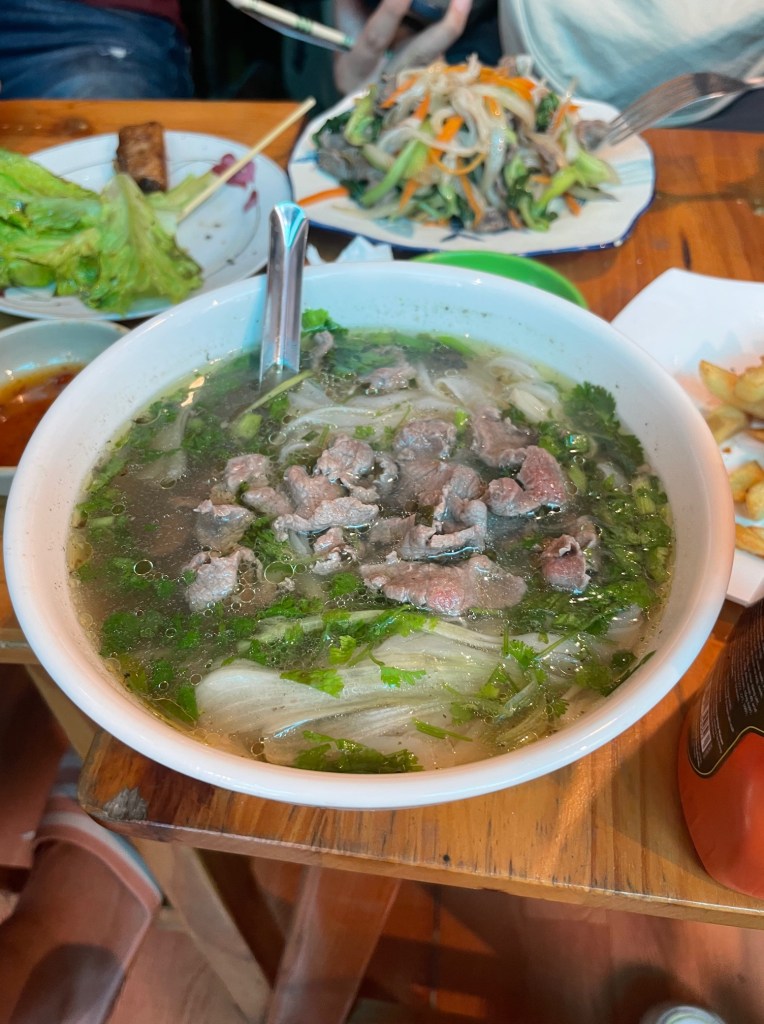
When I lived in Vietnam, the money seemed easy, especially because at the time it was easy to convert in my head to USD and from there into GBP. Now, going back as a tourist, it’s very difficult to convert in my head to SGD (one Singapore dollar is about 17,000 Vietnamese dong). Not only that, a lot of the paper notes are similar in colour, so it is easy to get them mixed up. My tips for dealing with the money would be as such; whilst it’s tricky to always convert, be mindful of how much things should cost in VND. For example, street food, like a bowl of pho, should cost anything from 25000 VND to about 60000 VND (60k for a really large portion, or at a famous street stall). Of course at restaurants, this will be more, maybe in the 100000 – 200000 VND range, and beers tend to be very cheap wherever, costing maybe 20000 VND. (Actually, I used to drink at places where the beer was 7000 VND (about 40 cents) but that is at a really local spot). You can see that Vietnam is really a very affordable place to visit.
My second most important money tip would be, do not pay in USD. Many blogs, tour groups and travel companies will tell you to pay using USD. And they’re not wrong, you can- maybe stores in the Old Quarter will accept dollars, but you are going to be massively ripped off with the exchange rate. Cash is still King in Vietnam; not everywhere will accept card, but using American dollars is a sure fire way to lose money.
The Food
Vietnamese is my favourite cuisine of all time. There is such a range of healthy, fresh and delicious food, and it’s always at a very affordable price. I would say that street food is always better than restaurants!
If you’re staying around the Old Quarter, there are some great famous spots you can try out, such as Bun Cha Nem at 6 Ngo Tram Street, Bun Cha Huong Lien 2 Obama (the one that Obama and Anthony Bourdain ate at), Banh Mi 25 & Pho 10 Ly Quoc Su.
My favourite dishes are:
Pho bo tai lan- flash fried steak noodle soup
Bun cha- pork patties and belly in a fish sauce broth with fresh herbs and rice noodles, sometimes with spring rolls as an add on!
Bun bo hue- a spicy soup noodle dish originating from the old capital of Hue
Ca phe trung- Vietnamese egg coffee
Banh bao- a giant bao with spring roll-like filling, and two quail eggs!
Pho dat biet- ‘house special’ beef pho, with many different cuts of beef
If you’re not so adventurous, and want some safer options, you can try:
Pho ga- chicken noodle soup
Nem nuong- spring rolls
Pho xao- wok fried noodles (bo means it’s with beef)
Banh mi – French baguette sandwich (trung is with egg, pa te is with a pork pate and xuc xich is with sausage)
Culture & Language
To be honest, even when living in Hanoi, I struggled with language. If you try and learn Vietnamese online, best of luck, the Vietnamese that they teach you on the apps is South Vietnamese- not what they speak in Hanoi!
In all actuality, even though many locals don’t speak English, they are more than happy to help, or try to understand what you are trying to say. So long as you are polite and don’t get frustrated, you’ll be fine. And also, saying ‘me oi’ is a good way to get people’s attention.
I hope these tips will help those planning on going on a short trip to Hanoi- maybe it’s your first time, or maybe you don’t want to feel like a tourist anymore!
When I first moved to Singapore, it took me about six months to settle. I found it a lot more difficult to acclimatise here than when I moved to Hanoi. I feel like I made a few mistakes when I moved, so I wanted to share some tips on how to cope with homesickness, to help other expats not make the same mistakes I did.
Join Expat Meet-Up Groups
When I first arrived in Singapore, I had some friends come to visit me from the UK. While it was amazing to see them, I spent the first month or so with them experiencing all the tourist spots in Singapore. This made me feel like I too was a tourist, not a resident. Years later, I joined several meet up groups; not only was it a great way to make new friends, but it also made me feel like Singapore is truly my home, as I was experiencing all sorts of cool places, not just the tourist traps.
Get Out Of Your Comfort Zone
I really do think that trying new things and getting out of one’s comfort zone helps to break up mundane routine; having the same routine can create spats of great boredom can often leave one feeling lonely. So I do think that going out to new places, such as hawkers, parks or even MRT stations you’ve never been to, not only makes you feel settled, but breaks up a boring routine.
Host Your Own Culture’s Events
This I think is a really cool idea; just because you live overseas doesn’t mean you have to skip all the holidays you would celebrate at home. I’ve been invited to Diwali parties, 4th of July gatherings and Eurovision parties in Singapore and I could really tell that the respective hosts really felt like it was home away from home. It was a great way to experience others’ cultures and customs, and it brings us all closer together
Stay In Touch
Keeping in touch with those from home is incredibly important, and with technological advancements, it’s easier now more than ever to keep in contact. However, I do think there is a right and a wrong way about doing it. I’ve learnt that setting a rigid time every week to call home, limits your flexibility; sometimes you may be out doing something, and having to rush home for a call can make you feel disconnected with Singapore. Calling home when you and are family are totally free and chilled makes the phone conversations much more enjoyable, and less homesick because you’ve been having a great time in Singapore!
Ultimately, moving away from home is hard, and whilst our family is not here, we are lucky enough to be able to choose our friends and who we spend time with. Surrounding yourself with understanding and supportive people, who are open to sharing experiences with you, will help you settle right in as an expat living in Singapore.
With travel restrictions opening up and it being easier to travel, you might be overwhelmed with how to kickstart your travel bug again! You may be worried that travel is now incredibly expensive post pandemic, but fear not! I have some travel tips for you so that you can successfully travel on a shoestring.
Of course, all travel planning starts with buying the ticket. You may think this is the most expensive part of the trip, so here are some ways you can save on ticket prices.
First of all, always check the flights in Incognito mode. Those cookies are going to track all your searches for flights otherwise and jack up the prices. I often find that using price comparison sites such as Sky Scanner, means that I get the cheapest flight possible, even cheaper than booking directly through the airline! One thing I really like about these travel comparison websites, and it’s even possible to do through Google is a price alert. Here, you input your email address, and the website will alert you any time the price goes up or down. This way you can try and get an even cheaper price. Some days of the week tend to be cheaper than others, monitor your alerts and see what works best.
Flying direct can often work out quite a fair bit more expensive than if you have any connecting flights. Whilst connecting flight might be a bit of a pain, they could save you hundreds of dollars off your tickets. If you don’t mind, and are travelling through countries with multiple cities and airports, consider connecting flights to save a bit of cash.
Here’s an idea, if you’re not sure where you want to travel to, but you still want to travel on a budget you can use comparison websites or Google to search for flights, and choose the starting location of Singapore. In the destination you can choose anywhere, and search for price lowest to highest. That way, if you’d like to try something new and exciting, you can make sure that it’s within your budget!
Do take note of travel restrictions, some countries have completely dropped all of their Covid restrictions, such as the UK. Whereas some countries, like Hong Kong or Macau, have still got very strict rules implemented. This may mean further costs for you. If you want to save on swab tests, you can choose a country that has a little bit more lenient restrictions.
Next, I want to talk about preparation. Fail to prepare, prepare to fail! There are some things that you can do that will minimise your spending costs whilst you are on holiday. Of course, the most important thing is to make sure that your passport is still valid. Generally, you can only travel if you have at least six months validity left on your passport. At the moment, after the pandemic, there is quite a backlog on renewing your passport, so make sure to get this sorted quickly!
When it comes to currency, there are a couple of great hacks that I frequently use whilst travelling, to make sure that I don’t get ripped off with exchange rates. First of all, change your currency in Singapore before you leave on your travels, avoid changing your Singapore dollars in your travel destination country, as this exchange rate will not be favourable to you. Lots of currency exchanges overseas choose their own rights of exchange, and can often take advantage of unsuspecting tourists.
You may have heard people say that if you travel to anywhere in Southeast Asia or South America, you can use US dollars as your spending money. Respectively, you can use euros in any non-EU country in Europe. I would strongly discourage listening to this advice. Yes, it is easier for you to carry one currency, and you can definitely use those currencies abroad, but unless you are going to America or somewhere in the EU, other countries that use these currencies can massively rip you off. Because it is inconvenient for them to hold onto this foreign currency, the exchange rate is normally very much at a disadvantage to you, meaning that you are paying a premium just for the convenience of having one type of currency with you. In my opinion, this is not worth it. For example, when I was in Laos, I only had Thai Baht with me. It was accepted in all shops and restaurants, but when I converted back into dollars, I realised that it was a lot more economical for me if I just changed into Laos Kip instead, I saved a lot more money this way.
If you ever get stuck and have run out of cash whilst in a foreign country, it’s always a good idea to have an international bankcard to hand. Most ATMs abroad will charge you for withdrawing using a foreign bank card, so if you use your DBS card overseas, you could be charged a fortune! I use a Monzo international bankcard, it is linked to my UK bank account, but I can withdraw from any ATM overseas and will not be charged. There are similar companies that you can get a bank card from in Singapore like Revolut or Wise, these cards are so handy to have a new, and work by topping up from your main bank account. I think this is great because if you keep your bank account on these cards quite low, it’s not so risky if you lose them overseas. They also come with very useful apps that you can access with ease, meaning if you lose your card whilst on holiday, you can freeze it without having to visit a bank branch or calling an international hotline.
Speaking of hot lines, a lot of people will often buy a Sim card in the country that they are visiting, and use that for the duration of their holiday. Instead of doing this, I recommend renting a Wi-Fi box. This little portable device comes with you during your whole trip, and works almost like a little router. You can connect multiple devices to it, so if you are travelling in a group you don’t need to rent more than one! This works out to be a lot more cost-effective than everyone buying their own Sim card. And I don’t know about you, but I feel a nervy taking out my Sim card whilst I’m abroad, it would be just my luck that I would lose it!
Of course, nowadays, we need a lot more extra paperwork then we previously did when travelling. So, from my experience, I would say it’s best to have all these documents, such as your vaccine certificate to be notarised and printed out when you travel. Most airlines will except soft copies on your phone, but I always think it’s best to carry a hard copy in case your phone battery runs out or you have no signal. Generally, you will need your vaccine certificate, boarding passes, proof of travel insurance with Covid coverage, and a passenger locator form for the country you are travelling to. You may also need to print out your proof of swab tests.
My final tip for preparation is a small one, but it can actually save you some money every time you travel. I would recommend bringing with you your own travel blanket, travel towel, and travel pillow. Reason being is that you can find these things very cheap in stores such as Mustafa‘s or even value stores across Singapore. A lot of airlines will charge you for using a blanket or a pillow, especially if you’re travelling on a budget airline like I often do to save money! Some hostels that you stay at might not even provide towels and things like this, so it’s always best to have your own. This means that you don’t have to keep re-purchasing every time you go abroad.
I want to tell you ways where you can save money during the itinerary of your trip.
Instead of hotels, hostels are of course a much cheaper option, and come with the added perks of meeting new people whilst you are travelling. If you don’t like the idea of sharing a room with strangers, most hostels will have private rooms available, that are still a lot cheaper than if you were to book a hotel. Something I love about hostels is that you can generally book a lot of trips and excursions through the front desk staff. They often have tie-ups with a lot of travel companies, meaning that your trips out and about maybe a lot cheaper than if you were to go and source for these things yourself. A lot of hostels I have travelled to also put on free events for the people staying there, like parties, quizzes, free drinks at the bar and different kinds of meet up activities. Not only is this a great way to meet like-minded people, but it also means that you can have very fun cheap night out or nights in at the hostel itself! Not only that, you may also meet people at the hostel that you decide to go travelling with further, enhancing your backpacking experience and meaning that you get to meet people from all walks of life.
Hostels may also be able to organise drivers and transportation for you, but if they don’t, try and find the local version of Grab or Uber and download these apps. This generally works out to be cheaper than hailing a cab, and in some countries is a lot safer as well. For example, when I lived in Vietnam, you could hire a Xe Om, or motorbike taxi from pretty much any corner. However, as soon as they noticed you were a foreigner, they would charge you triple the price of a local, and you may not feel 100% safe. At least with Uber and Grab, the motorbike fares were at a fixed rate and you were certain of your safety.
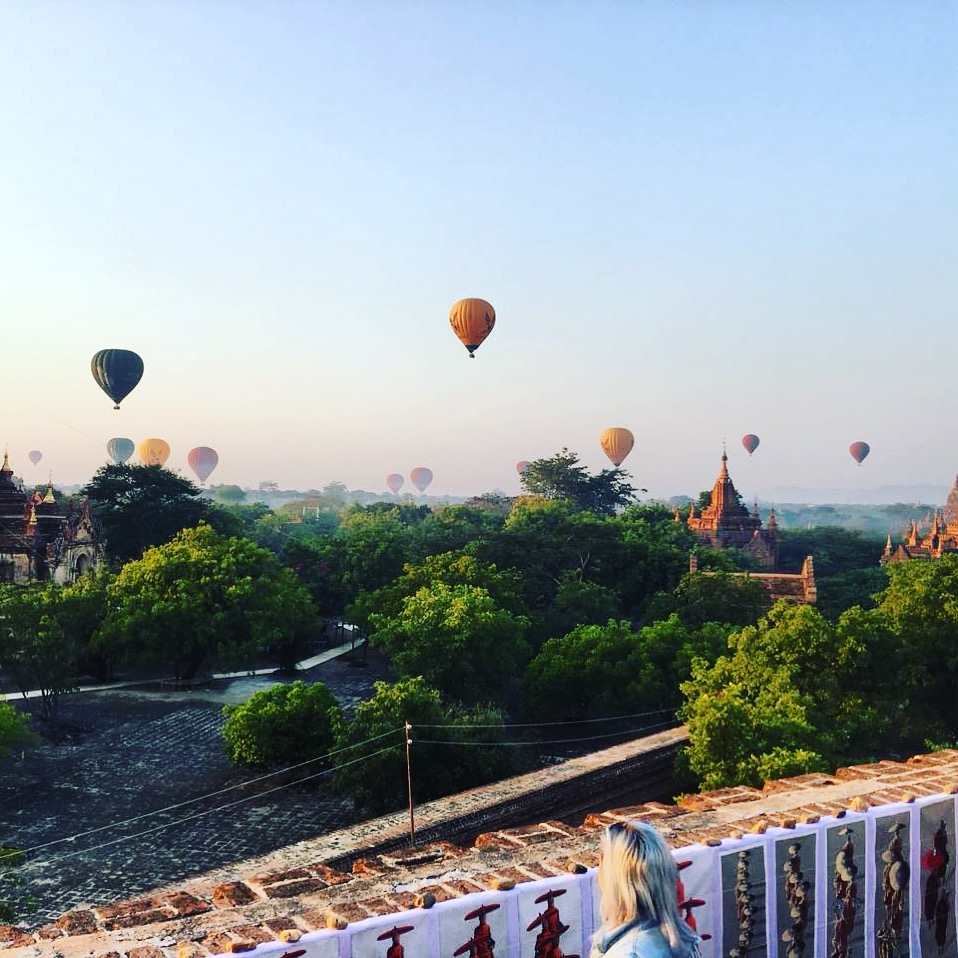
If you’re going to be travelling to multiple locations in the same country, or even cross country, like Europe, instead of booking flights in between each location, consider getting coaches or trains. These work out to be a lot cheaper and definitely an enriching backpacking experience. I would definitely recommend if you ever get the opportunity to do so, to take an overnight train to your next location. It’s definitely a memorable experience, with beautiful views and the chance to meet and mingle with locals. When I travelled around Myanmar, I got overnight coaches to most of my destinations. Even though the journeys were sometimes 16 hours, it was incredibly cheap, the locals travelling with you were super friendly, and included food. At the time I also thought it was great value for money because it saved me booking a hostel for that night.
Now that things are starting to feel like they used to, I hope this post can inspire you on your next trip. Enjoy travelling on a shoestring! Remember, it’s about the journey, not the final destination.
I wanted to write an article about my recent travel experience regardless of the outcome, and I wanted to write it to help those who are going to be travelling during this time, or are even thinking about it. We’re in our third year of the pandemic and I hadn’t seen my family in two years. Regardless of the situation, I was going to take any opportunity I could to go home to see them.
That being said, there’s a few things I wish I knew before flying. Even though I had friends that had flown before me, there were new developments every day with the Omicron variant that definitely kept me on my toes.
Pre-Flight
My main concern was coming back on a VTL (vaccinated travel lane) flight, meaning that when I returned to Singapore there was no need to quarantine. This was paramount as I had face-to-face training booked at work. I was going for two weeks, mainly because I’d already taken a lot of time off for our wedding and staycays, but also because I am a licenced financial services consultant in Singapore- I cannot legally work or give financial advice in other countries and if I was out of SG for too long I would run into tax issues.
VTL flights were CRAZY expensive- one BA flight was about $6,000. I love my family but was not about to pay that. So, I found a cheaper way to fly via Berlin with Scoot, return VTL, pretty cheap. I also booked a pre departure test for the UK, booked a day 2 test for when we got there, completed our passenger locator form and my VTP (vaccinated travel pass). I would recommend printing everything off for a smooth transition, and I even printed off all travel itinerary, insurance and our marriage certificate (he’s a Singaporean so I knew I could come back on a family ties lane if there was another lockdown).
Flight
With all our documents ready and check-in online done it was time to head off. Thank goodness we got to the airport early because, even though we had already checked in, it didn’t matter. We still had to queue and have Scoot check all our documents, which was fine and didn’t take too long, but they seem to have more staff ‘assisting you’ at the automatic booths than for the Covid checks, which seemed counter-productive, and our assistant kept pressing all the wrong buttons, so it would have just been easier to do it ourselves. But once check in was done, everything was easy and the flight to Berlin was pretty smooth.
That’s when the panic started. We only had a two-hour layover in Berlin (which was totally my own doing; we landed at 9am and all other flights to England weren’t until 7pm, and I would rather take my chances than sit in an airport for that long). The issue was that, because it was self-transfer with two different airlines, we had to go through passport control, collect our bags, check them in again, go through security and then immigration a second time before boarding our next flight. This was the most stress I’ve experienced in a long time, and if it weren’t for the kind family in front of us at immigration letting us past, we would have missed our flight. Anyway, we got our connection just in the nick of time and arrived safely in Manchester.
Being At Home
I am not over exaggerating when I say that seeing my mom at Manchester Airport for the first time in two years was like something out of Love Actually. I cried, she cried, and there was a tonne of people in the exact same situation, embracing each other after years of being apart. It was at this moment that I realised that all of this was worth it. It was like time had stood still and nothing had changed being back at home. It was also very special because this was the first time my husband was coming home with me and had met my parents face to face.
Whilst I was home, I met friends, got my booster and went to a club. Although I will say that because of my constant fear of Covid, we were super careful; wore masks EVERYWHERE, constantly hand sanitised, stayed in small groups and sat by ourselves with masks on in the club (lame I know). The UK had become very lax about the situation, with no one really checking vaccination status or wearing a mask. And to some extent I agree with the majority that it does need to be taken as an endemic now, but I had a flight to catch in two weeks.
Omicron Panic
During the trip I had several friends cancel on their plans because they had tested positive and were self-isolating. I was happy to hear, however, that they weren’t taking long to recover and had little to no symptoms. Governments worldwide didn’t see the positive side, however, and with news that Europe was shutting their boarders the panic started to set in. Our flight back to Singapore was again via Berlin and it wasn’t long until EasyJet cancelled our flight from Gatwick.
Then Singapore announced that it was suspending all VTL sales…we had 4 hours to frantically book flights. I found a pretty reasonable booking with Turkish Airlines arriving in Singapore on the 1st January.
Heading Back
We flew back from London and, after a lovely time with family and friends, we got our lateral flows done in Boots somewhere in Piccadilly, did our Health Travel Declaration for Singapore and stayed next to Heathrow Airport.
The gentleman at the Turkish Airlines desk was incredibly helpful and the document check was very smooth. Everything from that point to Istanbul went very well and felt like normal flying times. When we got to Istanbul we had to have our VTL documents checked again, which was fine for us but not for all- there were people being told they had to say in Istanbul Airport, others on the phone to their respective embassies and some being interrogated about their trip to Singapore. I genuinely think this happened because Turkish Airlines doesn’t make it clear on their website that the flight is a VTL- I had to trawl through several websites to confirm and the VTL flight only happens in January once every two weeks. And if you weren’t from Singapore, how would you even know what a VTL is?
Landing
Everything when we arrived in Singapore was smooth- we got our bags quickly, and, although I hadn’t pre-booked my PCR, it was quick and efficient. We got home and awaited our results…the morning came and my husband got a call from MOH saying that he had tested positive on his PCR. This came as quite a shock as we were both negative before we left, my whole family had tested negative and we are now testing negative on ART tests. Hours later I still had not received my results. But eventually they came in and were positive too. We now both have to quarantine for ten days (from result, not from test, so essentially 11 days), which I am pretty upset about. For some context, it came out in the news that those on non-VTL flights will no longer have to do a PCR on arrival, and self-isolate for 7 days. If they test positive on an ART they have to isolate for 72 hours or until they test negative. Please tell me why for VTL it is a 10 day quarantine, regardless of how soon you test negative?
Final Thoughts
All in all I am very happy I went home and nothing will take away that time I spent with friends and family. However, I do feel that the VTL scheme is just a way of making money- ticket prices are insanely high, the number of tests is insurmountable and the PCR upon arrival was $125, which I got the results well after 24hrs instead of 6-12. And on top of that I still have to quarantine longer than if it was non-VTL. The level of extra documentation and stress made flying incredibly nerve-wracking. I used to be a frequent flyer and travel a few times a month- this trip I was incredibly anxious, panicked and it was overall such an unpleasant experience. Also, if I knew I was going to test positive anyway, even after all the many precautions I took, I probably would have cared less and relaxed a bit more.